Monastyryska. Dormition church

· 2 min read
Having driven through Monastyryska countless times, I always noticed the Roman Catholic church in the centre of this town. But I decided to look at it only when I heard that the church has an altar by Pinzel. I managed to get inside only when the church became an Orthodox church; before that it was always closed.
A lot has been written about Monastyryska online, both on Wikipedia and on the website of the Monastyryska community, where the history of the town is analysed in detail.
I want to stress that the name Monastyryska is a Polish invention, since it was they who reworked the Ruthenian Monastyrysche into Monasterzyska. The name is always used in the masculine plural (in Ukrainian), because sometimes one hears Monastyryska referred to as a feminine singular. No, it is a plural.
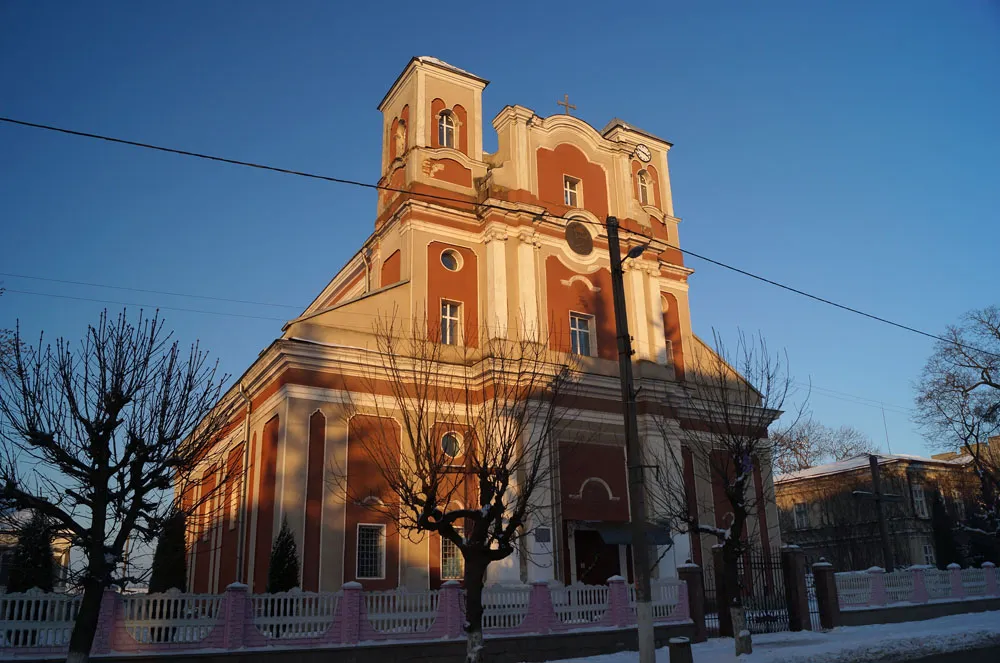
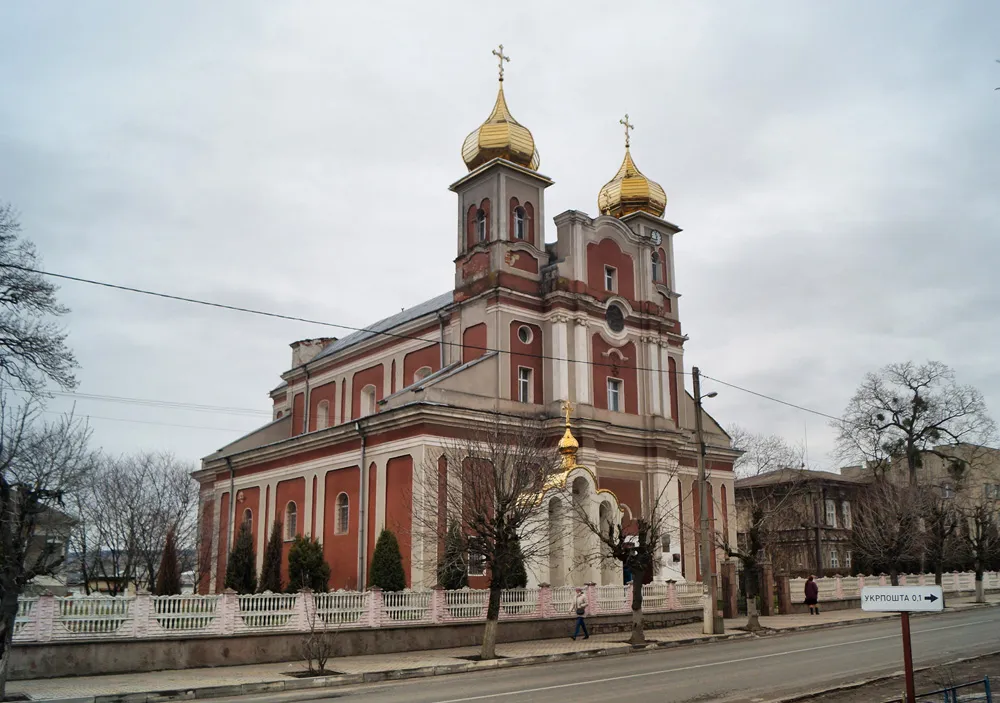
Before and now.
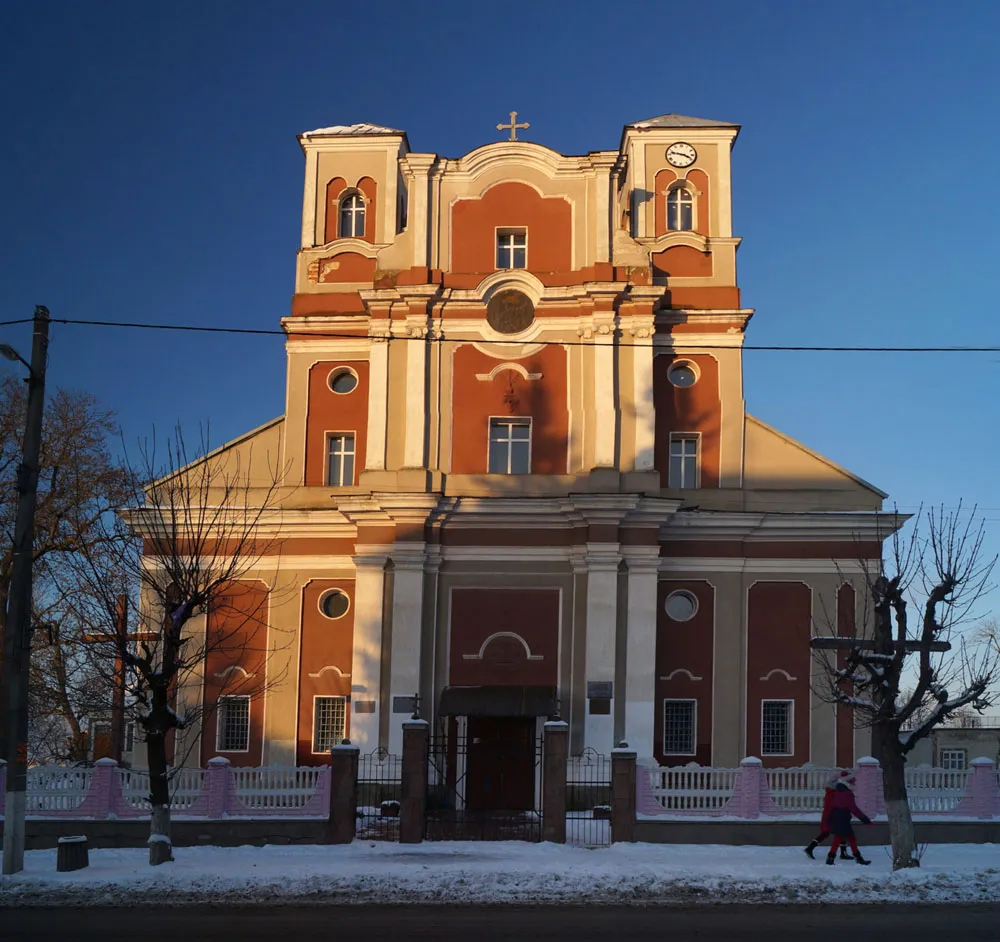
The first church in Monastyryska was wooden, built in 1719 at the expense of Teresa, widow of Aleksander Potocki. In 1727 Józef Potocki increased the funding of the parish of the Assumption of the Blessed Virgin Mary, and later at his expense a new brick church was built and furnished, consecrated in 1751.
In 1907 the church was restored, and another repair was carried out in the interwar period. After the Second World War the last parish priest of the church, Father Antoni Joniec, left Monastyryska, taking with him to Poland part of the church property, including the miraculous image of Our Lady of Sorrows that had been kept here. The church was closed on 30 November 1945 and turned into a warehouse. In 1991 the church was given to the Ukrainian Autocephalous Orthodox Church. (Materials from the website Roman Catholic churches and chapels of Ukraine were used.)
Today the church belongs to the Orthodox Church of Ukraine. It has been renovated and looks great, but one question torments me: why those golden onion domes on the bell towers, which were not in the design? Surely one cannot do that?
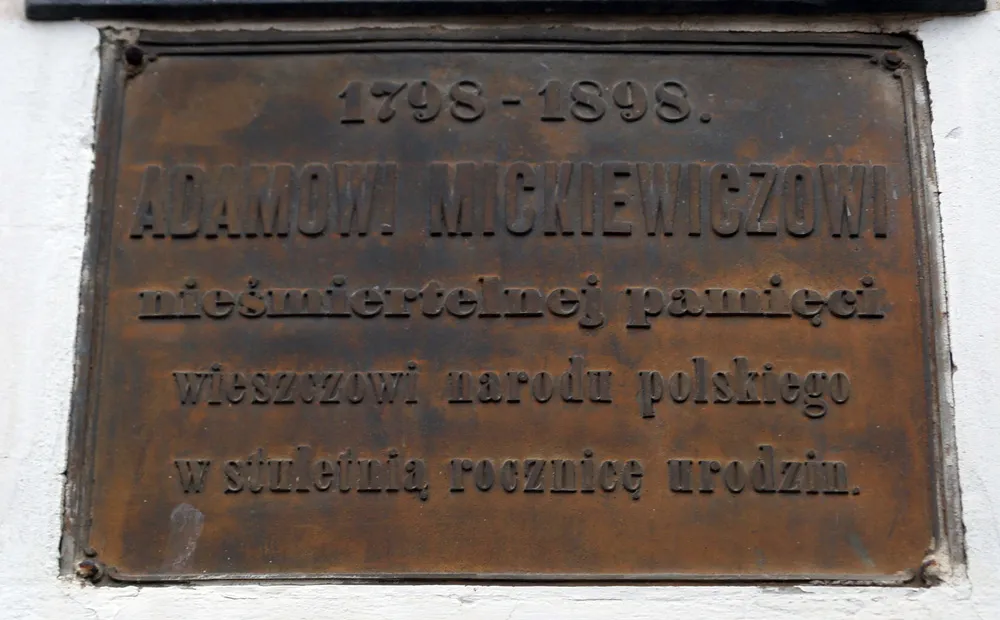
And there is no Pinzel in the church, only a plaque in honour of Mickiewicz.
Text and photos by Roman Malenkov.
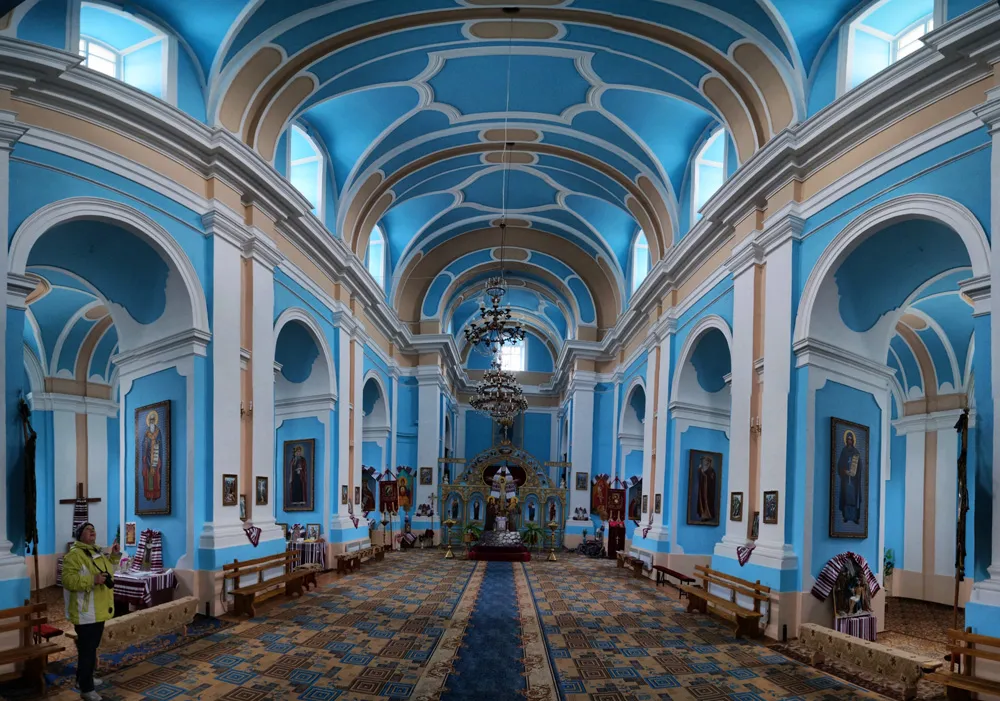
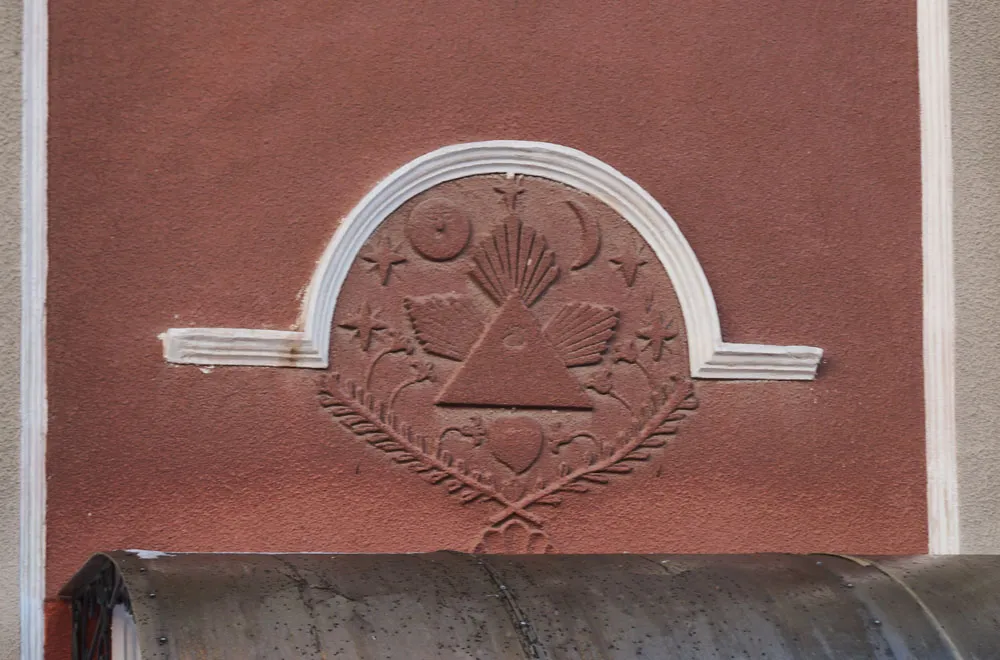
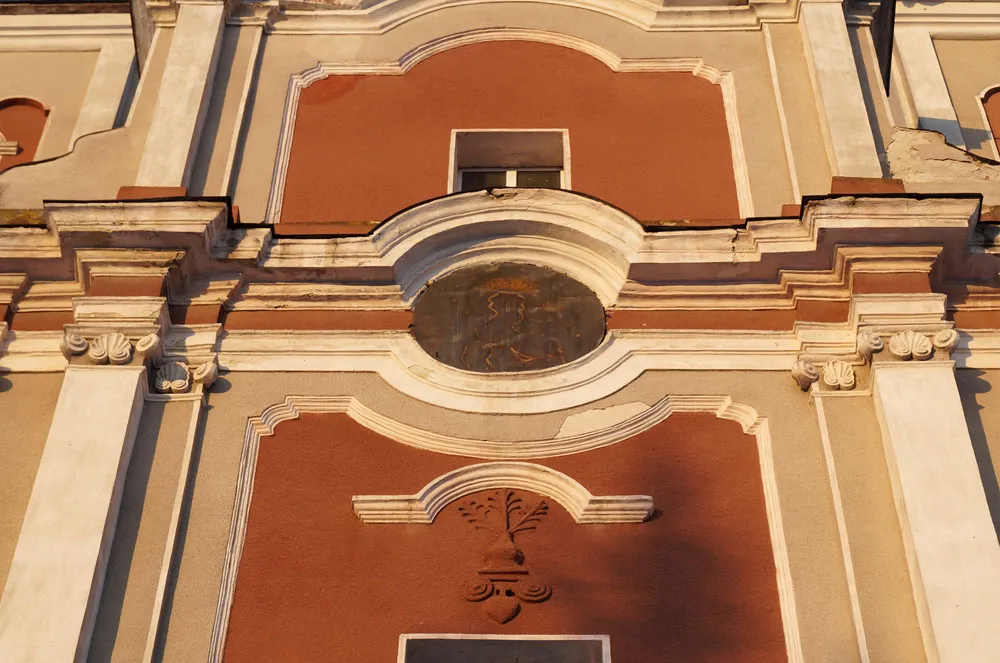
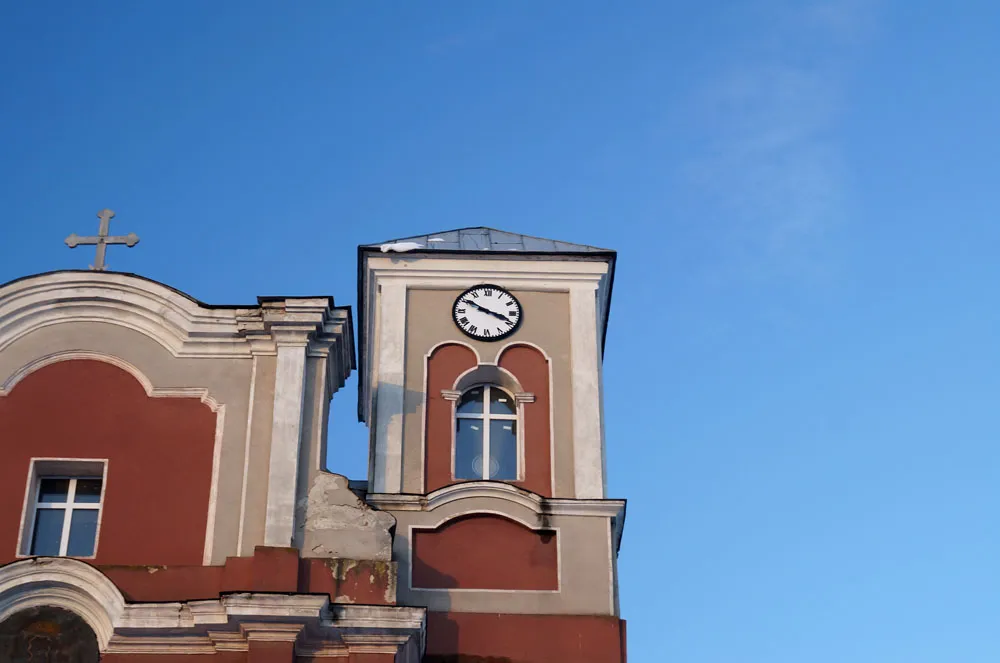
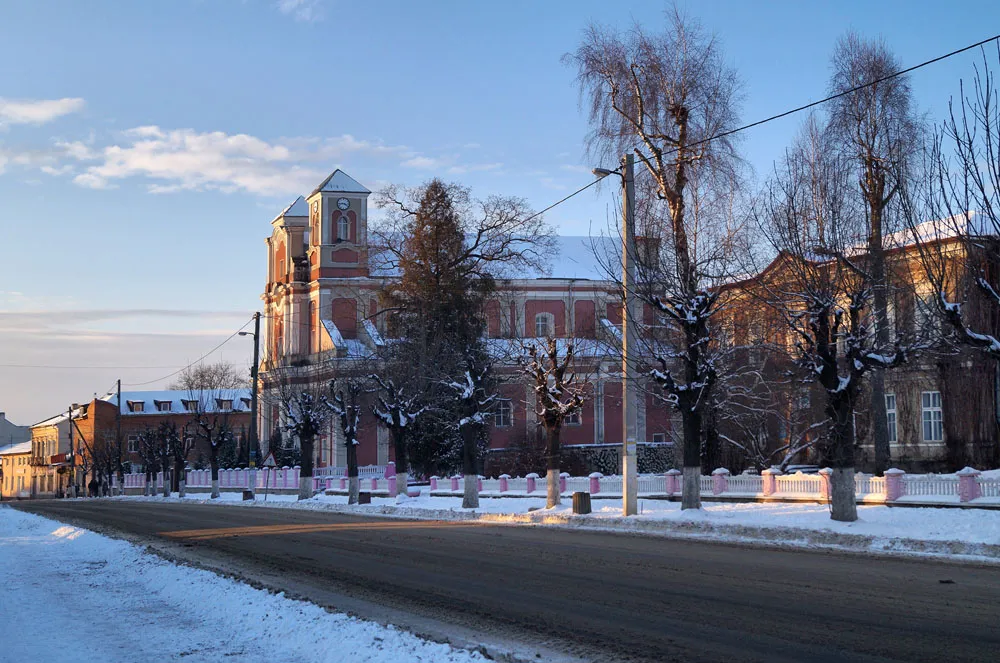
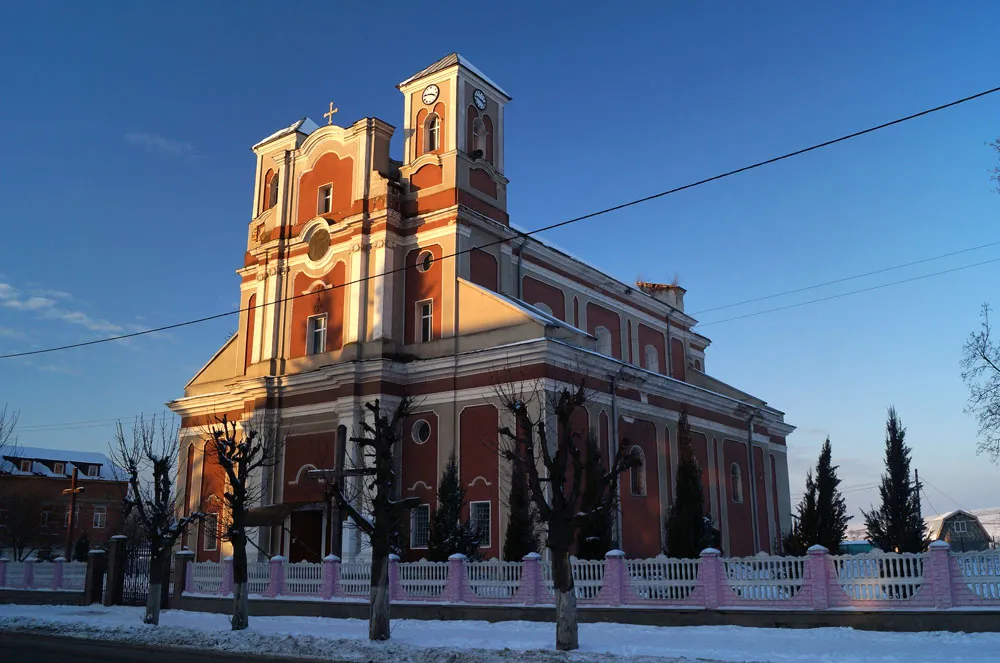
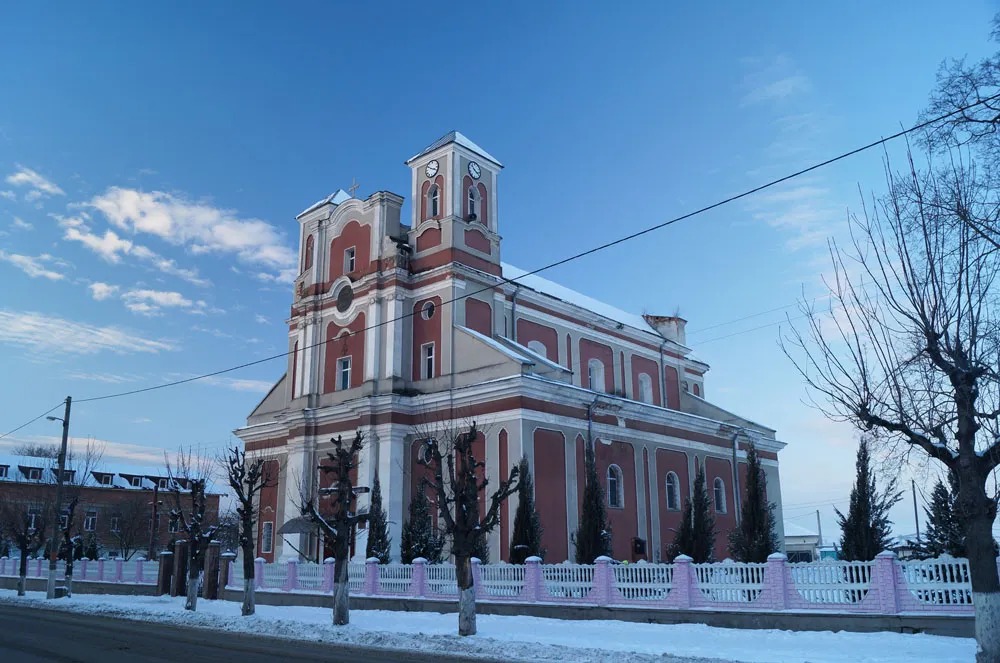
How it used to be.
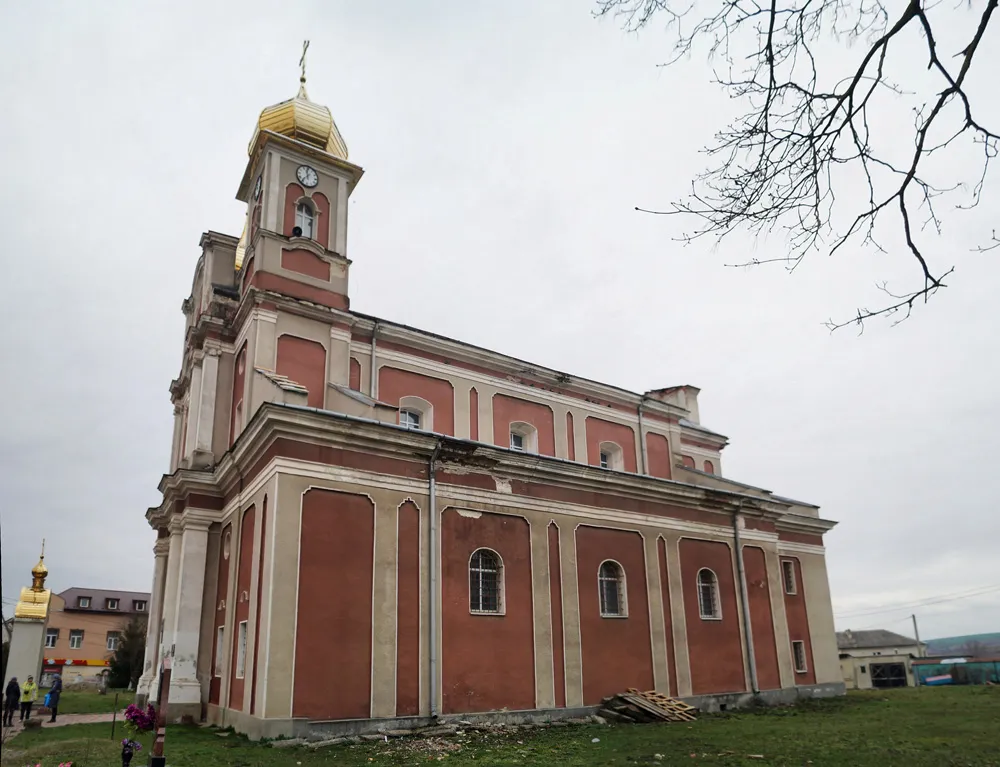
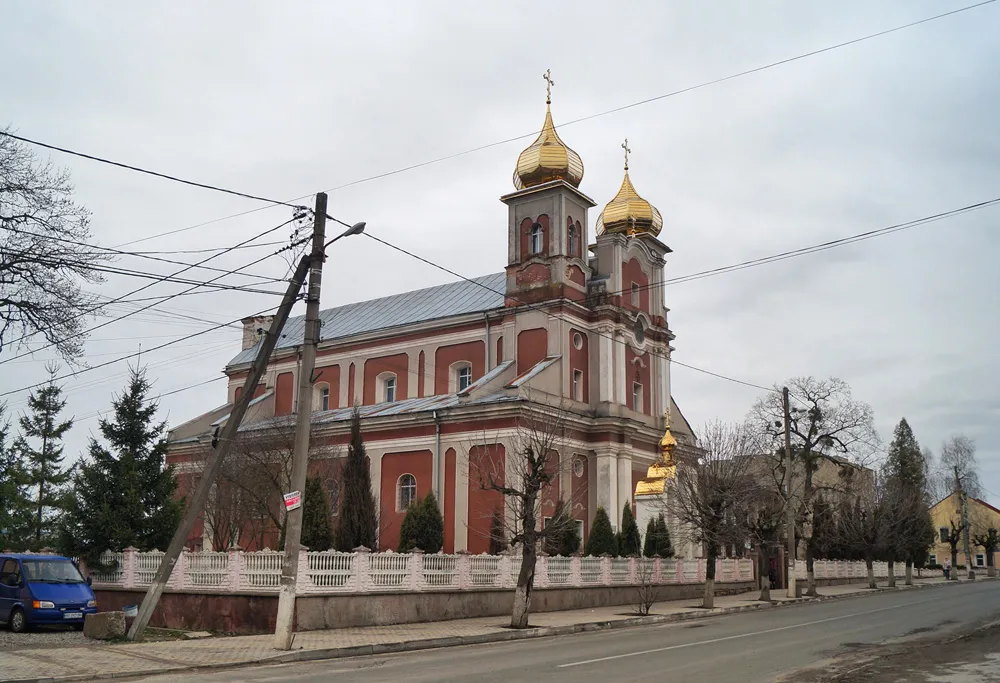
And how it is now.