Shchasnivka. The source of the Zbruch River

· 3 min read
Shchasnivka is a village in the Skorykiv village community of what was until recently the Pidvolochysk and is now the Ternopil district of Ternopil Oblast.
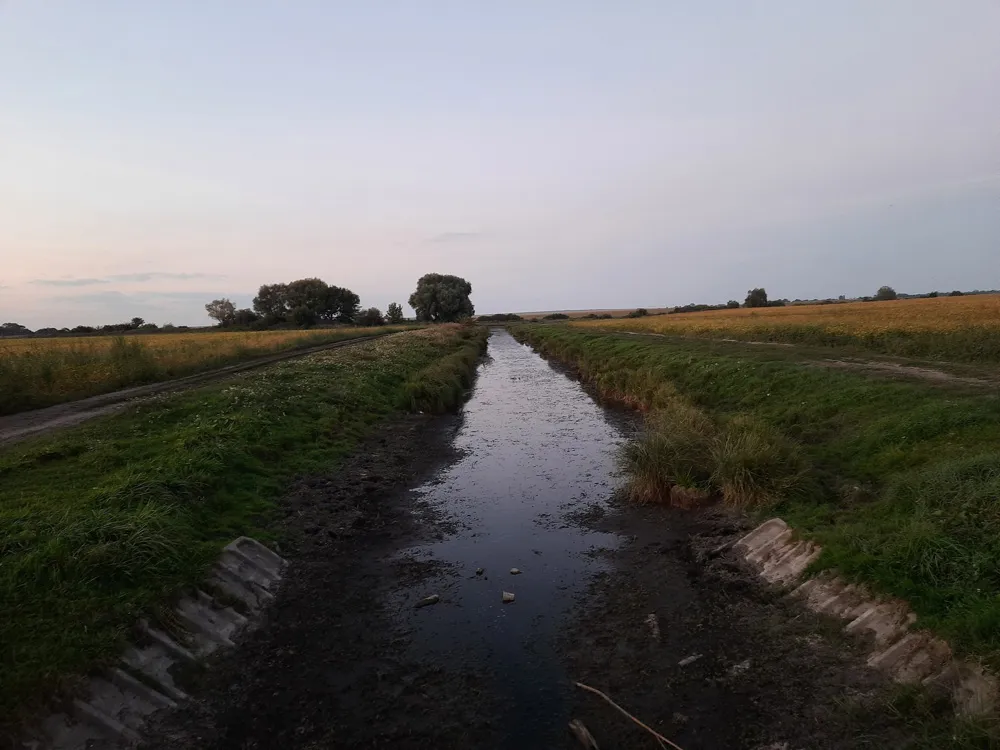
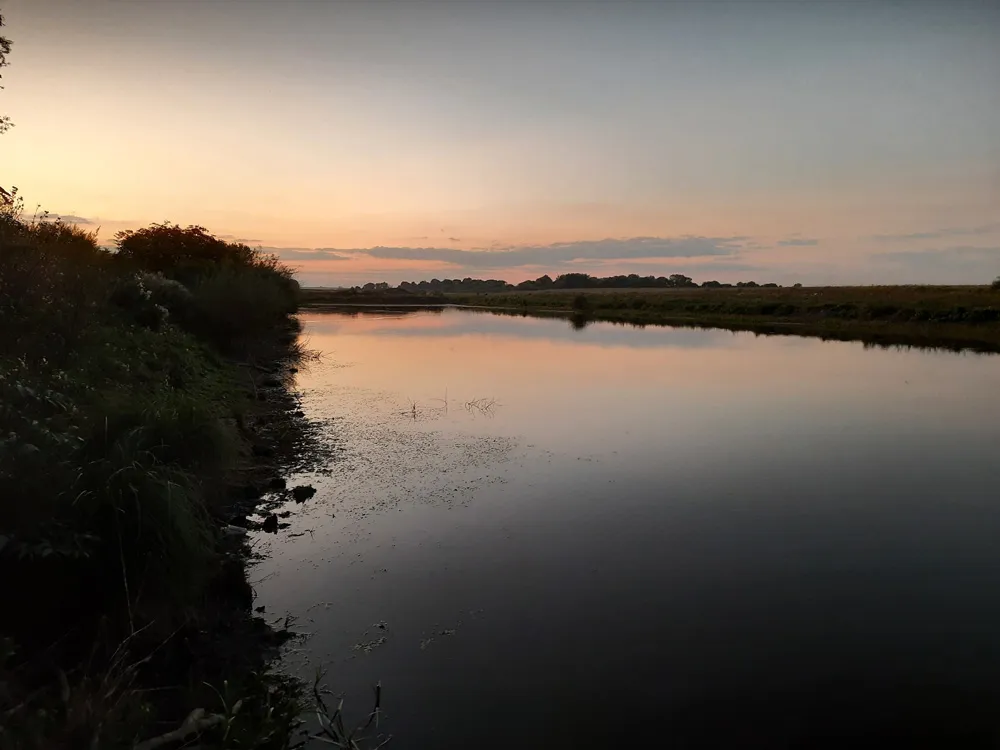
It is a tiny village with a population of a few dozen. It lies on the right bank of the Zbruch River. There are three villages with this name in Ukraine. One of them is right nearby, on the opposite bank of the river. Evidently, before the partition of Poland Shchasnivka was a single village. There is also a Shchasnivka in Chernihiv Oblast. That village is much older than ours and is mentioned in 1155 in the Hypatian Chronicle. It was allegedly named after a happy event, the signing of peace between the Polovtsians and the princely envoys, although a more acceptable version derives it from the name of a Polish owner, Shchasnyi, who settled the territory in the 17th century. Shchasnivka in Ternopil Oblast is known because the source of the Zbruch River lies closest to this village. My route to the source ran through Koshliaky. After visiting the source I planned to stop by Shchasnivka. After wandering through the fields for a while, I was lucky to meet young women riding bicycles with churns of milk. Here there is a marvel: the cows graze on the meadows around the clock, and the women only come to milk them. So the milkmaids pointed to a tiny marshy copse overgrown with bushes from which a small stream flowed. That was the source of the Zbruch. I concluded that it is better to look for the start of the river in winter or early spring, when there is not yet such lush vegetation. Meanwhile dusk had fallen and I wanted to spend the night right there, but hordes of mosquitoes drove me off to the village. It is worth noting here that the Zbruch used to be longer and was considered the largest tributary of the Dnister. The river began from springs near the hamlet of Zelena Krynytsia, or according to other data from the villages of Moskalivka and even Bilozirka. But thanks to valiant Soviet land reclamation workers, the Zbruch was shortened. Even now one can see in the fields dried-up canals, various pipes and other horrors of their land reclamation.
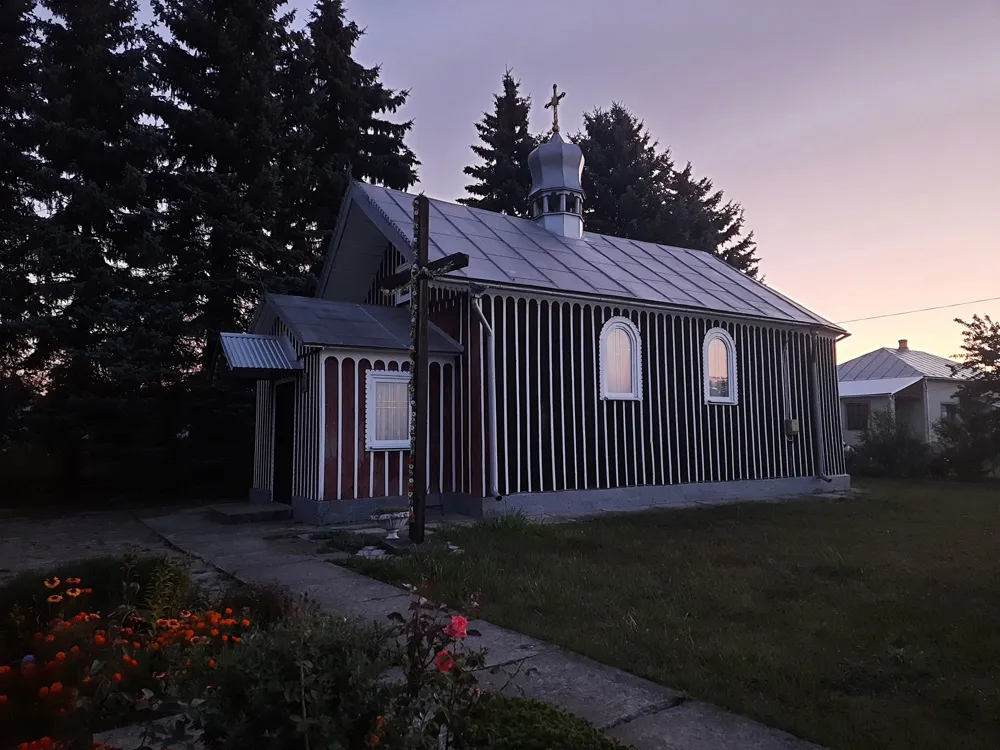
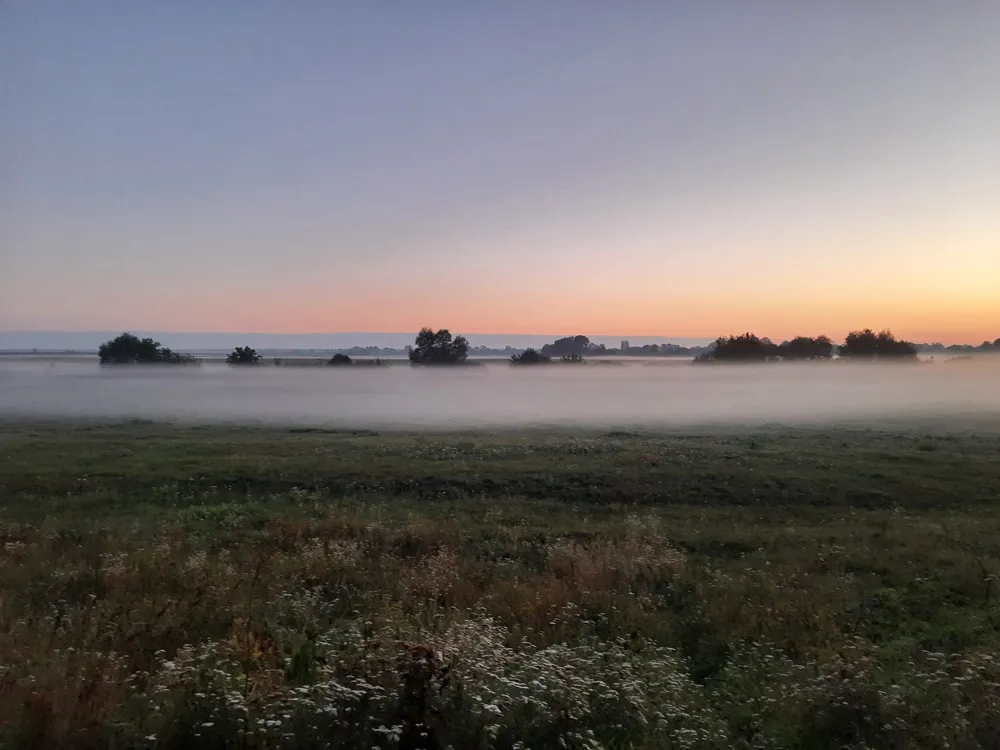
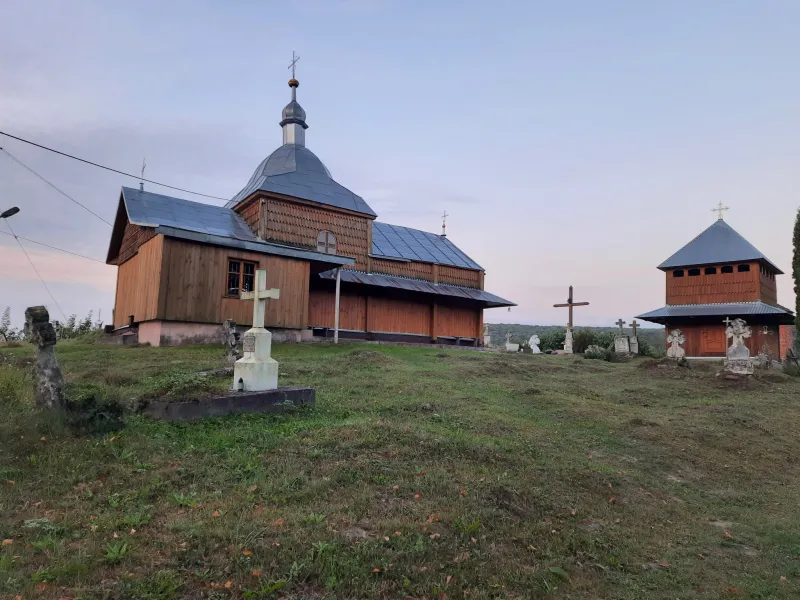
But let us return to Shchasnivka. In the village too I could not pitch my tent, this time because of the dogs, which barked frantically, and their owners came out at the racket. I spent the night beyond the village. In the morning mist I rode into the village to photograph the Church of the Nativity of the Blessed Virgin, built in 1905.
And a few more words about the village’s history. The first written mention dates from 1583, as Shchesnivka, the property of V. Zbaraski. The name probably derives from the surname Chesnovskyi (Shchesnovskyi). In the 18th century the village belonged to the Wiśniowiecki family. In 1753 a wooden church was built in the village.
Branches of Prosvita, Sich, the Union of Ukrainian Women and other Ukrainian societies were active, as was a cooperative. On 1 February 1944 a detachment of Red partisans (about 250 people) passed through the village. During the German-Soviet war, 16 men from the village were killed or went missing serving in the Red Army.
Text and photos by Petro Hrushko