

Yahilnytsia: young Bandera, churches and the gang of Mr Gander
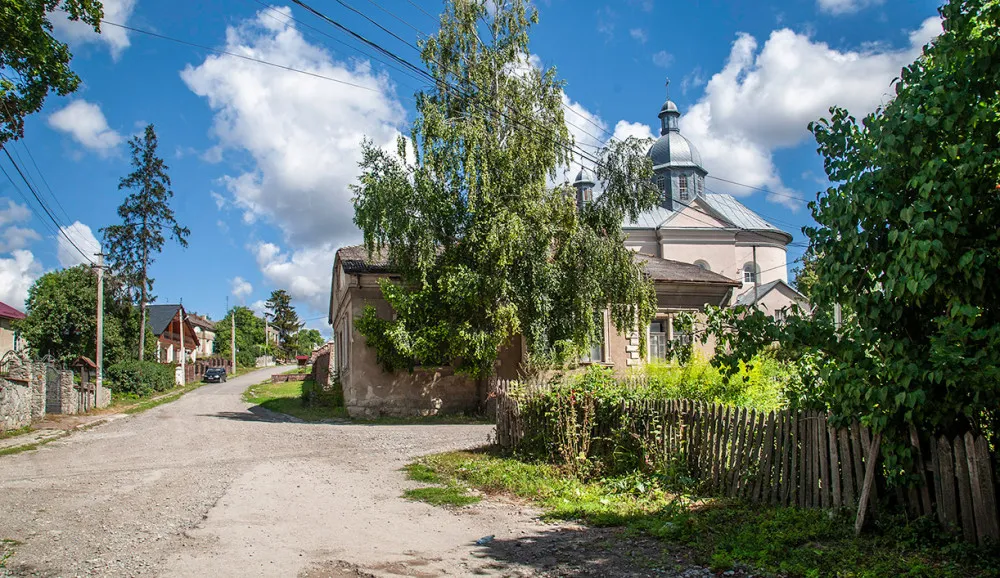
Yahilnytsia, near Chortkiv (Ternopil Oblast), is known first of all for its castle. But thanks to the peculiar policy of the “Soviets”, the castle ended up on the territory of the village of Nahirianka, which in the post-war period was separated from the town as a separate settlement. So we will leave that for another time. Today we will talk about Yahilnytsia itself. It is first of all interesting for its sacred monuments – the Baroque Roman Catholic Church of the Assumption of the Blessed Virgin Mary and the majestic brick Church of the Ascension of Jesus Christ (UGCC). The latter is rather cleverly placed on the top of a hill, which makes it look even taller and more majestic.
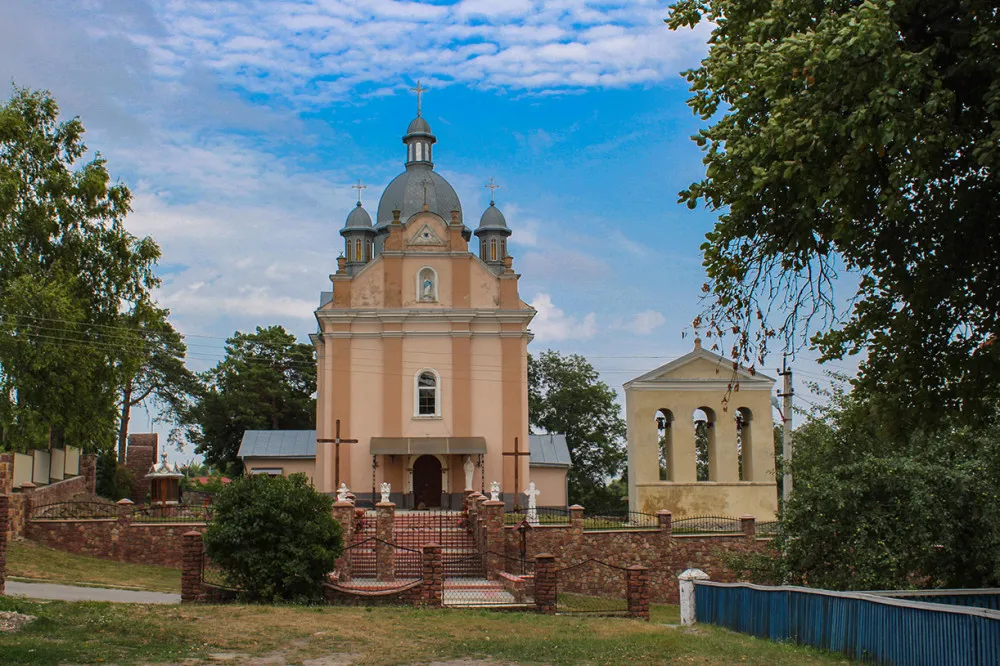
From the start (1885) the church looked more like a Roman Catholic church. In particular, it had only a large and a small dome (the latter was in fact a bell turret). After the reconstruction in 2001 the church acquired Byzantine features. The central dome was then considerably enlarged and its drum widened. At the same time two side domes were added.
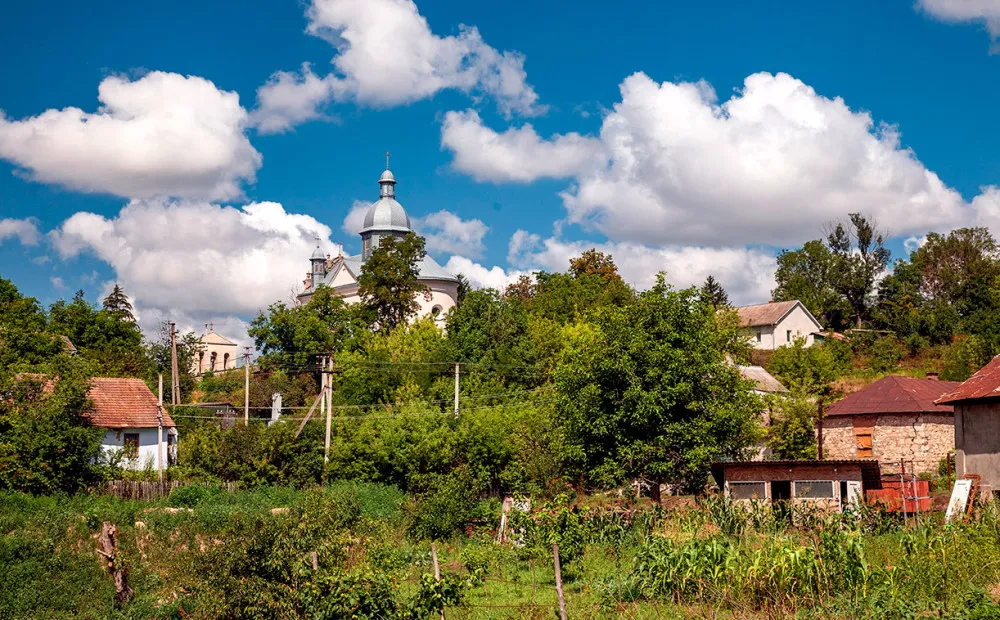
The Church of the Ascension of Jesus Christ dominates the area
Local legends explain the church’s Roman Catholic architecture by the generous donations of Countess Leontia Lanckorońska. They say the church was built in a “Western” style to please the generous Catholic countess, who in fact financed the construction.
An interesting fact: in 1912–1927 the parish priest of this church was Fr. Volodymyr Antonovych, the brother-in-law of Stepan Bandera’s father. Accordingly, when in May 1919, during the Ukrainian-Polish war, the Poles captured Stryi, Fr. Andrii Bandera, a chaplain of the Galician Army, did not think long about where to evacuate his family. To his relative in Yahilnytsia, of course.
Leaving his family in his brother-in-law’s care, Fr. Andrii immediately left for the front, to his 5th Regiment of the 3rd Brigade of the 2nd Corps of the UHA. In the summer of 1919 the fiercest battles of the famous “Chortkiv Offensive” – the UHA’s largest offensive operation against the Poles – took place near Yahilnytsia. Then about 25,000 poorly armed Ukrainian soldiers forced a 40,000-strong Polish army, armed to the teeth and reinforced by the French, to retreat along the entire front line. Only the UHA’s lack of material and technical supplies saved the enemy from defeat.
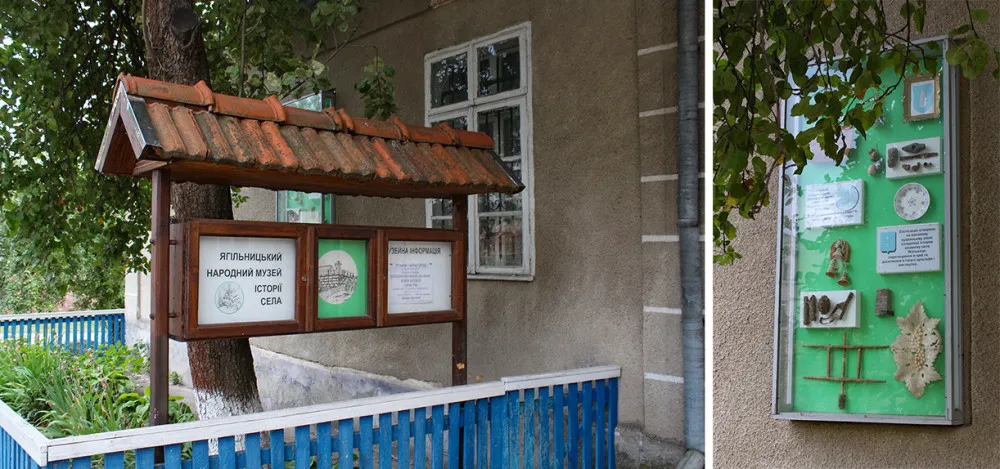
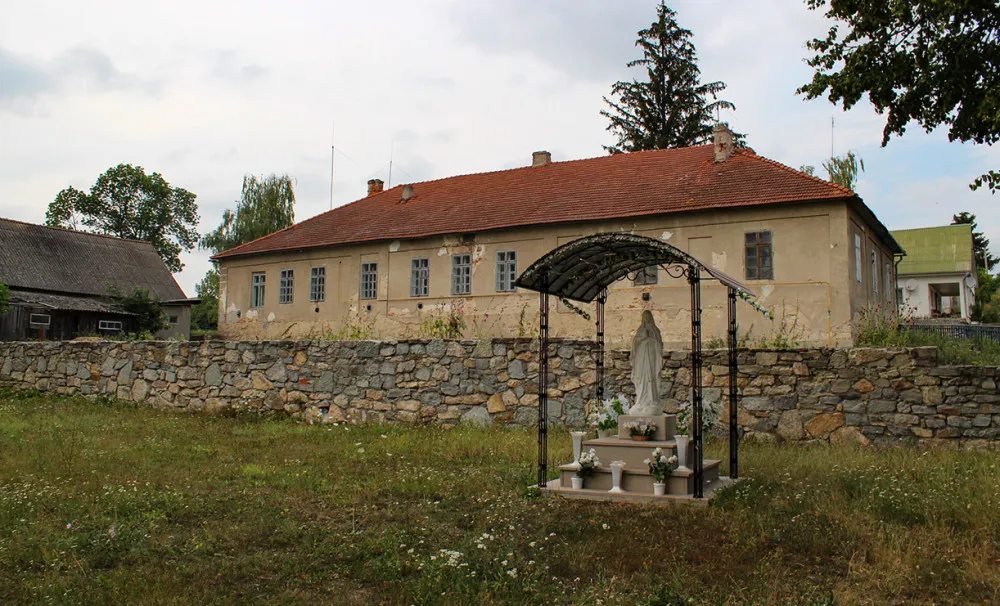
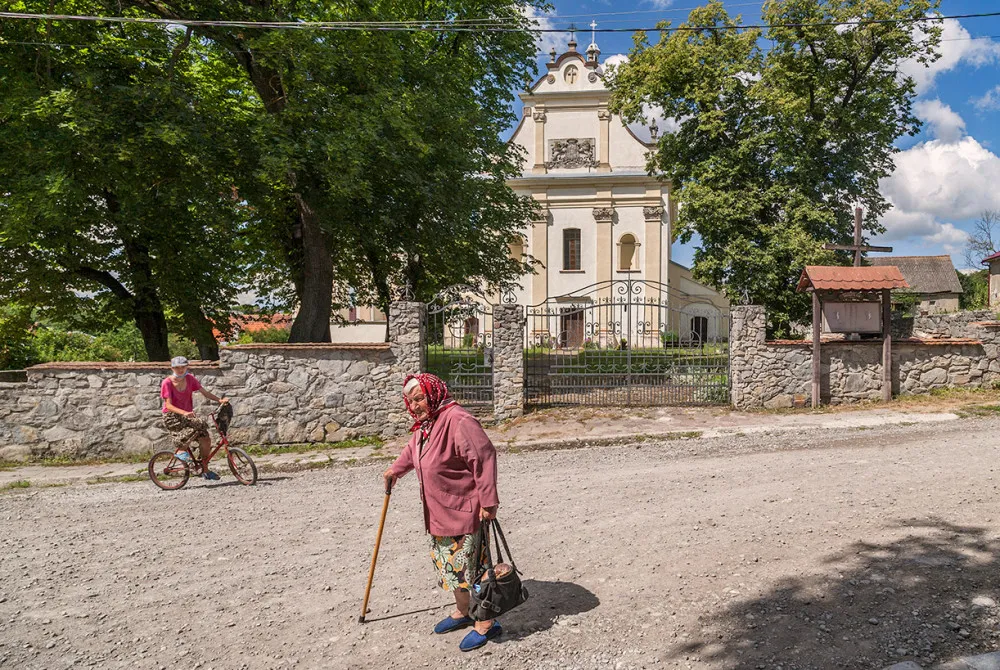
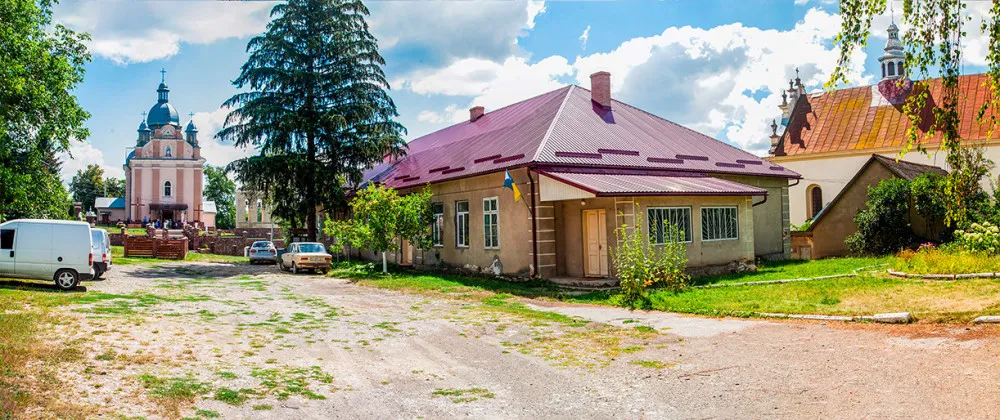
In front of the Church of the Ascension, a long one-storey building catches the eye, housing the local museum and the village council. Its façade has been modernised, but from the rear it is just as it was under His Majesty the Most Serene Emperor Franz Joseph. The Bandera family’s story is also connected with this building.
When Stepan Bandera’s mother died of consumption in 1922, Fr. Andrii was left a widower with seven children. His daughters Volodymyra and Oksana needed a woman’s upbringing. Oksana settled with their aunt Liudmyla. Volodymyra was taken in by another aunt, Kateryna Antonovych. She lived with the Antonovych family in Yahilnytsia for almost five years. During this time the girl studied at the local Stanisław Konarski school – whose former premises are now shared by the village council and the museum.
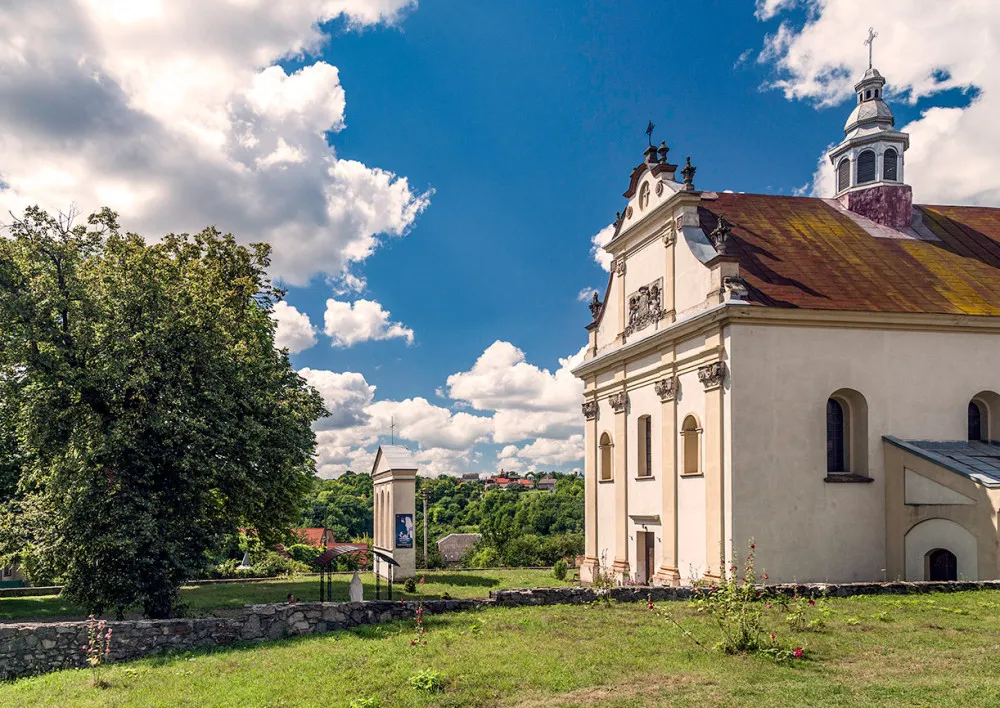
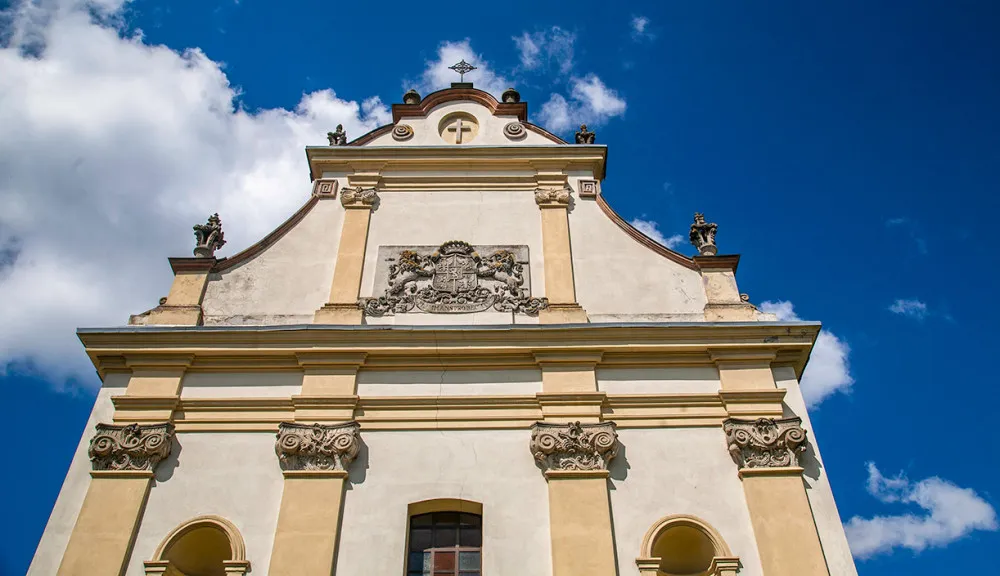
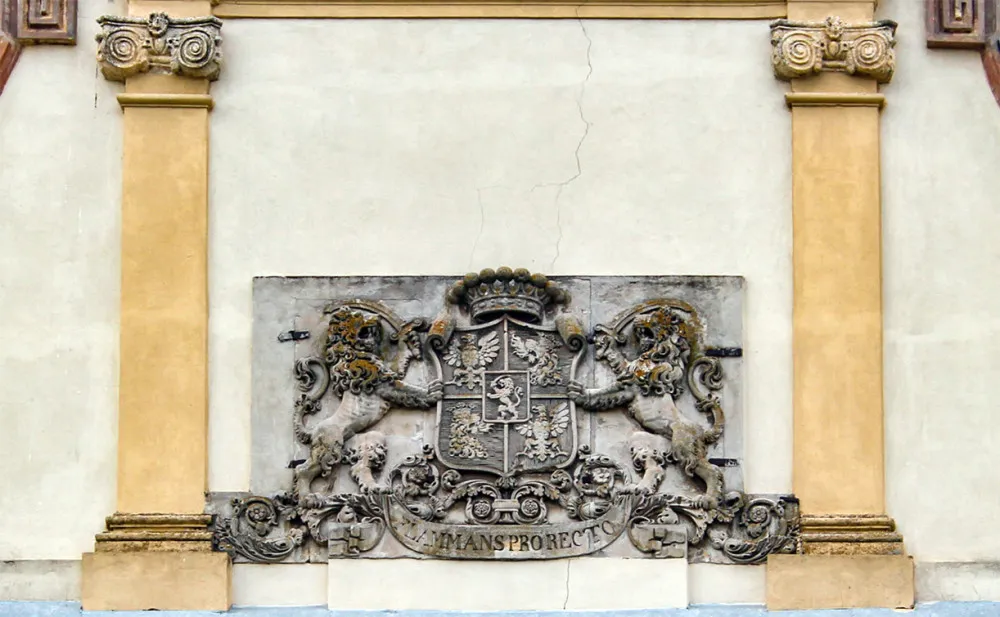
Next to the former school stands the Church of the Assumption. It is believed to have been consecrated in 1842, but it is possible that the church appeared as early as the end of the 18th century. The façade is decorated with a gigantic Zadora coat of arms (the count’s version) that belonged to the Lanckoroński family. It is perhaps the largest “church” coat of arms in Ukraine.
After the Second World War the church’s fate was a typical one – it was turned into a warehouse. At least it stored consumer goods rather than poison chemicals or some other filth. Afterwards a gym was set up there. Only after Ukraine gained independence was the neglected church returned to the faithful. Thanks to the foundation of Karolina Lanckorońska, the church was repaired. Today it is looked after by Dominican fathers from Chortkiv.
During the author’s very first visit to Yahilnytsia, one of the most unforgettable encounters took place near the church.
While the researcher with his cameras jumped, crawled and scrambled on all fours around the church (it is not easy to choose a good angle), he soon noticed that he was not alone. A hoofed-and-feathered gang followed him all the time and stared in surprise: “What is this stranger doing here, and why is he behaving so strangely?”
So we walked in circles around the church. The author took photos, and they gave moral support.
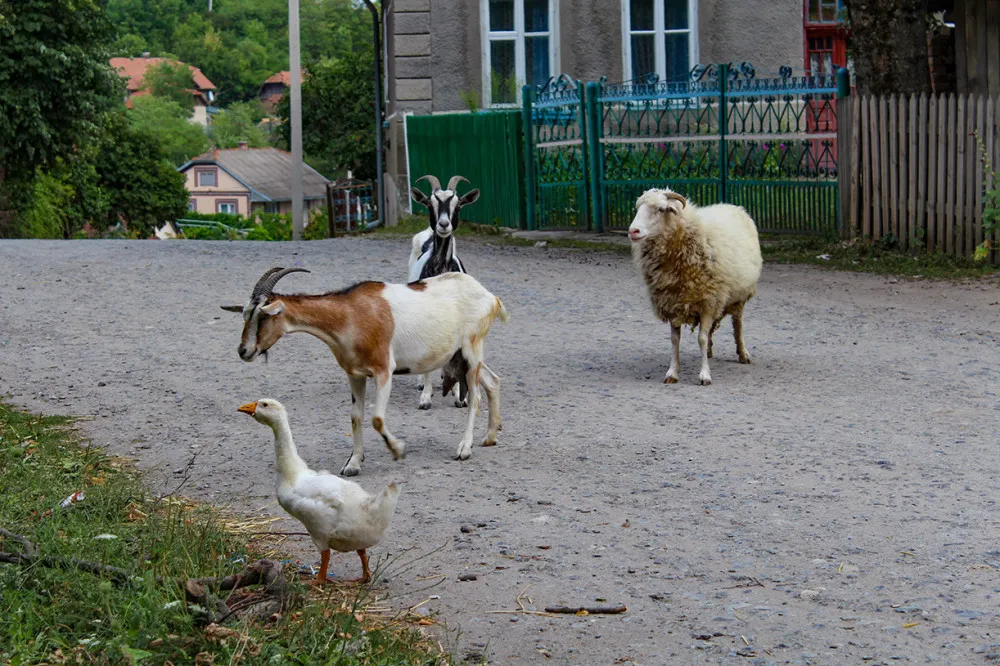
As it turned out, their chieftain was Mr Gander. When he made sure the newcomer had no treats in his pockets, he honked loudly and waddled off somewhere down the street. The four-legged retinue obediently moved after him…
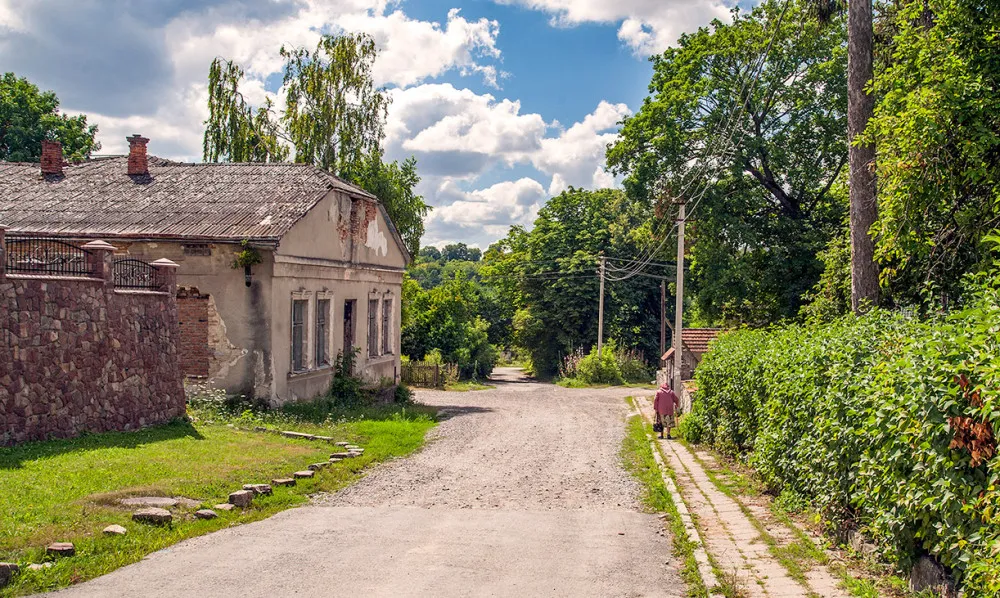
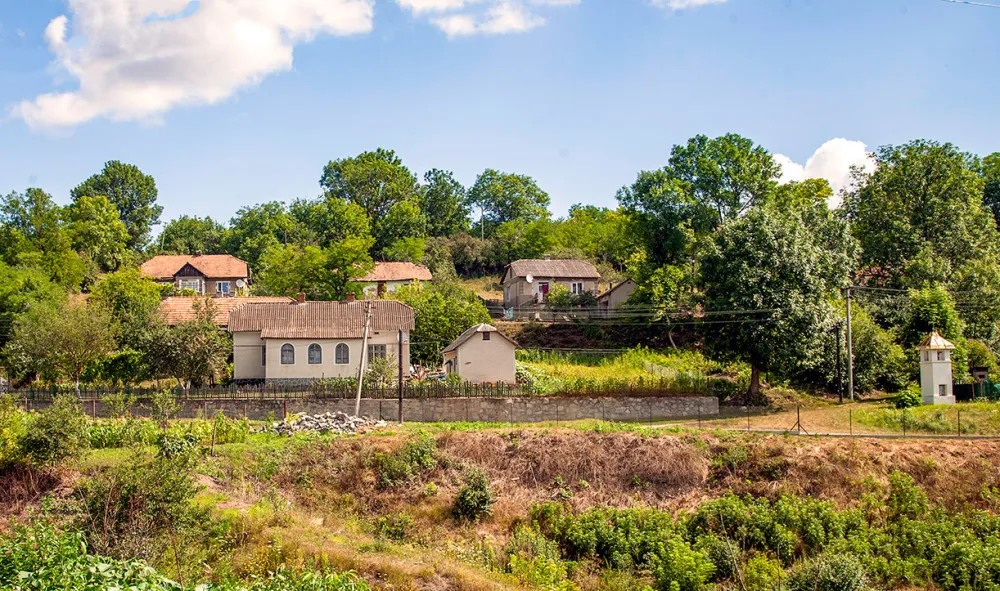
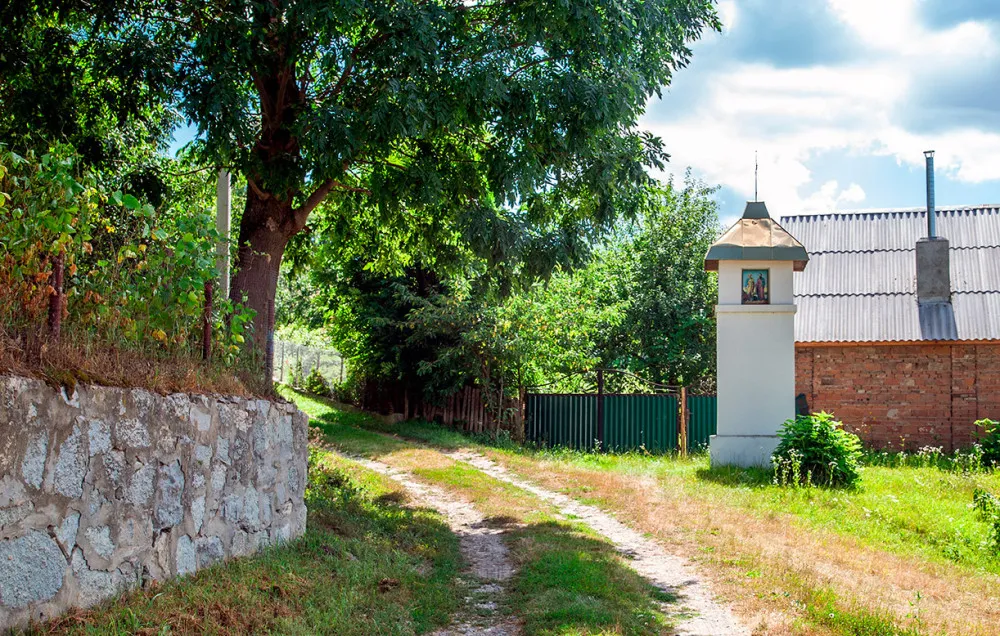
If you walk down the street leading deeper into the valley (do not turn left but go straight on from the church gates), you can find a rather interesting sacred building about which none of the guidebooks says a word. It is a small pillar chapel. From the valley there is also a beautiful view of the castle, the Church of the Ascension and the village itself. The houses with tiled roofs seem not to have changed since the time when little Stepanko Bandera ran along these streets.
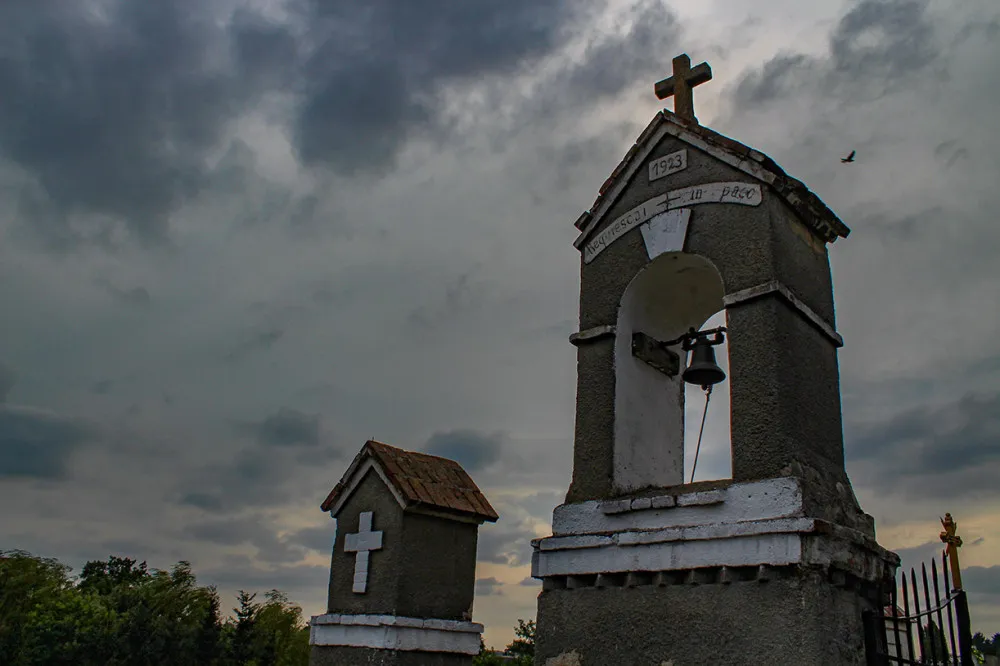
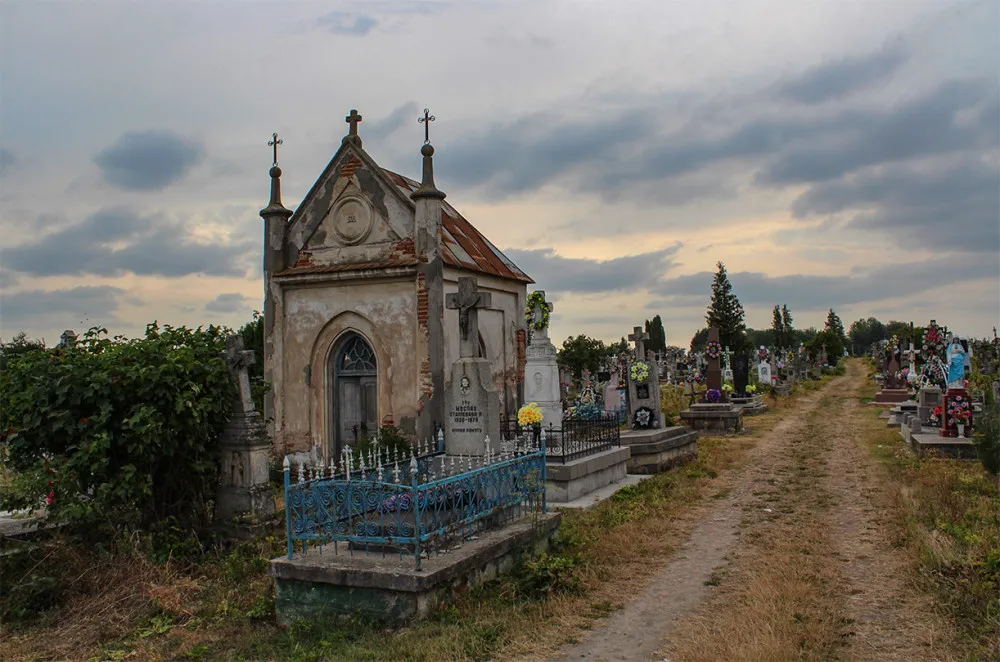
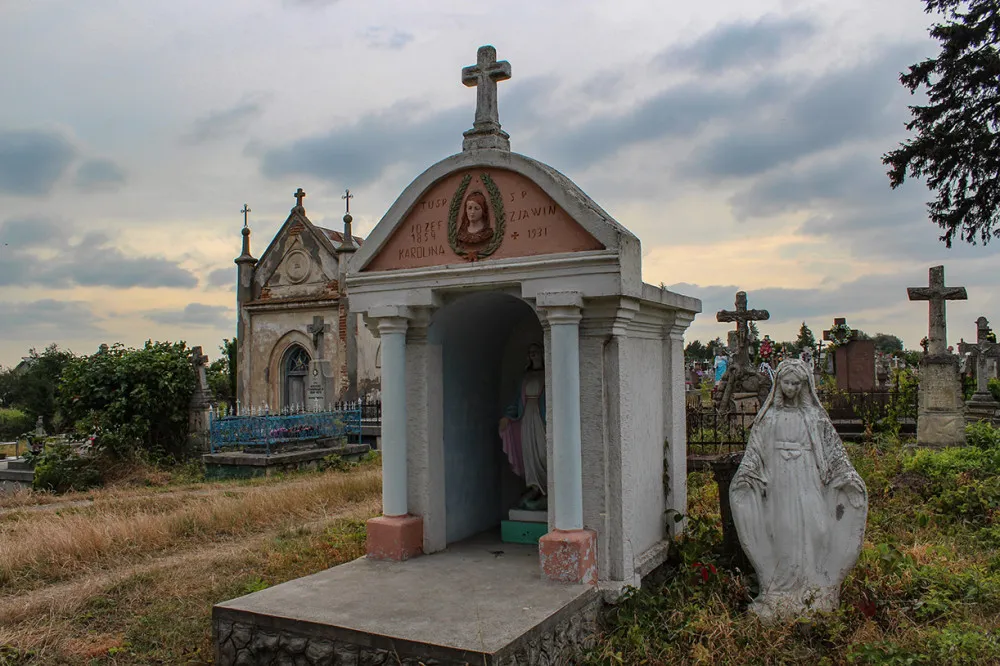
The old cemetery is quite interesting – it is right by the highway, so it is impossible to miss. A miniature Neo-Gothic chapel draws attention. A touching inscription has survived in it: “Grobowiec dwoch przyjaciół Ferdynanda Münzera i Jana Kościelnego w roku 1905” (“The tomb of two friends…”). Family tombs are common, but here is a mausoleum of two friends. That was friendship – together even after death! It would be interesting to learn their story. It is quite likely that they died at the same time in some accident.
Another interesting one is a gravestone with a figure of Jesus carrying the cross. On the monument we see a portrait of some respectable gentleman in a military uniform with crosses and medals. This is the grave of Yahilnytsia police commissioner Anton Svidzinskyi (1870–1935).
They say that somewhere near the Christian cemetery there are remains of a Jewish cemetery (kirkut), destroyed by the Germans and finished off by the Communists, in which a few interesting gravestones have even survived, but the author has not looked for it yet. It will be worth a look when the chance arises.


