Beech primeval forests of the Carpathians. UNESCO

· 5 min read
Once I happened to hear a story told by an old forester in Rakhiv district of Zakarpattia Oblast. He spoke of a Swiss (or German, or Austrian) delegation that, a very long time ago, perhaps still under the emperor, was a guest in the incredible beech forests, in the hunting grounds of Czech (or Hungarian) lords. One of the delegates made an entry in his diary about the untouched ancient primeval forest, and this entry was noticed 80 years later. A new delegation came in the 1990s to the same area described in the diary and was amazed – the primeval forests had survived because they stood in hard-to-reach terrain and were inconvenient to fell and haul out. You will see, the forester said then, the Swiss will make a nature reserve here.
The forester proved a true prophet – the beech primeval forests of the Carpathians were inscribed on the UNESCO World Heritage List in 2007. At that time the site was located in Ukraine (70%, six massifs) and Slovakia (4 massifs). Then the property was extended twice (in 2011 and 2017) and is now located in 12 countries (Austria, Albania, Belgium, Bulgaria, Spain, Italy, Germany, Romania, Slovakia, Slovenia, Croatia and Ukraine) – wherever there are valuable pockets of old beech forest. The official modern name of the site is Ancient and Primeval Beech Forests of the Carpathians and Other Regions of Europe.
UNESCO criteria.
Criterion (ix). The site is of outstanding universal value as an example of untouched natural complexes of the temperate zone. It contains the gene pool of the European beech and demonstrates a unique natural model of the processes by which beech forest develops in diverse natural and climatic conditions.
What is a primeval forest?
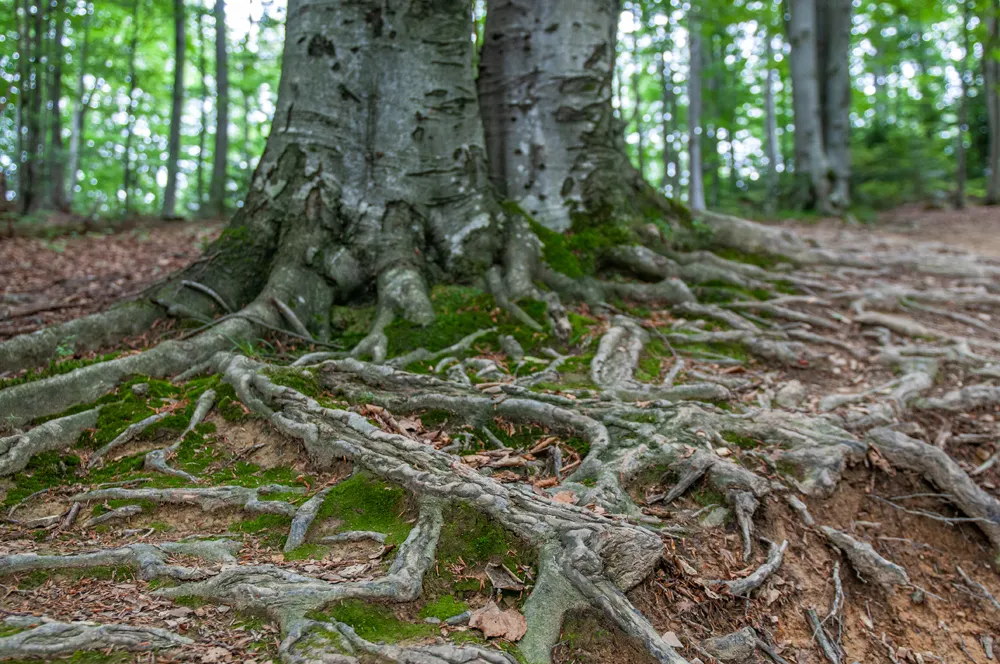
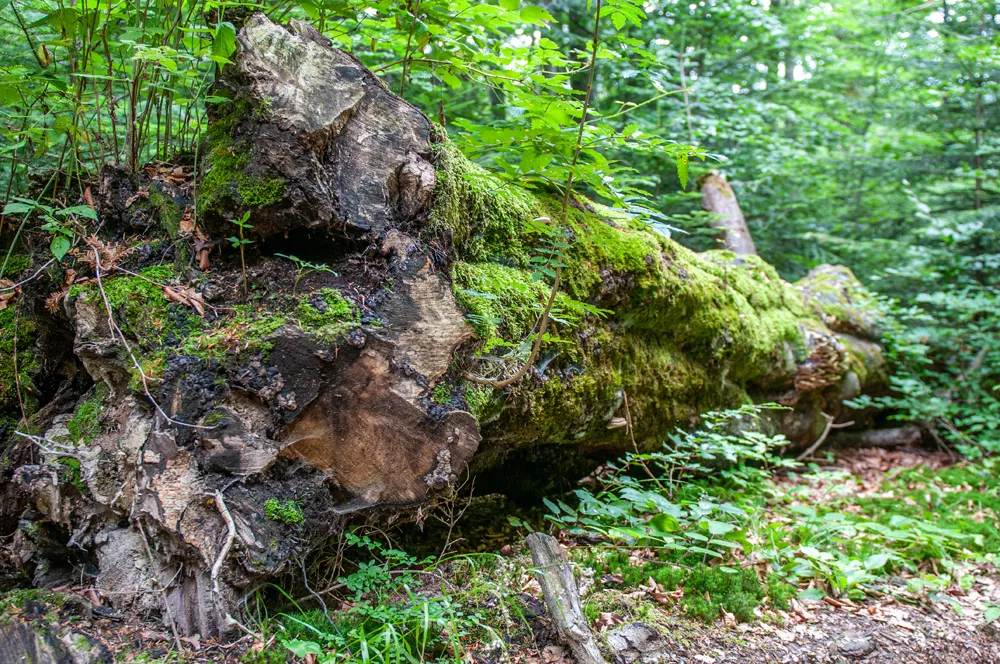
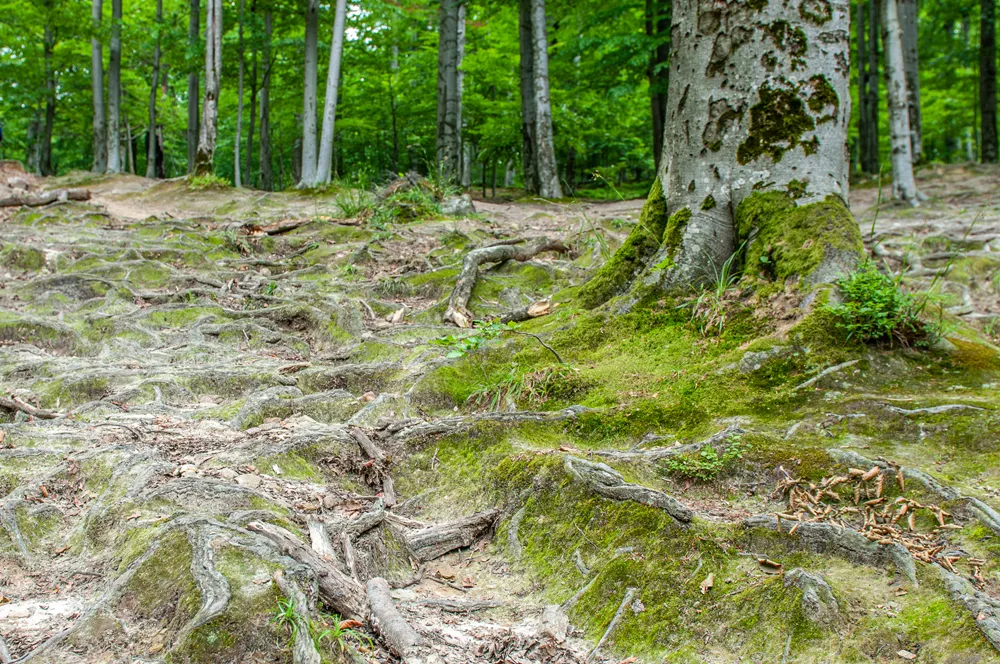
A gloomy forest with huge ancient trees, a great many fallen trunks bristling with undergrowth, and dead standing wood that creaks and groans in the wind – a forest as if from a fairy tale and, above all, with almost no traces of human activity – that is a primeval forest. In scientific language, a primeval forest is an overmature forest, or a part of one, that has a great age since its origin and unique biological features. Such forests have many layers of vegetation that has not experienced human impact for a long time.
Beech forests are among the most widespread in Europe, but also among the most vulnerable, for since ancient times they have suffered the heaviest felling because of the value of their timber. It so happened that old beech forests have almost disappeared in Europe, so the primeval forests of the Carpathians became, in their time, nearly a discovery for European scientists. Forests that had not undergone any noticeable human impact for hundreds of years, because they were used as hunting grounds, became the benchmark of beech primeval forests and the best-preserved gene pool of the European beech, and that is why they were recognized as a UNESCO World Heritage site.
In 2007 the newly created site Beech Primeval Forests of the Carpathians was located in Ukraine and Slovakia over an area of 77,971.6 hectares. Ten unique massifs stretched from the Marmarosh massif and the Chornohora ridge, along the Polonyna ridge to the west, to the Slovak Vihorlat massif. Five protected primeval-forest massifs (Chornohora, Uholka-Shyrokyi Luh, Marmarosh, Svydovets and Kuziy-Trybushany) lie within the Carpathian Biosphere Reserve, and the Stuzhytsia-Uzhok massif lies in the Uzh National Nature Park. The largest of all the primeval-forest massifs is Uholka-Shyrokyi Luh.
Thanks to the beautiful Hoverla – the highest mountain in Ukraine – and seven other mountains exceeding 2 thousand metres, the best known and most visited by tourists is the Chornohora ridge. At least as interesting, but far less accessible, is the Marmarosh massif – a spur of the great mountain range, whose highest peaks jut up somewhere in Romania, while we have the incredible Pip Ivan Marmaroskyi, 1,936 m high. For its picturesque, pointed, rocky summits the Marmarosh massif is called the “Hutsul Alps”. The shortest route to the most picturesque Ukrainian mountains runs from the village of Dilove, but even that takes two days – without an overnight stay, reaching Pip Ivan on foot is very hard. One can, of course, use an off-road vehicle, but the road is very difficult and even dangerous.
The Svydovets ridge is also quite interesting to tourists. Its greatest height is 1,883 m, but getting here is not difficult, since on one side it is a gentle slope with a relatively easy ascent. Svydovets impresses with its glacial cirques and lakes.
In 2011 the transboundary natural site “Beech Forests of the Carpathians” was extended – five old beech massifs in Germany were added to it. Six years later a large-scale extension of the site took place – protected primeval forests in nine countries were added. In addition, Ukraine’s representation was expanded – four massifs from the Synevyr National Nature Park (Darvaika, Kvasovets, Strymba, Vilshany), two massifs in the Zacharovanyi Krai National Nature Park (Irshavka, Velykyi Dil) were added, as well as sites outside the Carpathians – the Roztochchia National Nature Park (this is in the Lviv region) and the Satanivska Dacha forest reserve.
The site called “Beech Primeval Forests of the Carpathians and Other Regions of Europe” is the only natural site in Ukraine on the UNESCO World Heritage List. Perhaps, some day, it will be joined by the Askania-Nova Biosphere Reserve, which is currently on the Tentative List (the list of candidates).
Text by Roman Malenkov, photos by Serhii Shcherbii. From the book “World Heritage in Ukraine”