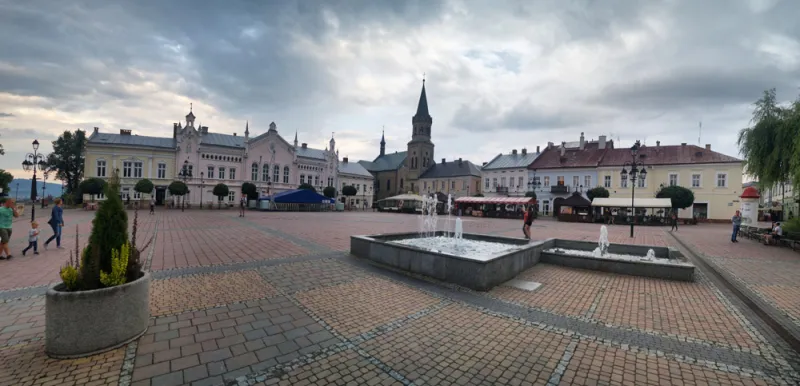
Priashiv Prešov. The former centre of a Ukrainian ethnic region

· 8 min read
We travelled to Priashiv from Stará Ľubovňa. By Slovak standards the way to Priashiv from there is not short, especially when you do not know where to buy a vignette for the motorway, and drive through villages and mountains, on such serpentines that your head spins. True, on the way to Priashiv we saw quite a lot of other interesting things: the beautiful town of Kežmarok, and the even prettier, UNESCO-listed fairy-tale little town of Levoča, completely surrounded by defensive walls, moats and towers. And then, high in the mountains, already in the dark, we met a huge combine harvester, which presumably is also not allowed onto the motorway.
At night, like hunted horses, we drove into the narrow streets of Priashiv’s town centre, barely found the hotel and fell asleep exhausted. In order to see in the morning, from the window, a wonderful view of old tiled roofs and a church on a hill above the town: the Calvary.
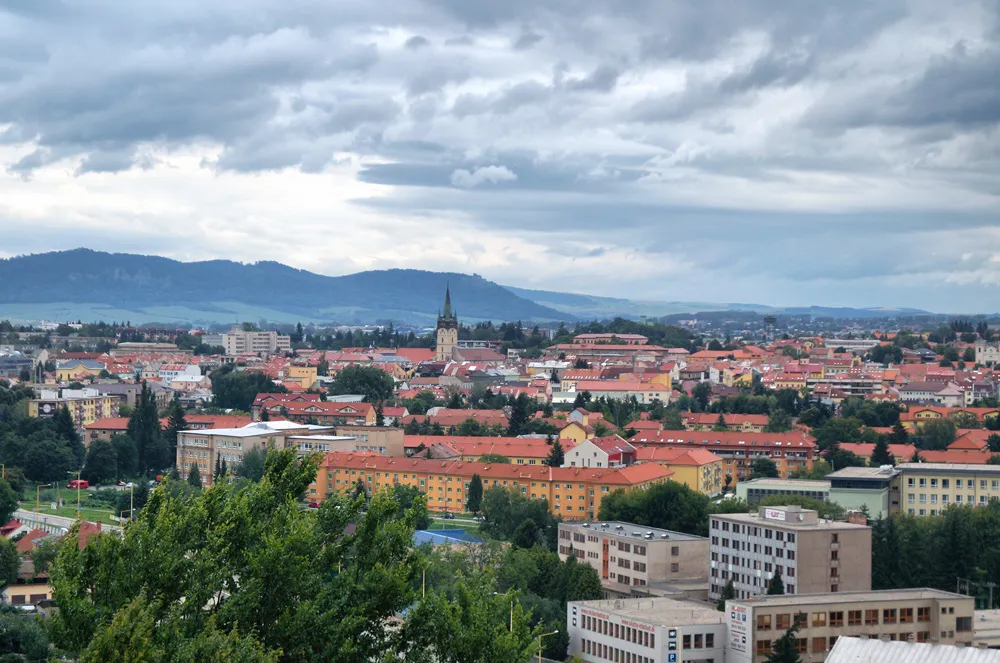
The capital of the region, Priashiv Prešov, lies outside the Ukrainian ethnic lands, but I cannot fail to mention it, because many Ukrainian administrative institutions, educational and cultural events were located here, and there have been many Ukrainians here since long ago and still are. According to the 2020 statistics, approximately a thousand Ukrainians and a thousand Rusyns live in Priashiv, but Greek Catholics and Orthodox together number over nine thousand, out of a total population of 88 thousand. So every tenth person is either a Ukrainian or of Ukrainian descent (Greek Catholic or Orthodox). Let me remind you once more that the official faith of the Slovaks is Roman Catholicism.
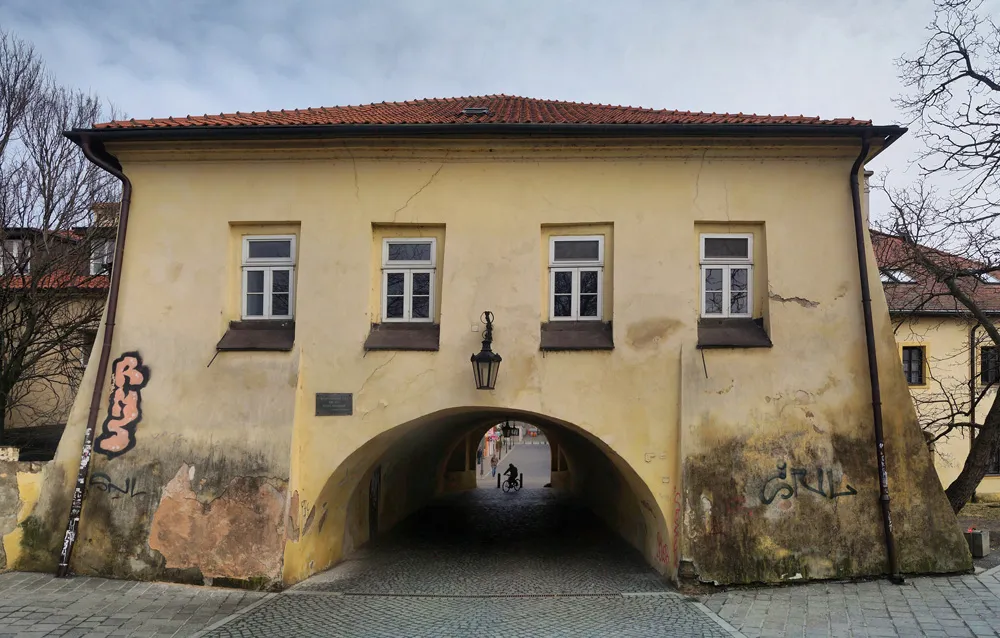
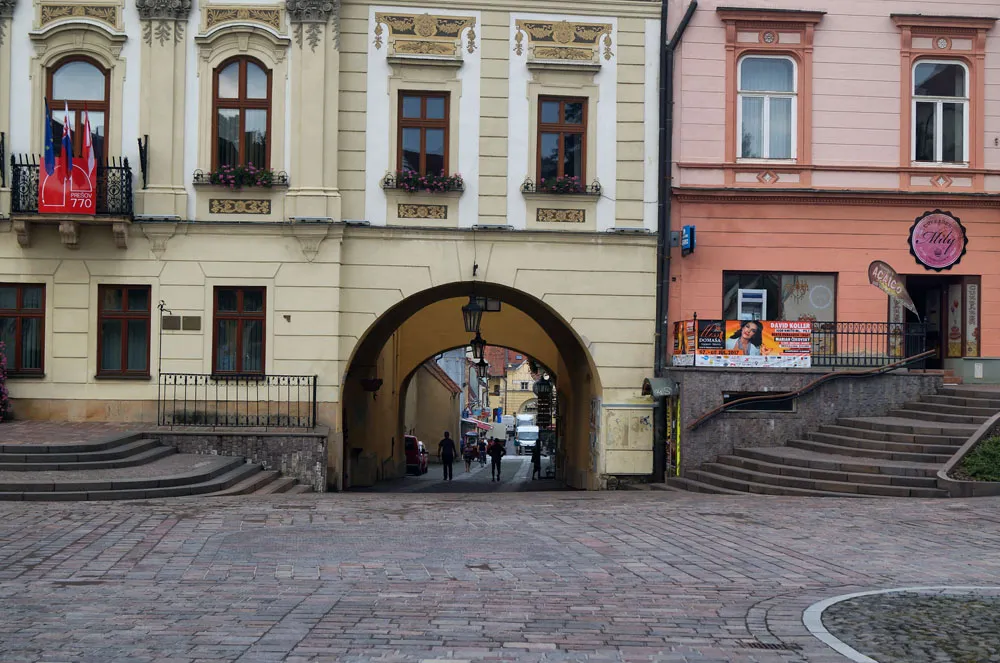
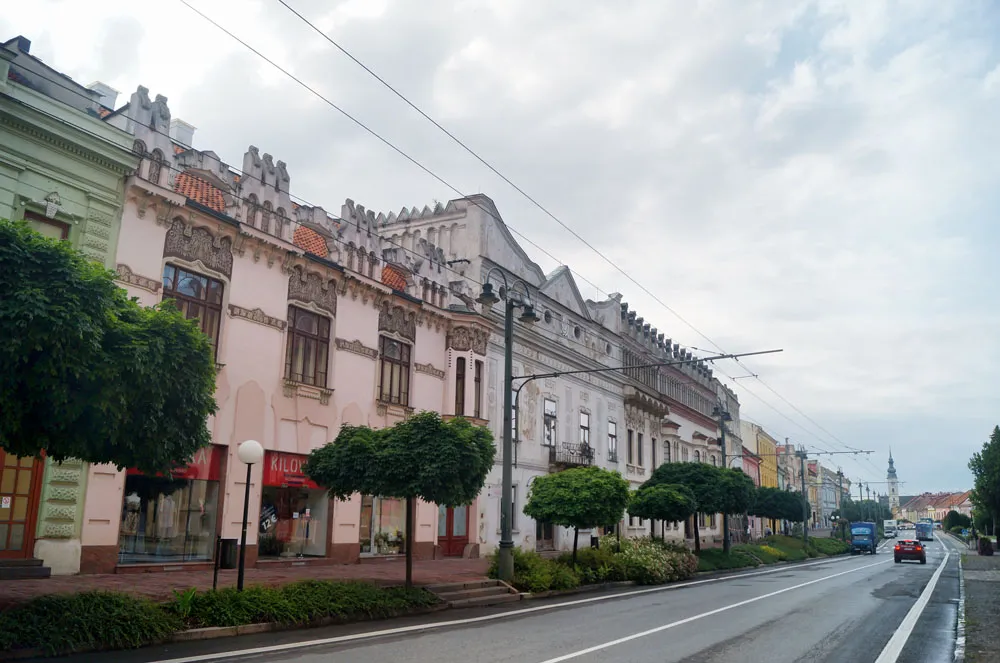
I will say right away that I like Priashiv (Prešov in Slovak) very much. I have been to this town many times already, and would not mind dropping in again. First of all I like the old historic centre, which was once completely surrounded by walls and has preserved its colourful entrance gates. The old town (the old part of the city, in the Polish manner) of Priashiv is absolutely unlike Polish towns, since the law here was not Magdeburg but Saxon law (also called Hungarian), so the town plan was not rectangular (a grid) but followed the shape of a fish, which the central street had: it widened in the central part and narrowed towards the edges. Under Saxon law the main part of the town was occupied by the cathedral, next to which very often stood the town hall (radnica).
The heart of Priashiv is the Roman Catholic Gothic cathedral of St. Nicholas (Mikulaš in Slovak). Its construction began as early as the 13th century, though the main building work took place in the middle of the 14th century and at the beginning of the 16th. The church was built by the Hungarians, who held the region at that time, and by the Germans, who made up the main part of the town community. The church is 55 metres long and 34 metres wide, and the bell tower is 60 metres high.
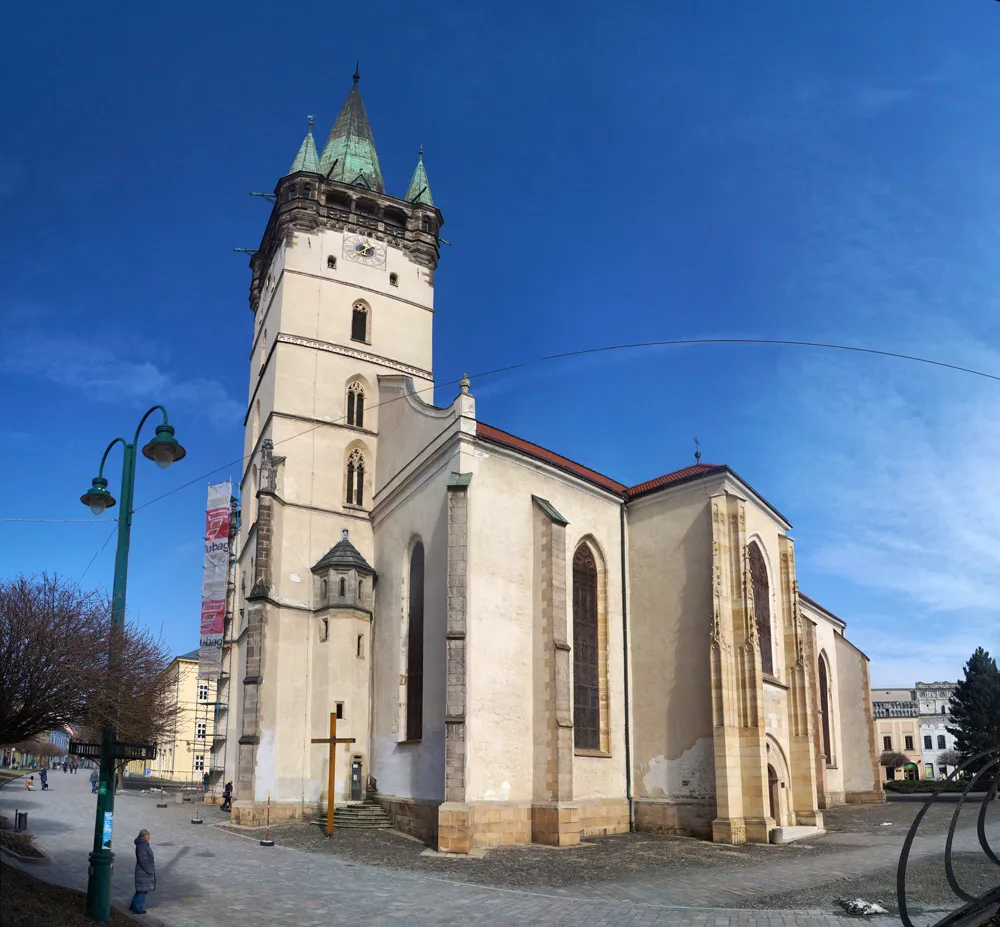
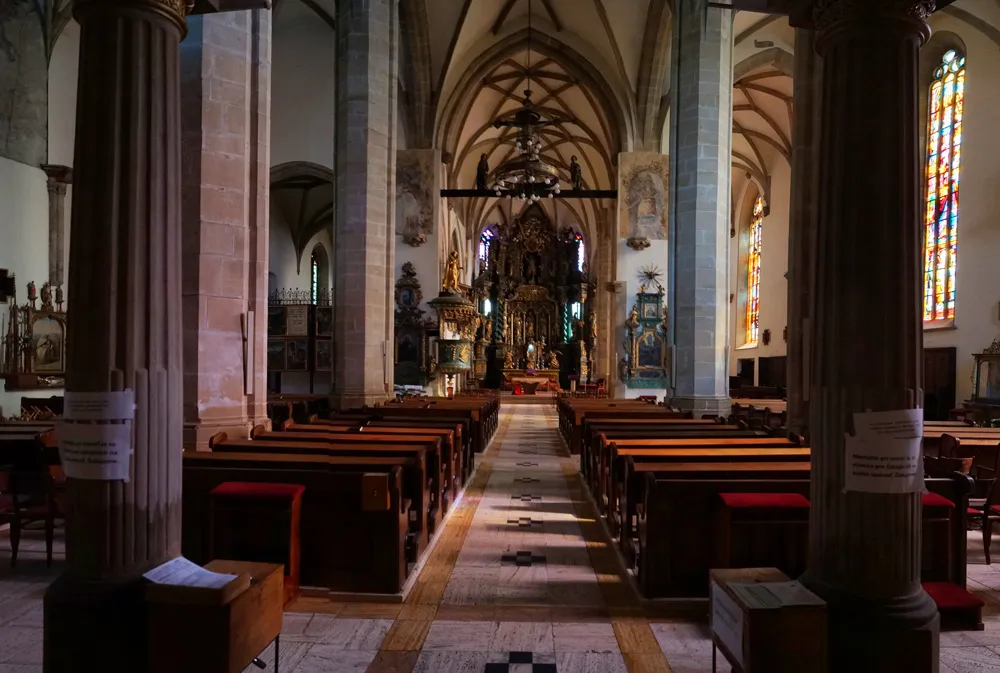
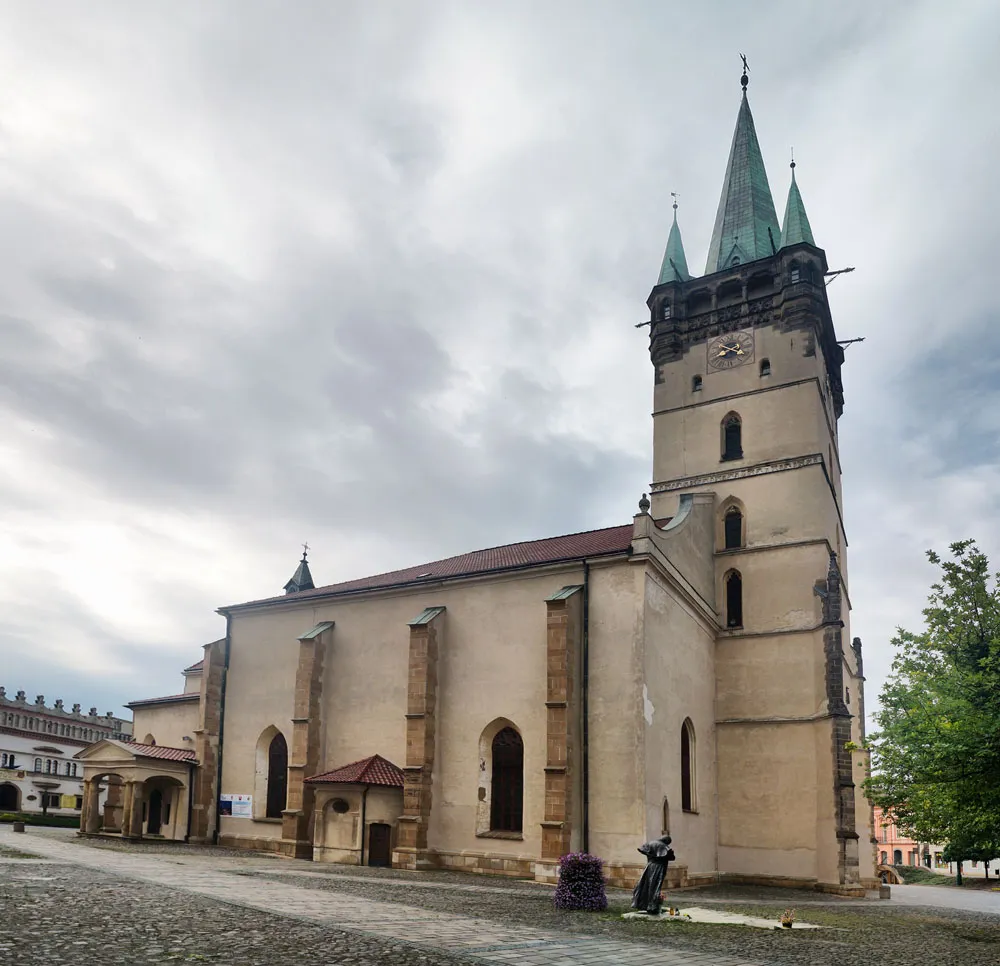
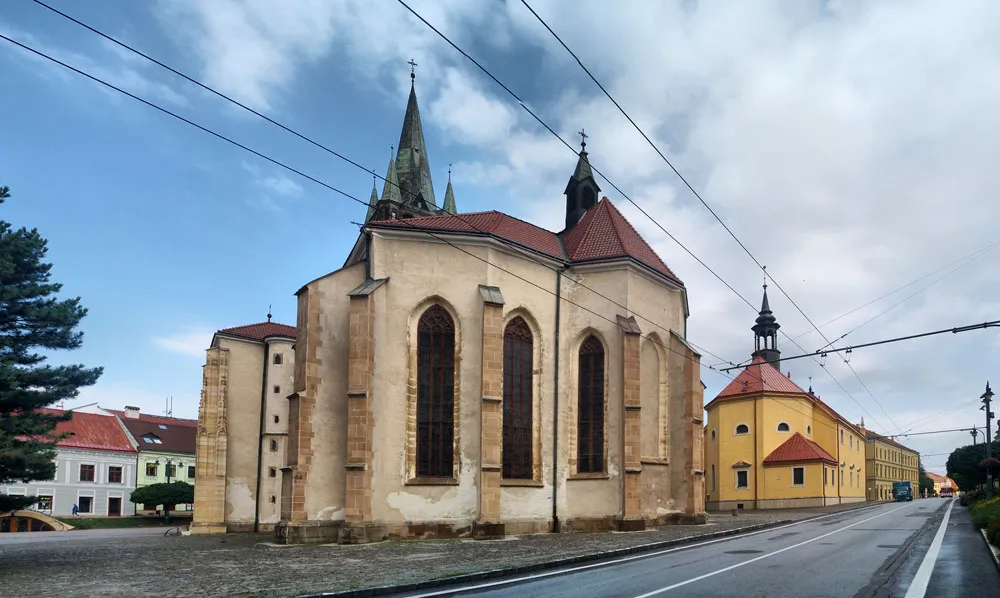
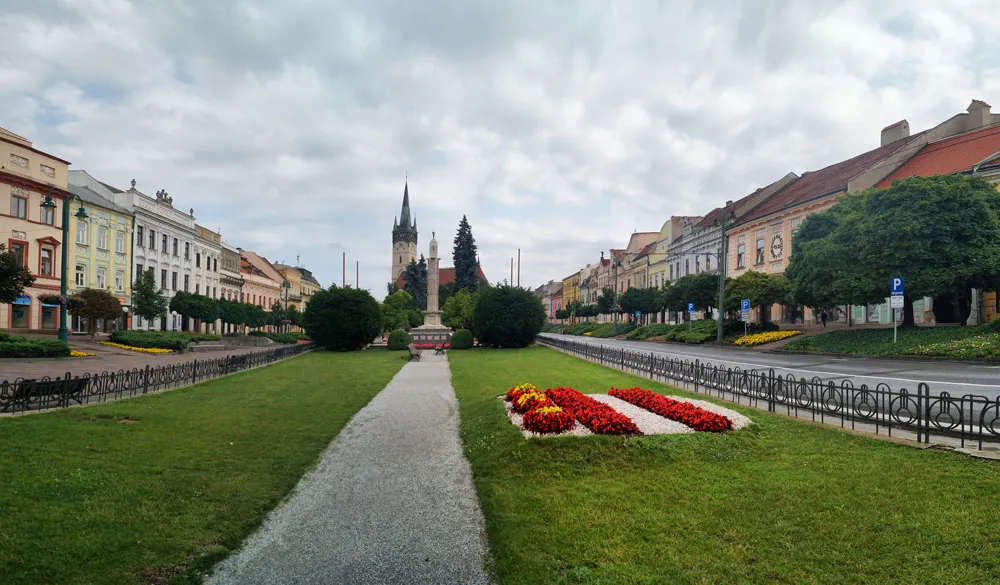
St. Nicholas Cathedral
I would call St. Nicholas Cathedral a model representative of Hungarian Gothic, probably based on the building traditions of the Saxons. In particular this concerns the finish of the bell tower, with a very tall tent-like spire and four smaller spires at the corners.
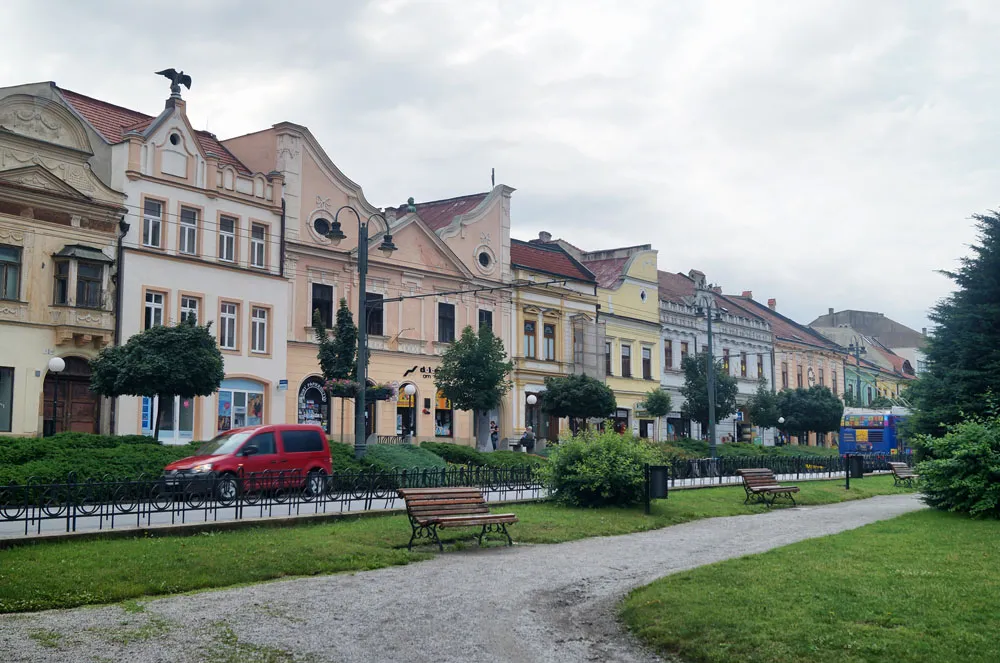
Next to the cathedral are several former administrative buildings, which together with the church form an island of buildings in the centre of the Market Square. The square itself resembles a bow in plan. At its edges it has two gardens, and along its perimeter runs Hlavná Street, and it is surrounded by a continuous wall of two- and three-storey, mostly Renaissance townhouses. Some of these townhouses are former palaces and residences of the Hungarian nobility, including the Rákóczi family.
I want to draw attention to an unusual monument stuck to the corner of an old administrative building (once the court was here), south of St. Nicholas Cathedral. On the monument stands a full-length Cossack, with long moustaches and a forelock on his head, and from behind him peers an executioner, in a mask, with a very long sword by the block. Under the monument is a stone plaque with Hungarian text. With the help of Google Translate I understood from it that in Hungarian Priashiv is called Eperjes, and that it is not a Cossack at all but Imre Thököly, the leader of the anti-Habsburg uprising. It turns out it was not only Ukrainians who liked a forelock on a shaved head and very long moustaches.
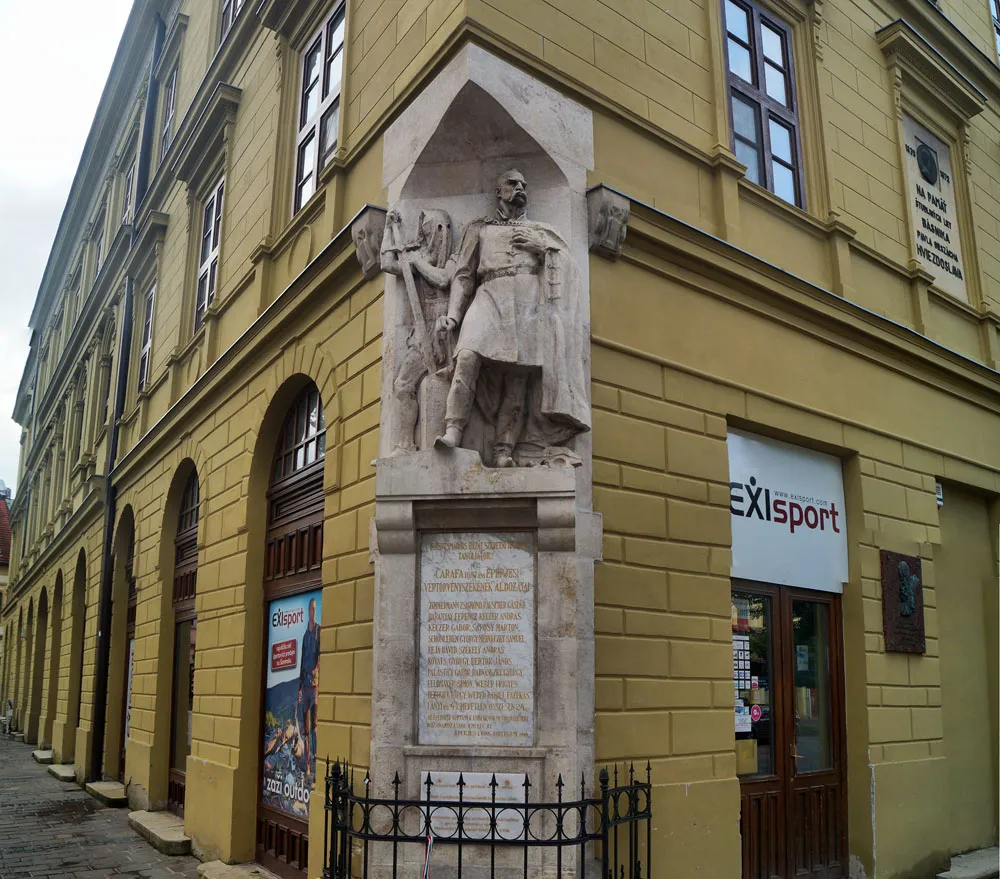
A sign commemorating the uprising of 1684
The uprising of the inhabitants of Priashiv flared up in 1684, led by a representative of a respected Hungarian family, Imre Thököly. In the same year the Austrians suppressed the uprising, and the leaders were arrested and held in Caraffa’s Prison (by the way, this prison has survived, a beautiful Gothic building) for three years. The prison, like the court, took its name from the surname of General Antonio Caraffa, who headed the imperial army and then the cruel trial of the rebels. And a terrible punishment: first their hands were cut off (by that very executioner, with the very long sword), then their heads, then they were quartered and the pieces of their bodies were carried around the cities of the empire.
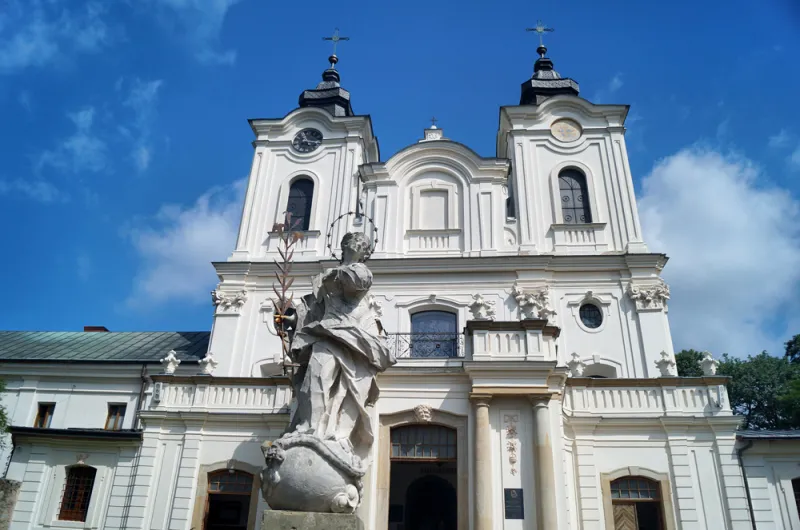
To the south, 450 metres from the city’s main Roman Catholic cathedral, stands the main Greek Catholic one, the Cathedral of St. John the Baptist. From 1603 this church was the main church of a Minorite monastery, and in 1753-1759 the Baroque building that we see now appeared; it was built by the architect Gašpar Urlespacher. The tower was built in 1865.
It should be noted that the Cathedral of St. John the Baptist was built as a Roman Catholic one. In 1790 the emperor established in Priashiv a vicariate of the Greek Catholic Eparchy of Mukachevo, and in 1815 the Church of St. John the Baptist was handed over to a separate Greek Catholic eparchy. Since then it has been a cathedral.
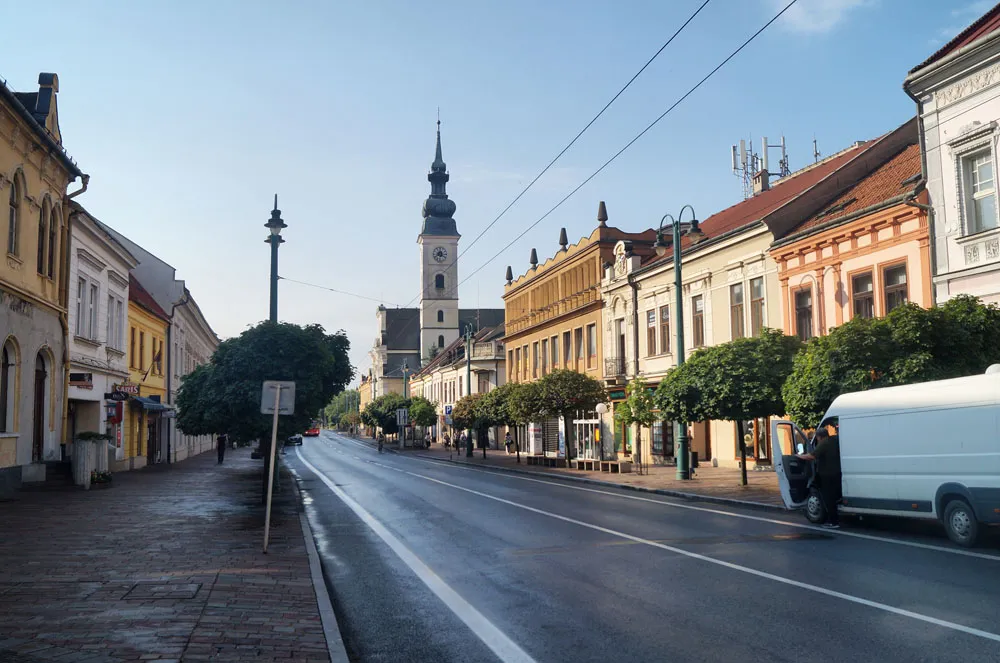
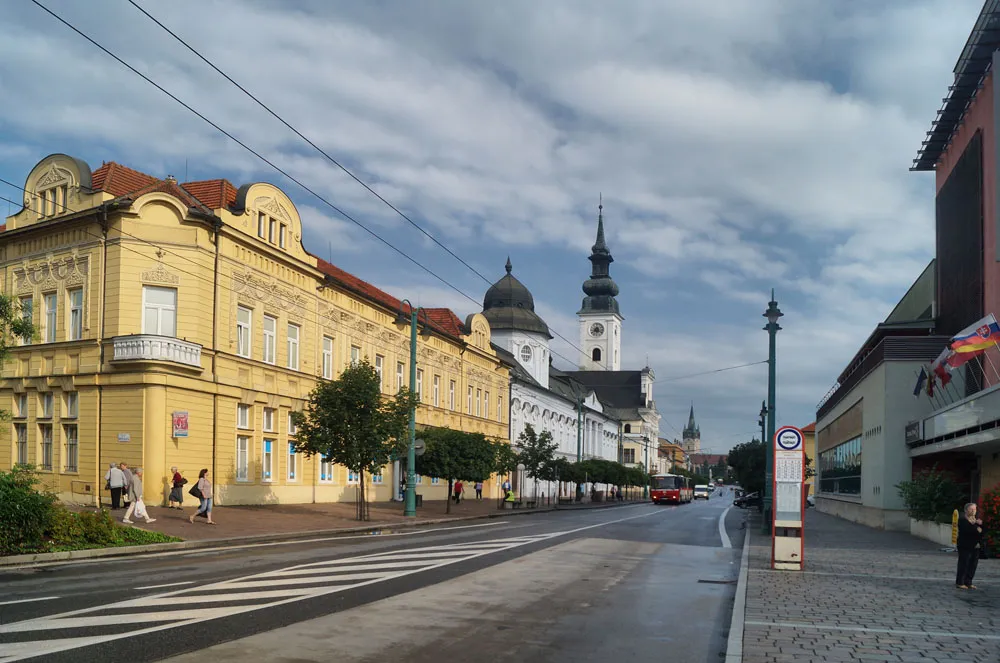
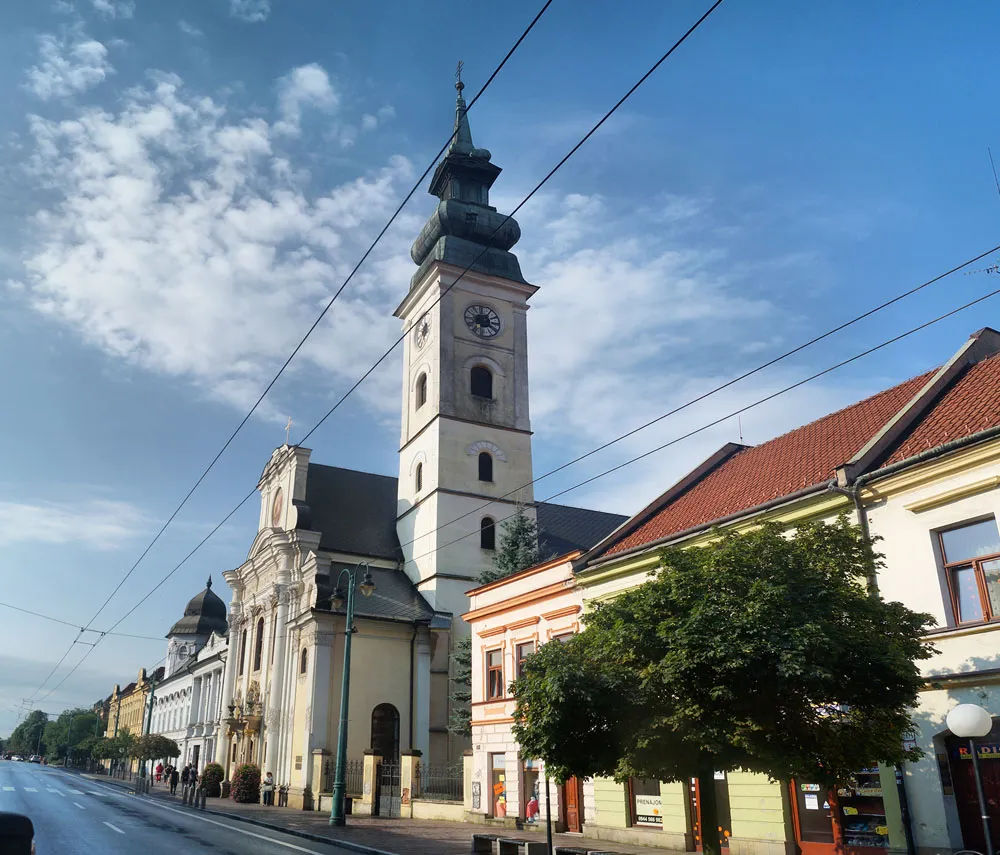
Greek Catholic Cathedral of St. John the Baptist
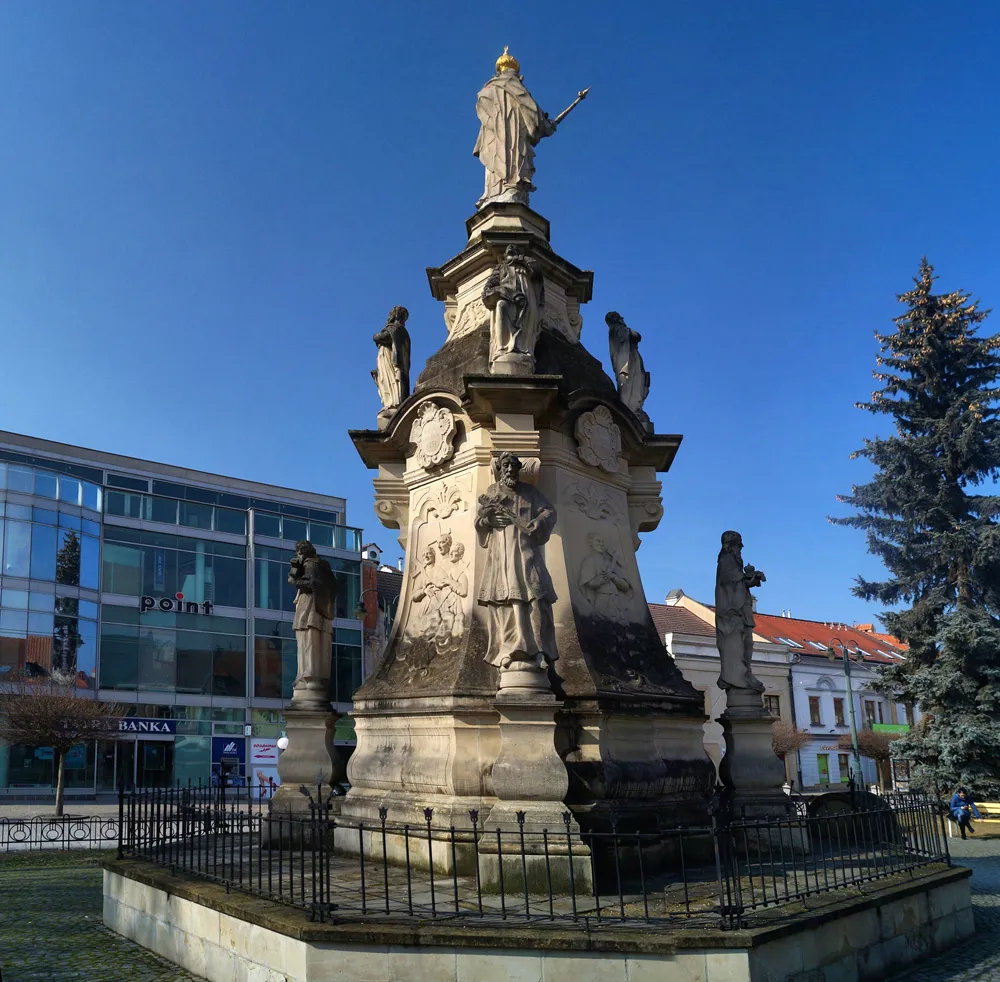
Priashiv has a very large number of architectural monuments, among them churches, remains of the city fortifications, and residential and administrative buildings. I also want to draw attention to the Calvary, which has risen on a hill above the town centre since the 18th century. It consists of a church and 14 chapel-stations climbing the slope of the hill.
In Slovakia they are very fond of Calvaries. Translated from Latin this word means Golgotha, so it is clear that the complex symbolizes Jesus’s path to that hill, to the cross. Each of his stops is marked by a chapel, and the place of the cross by a church. The largest I have seen is the Kalwaria Zebrzydowska in Poland, a complex of separate churches, each dedicated to a separate station (stop) of Jesus, and at the actual site of Golgotha a large monastery. There are no such large ones in Slovakia, but there are very many smaller ones, all on high hills or rocks, and Priashiv has one too. Its construction was initiated by the Jesuits, and the funds were given by townspeople and nobility. Construction of the chapels began in 1720, and everything, with the consecration, was finished only in 1769. You can imagine the scale of the complex if it was being built for almost half a century.
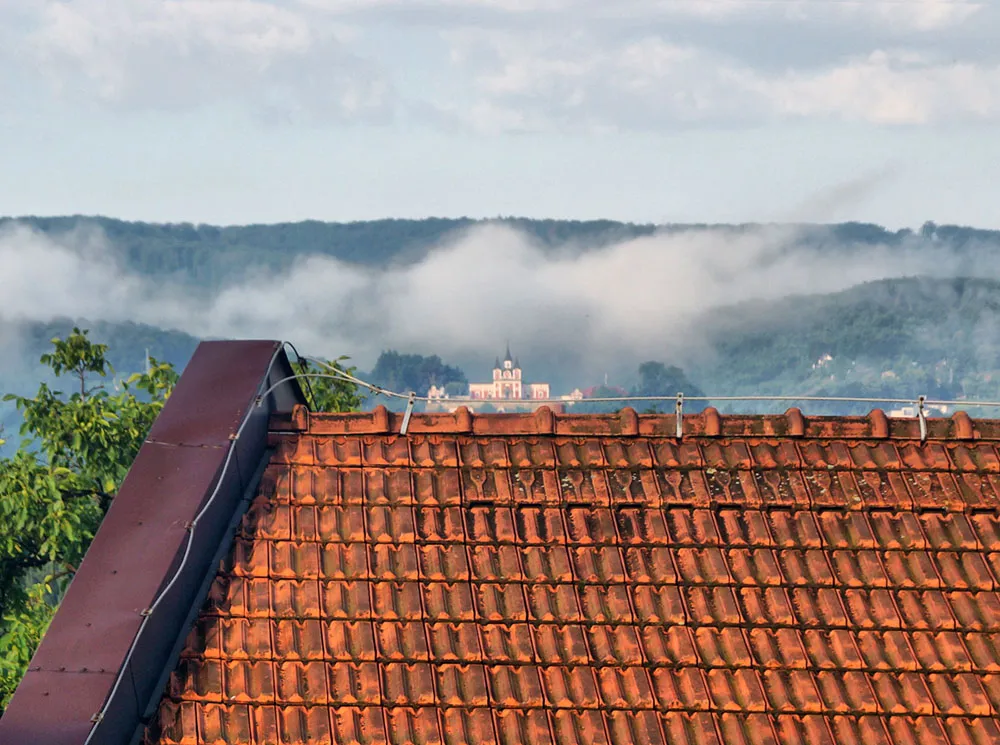
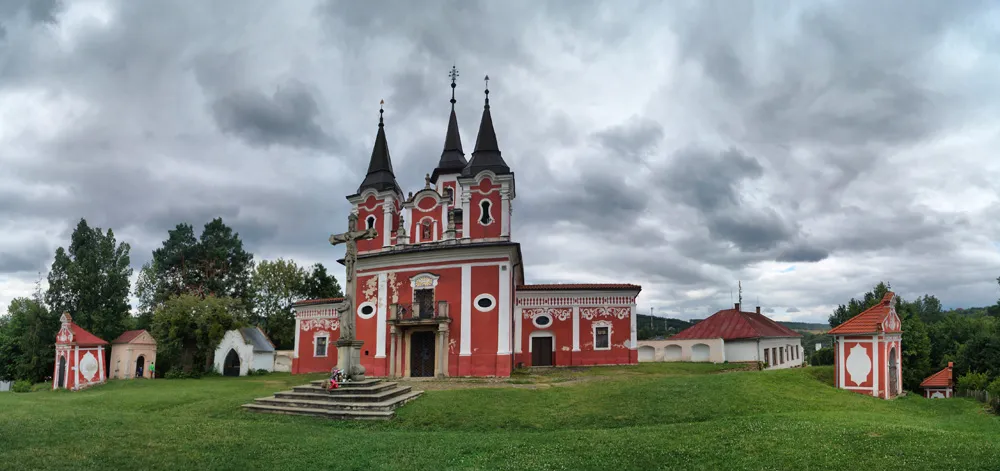
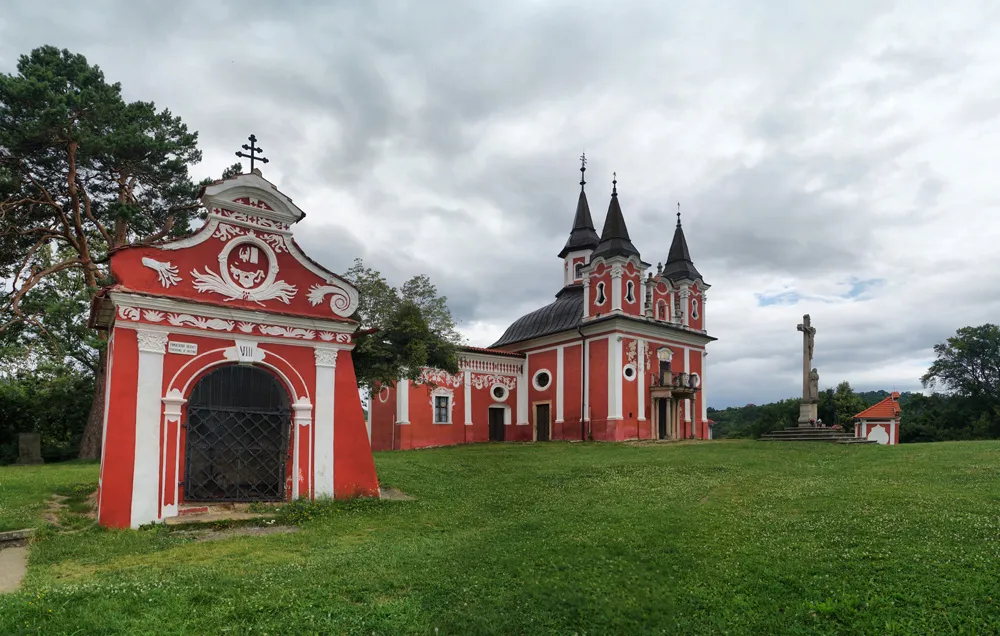
The Calvary
The first documentary mention of Priashiv dates from 1247, although the town is believed to have been founded in the 12th century, probably by the Hungarians. By the 13th century a significant part of the townspeople were Germans. It was they who developed Priashiv, since until the 17th century they had a very large and influential community in the town. But we are more interested in the Ukrainian community, whose size I named at the beginning. Ukrainian Rusyns appeared in Priashiv probably immediately after its founding, but began to play a noticeable role only in the 19th century, after the revolution of 1848. Then the town became one of the main Ukrainian centres of Hungary, which was helped by the existence of a separate Greek Catholic eparchy. Unfortunately, in the 19th century the Ukrainians of Priashiv massively yielded to Russian provocations and embarked on Russophilia. I will not list all the pro-Russian organizations that the Ukrainian intelligentsia created in the town before the First World War; there was even a “Soyuz russkikh zhenshchin” (Union of Russian Women) here. Genuine Ukrainian life began after 1919 within Czechoslovakia and especially flourished after the Second World War, when the Ukrainian People’s Council of the Priashiv Region appeared, Ukrainian-language newspapers, weeklies and monthlies began to be published, a Ukrainian radio channel and two departments of language and literature at the university appeared. There were also many Rusyn organizations and institutions, and they even created a museum. A Rusyn one. The Rusyns cooperate with Ukrainians but consider themselves a separate people. And so it remains to this day. I hope that after the understanding of what Russia is, the situation will change.
Text and photos by Roman Malenkov
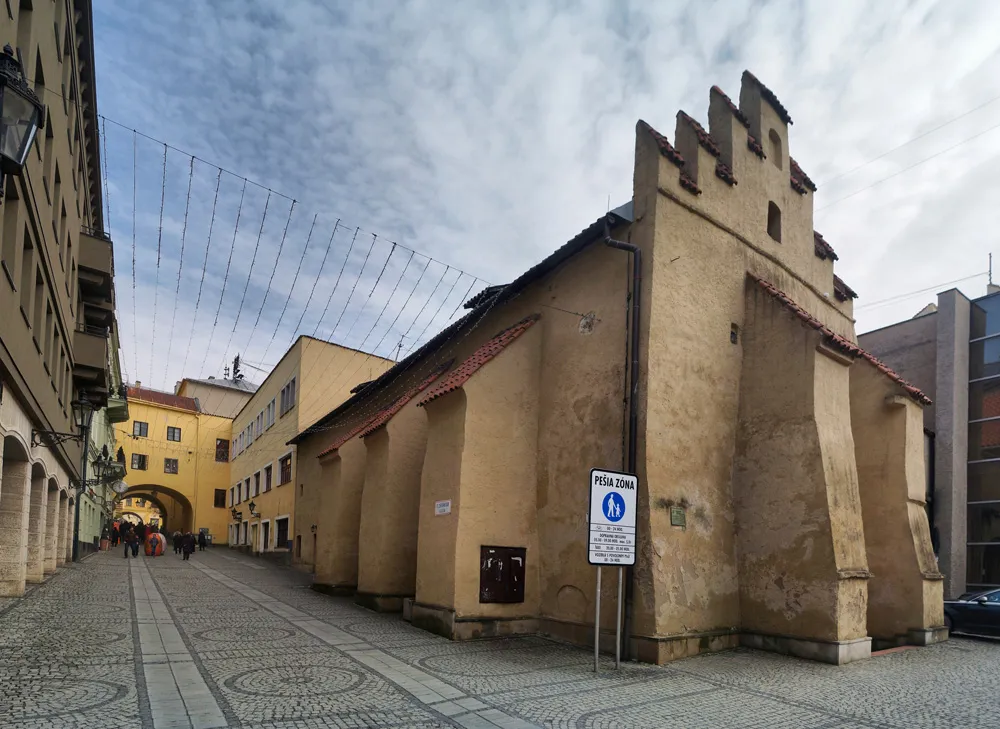
Caraffa’s Prison