Velyka Sviatkova and Mala Sviatkova

· 5 min read
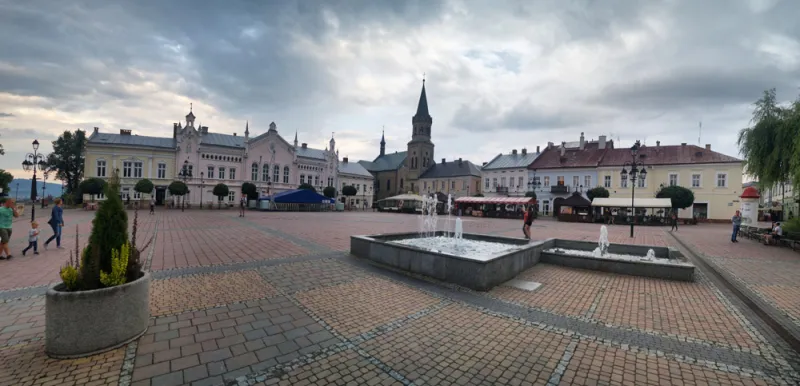
The names of these two villages evoke associations with a holiday. Once people here loved and knew how to celebrate, so imagine our surprise when, during our very first visit, we landed straight in the middle of a festival. I did not immediately understand what the celebration was connected with, whether some ancient traditions or modern trends, but as we drove into Velyka Sviatkova we had to pull into a large car park and plunge into the folk festivities.
At first we were a little scared, because the team of police officers who directed us into the car park looked like some special unit on a mission. What do they want from us? we thought. But the police politely explained that there was a festival in the village and that the centre was now open only to pedestrians. Cool.
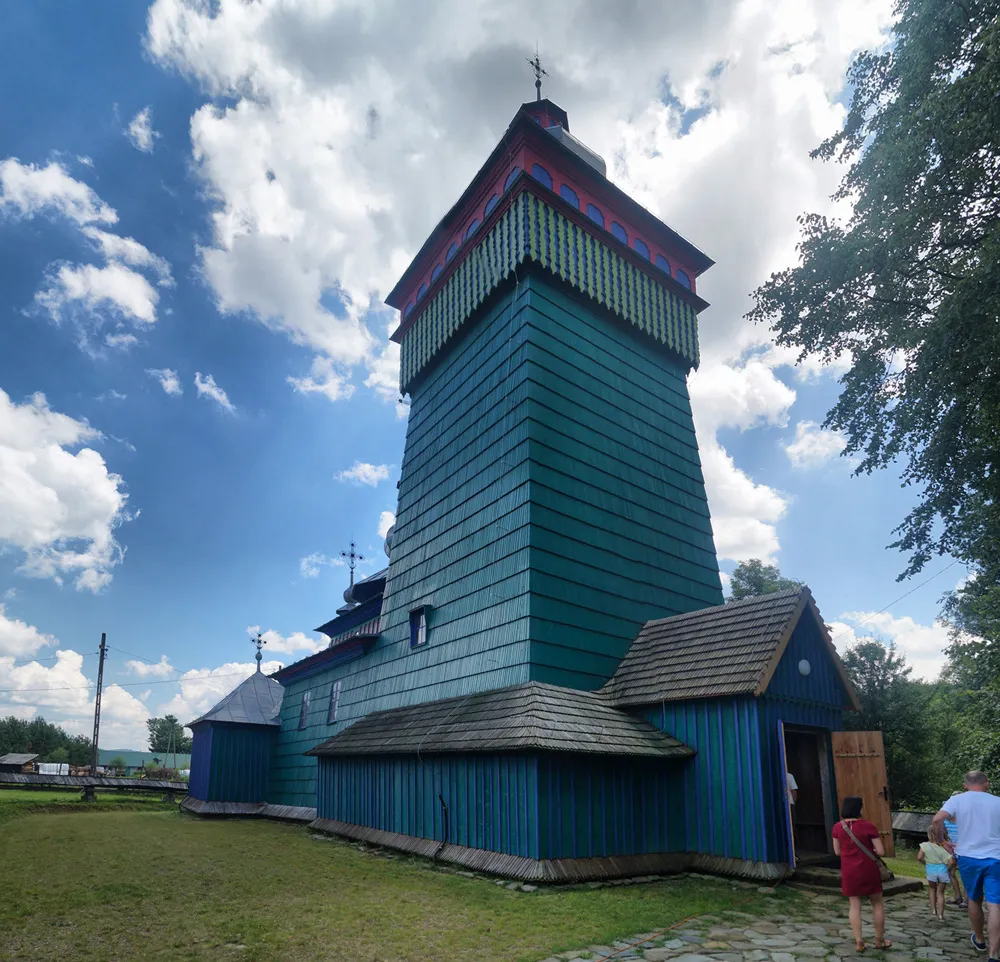
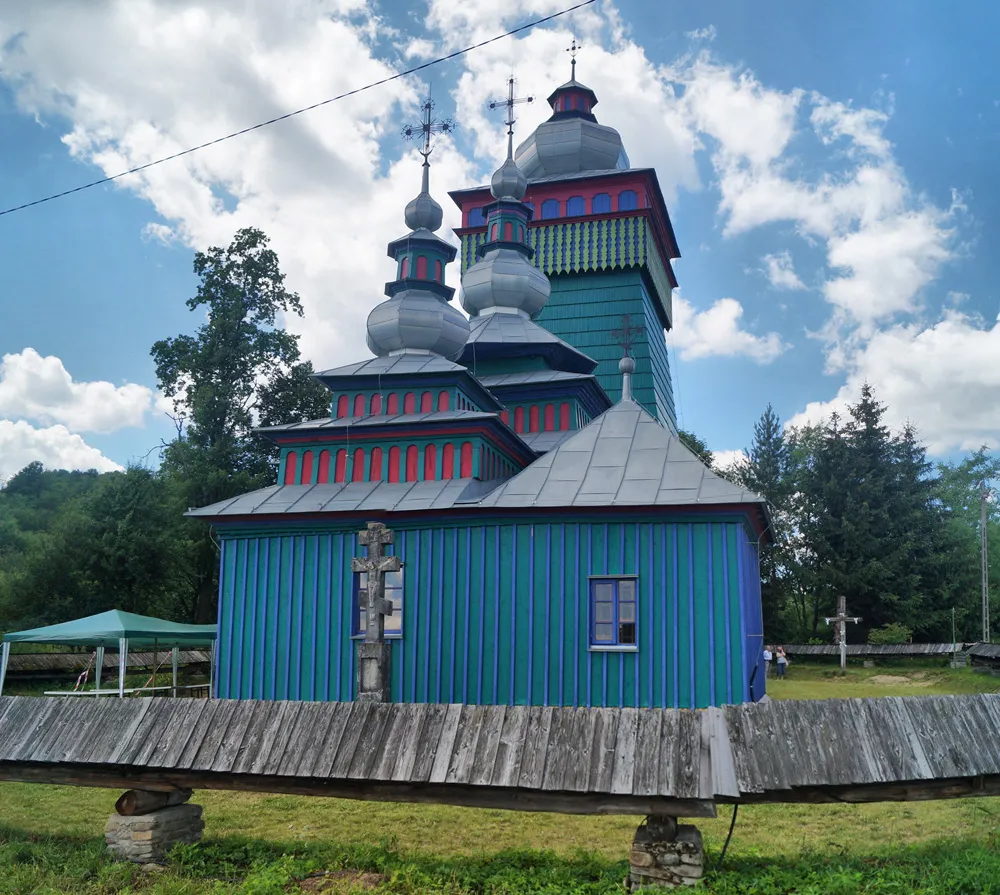
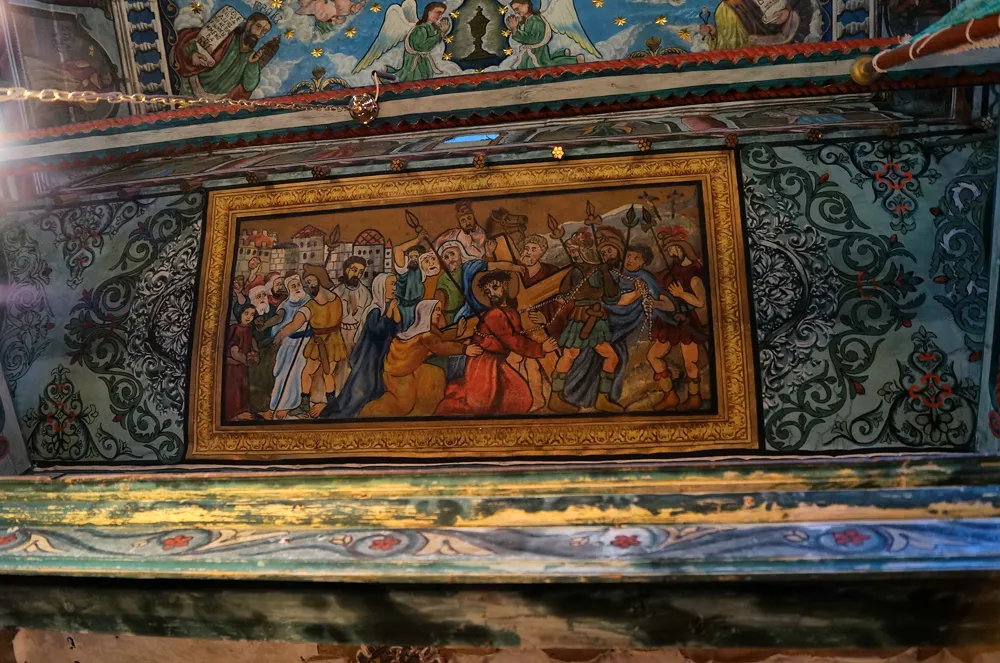
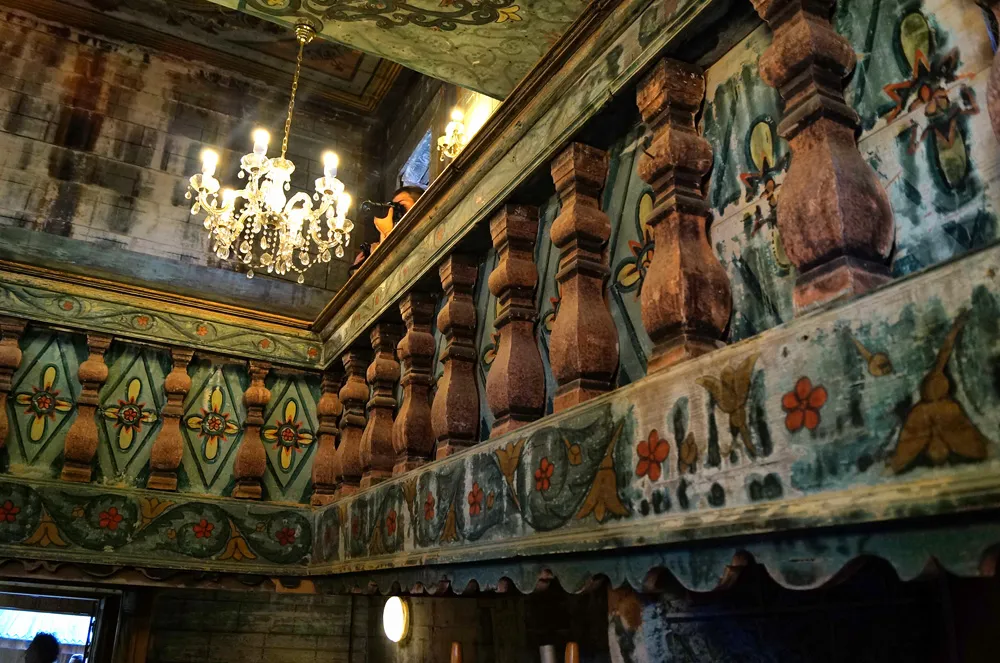
The church and the festival in Velyka Sviatkova
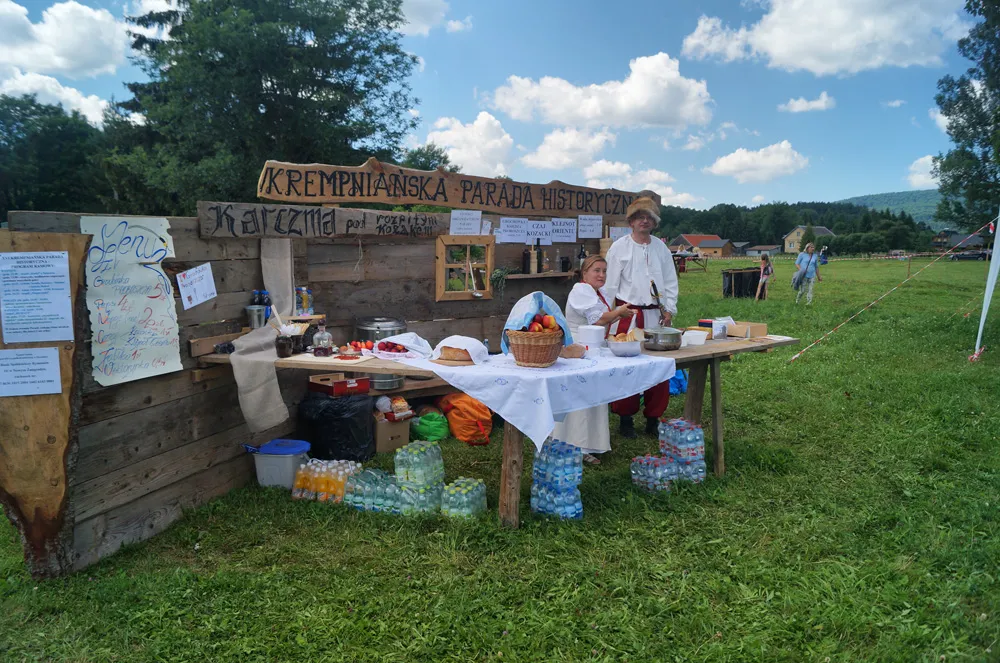
There were stalls with all kinds of local food: sausages, cheeses, bread, pickles, vegetables, herbs, oil. Above some tables hung a sign “Karchma”, and there they sold strong tinctures, fruit liqueurs and wines, as well as snacks: bread, apples, tomatoes, peppers and something in pots. Some stalls sold big slices of bread spread with lard, topped with rounds of pickled cucumbers; such sandwiches were extremely popular. There were also tables with souvenirs and all sorts of wooden trinkets, such as toy bows, crossbows, axes and knives, mugs, spoons, plates, nothing original, the same as at any stall in tourist places in Ukraine. Some people sold various works of art: figures made of snags, paintings.
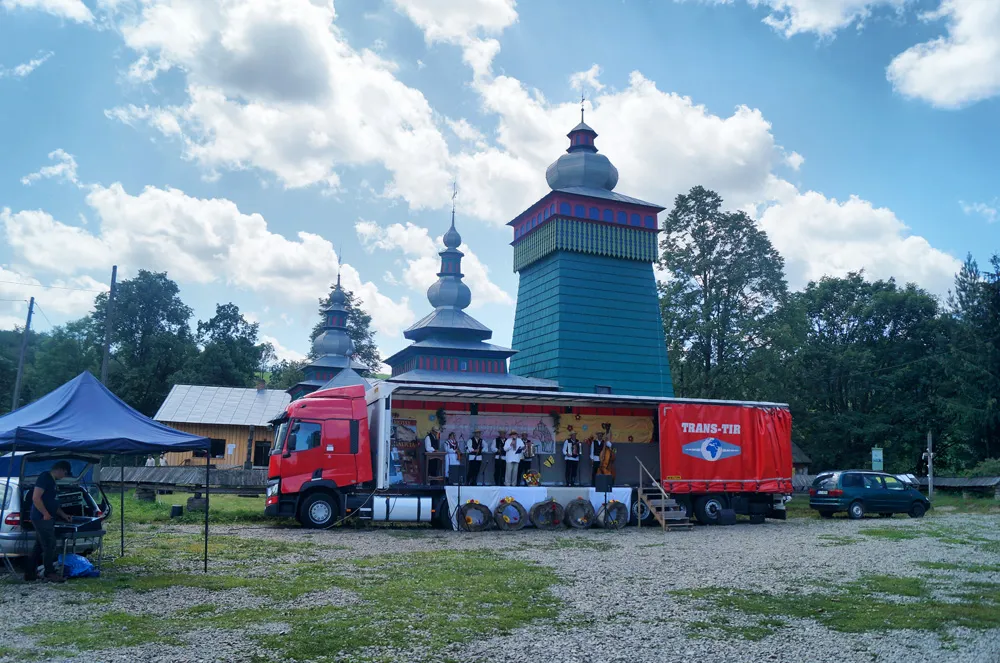
On the village square stood a stage: a big truck with a side wall opened and an advertisement for Trans Tir. Various musicians and singers in embroidered shirts and straw hats performed on it non-stop. They sang mostly in Polish, but sometimes Ukrainian, Lemko, was heard as well. Some of the stallholders also knew Ukrainian.
“There are few Ukrainians here,” they said, “they were all taken away, deported. Only a few have returned.”
Above the stage (on the truck), above a stall with the sign «Stoisko organizatorow parady», we noticed the inscription «Krempnianska parada historyczna». At last it became clear what kind of festival it was. I had heard about it before: it was held in the village of Krempna, but this year it had been decided to hold it in neighbouring Velyka Sviatkova. Or perhaps not only this year; I did not have time to ask, or I forgot.
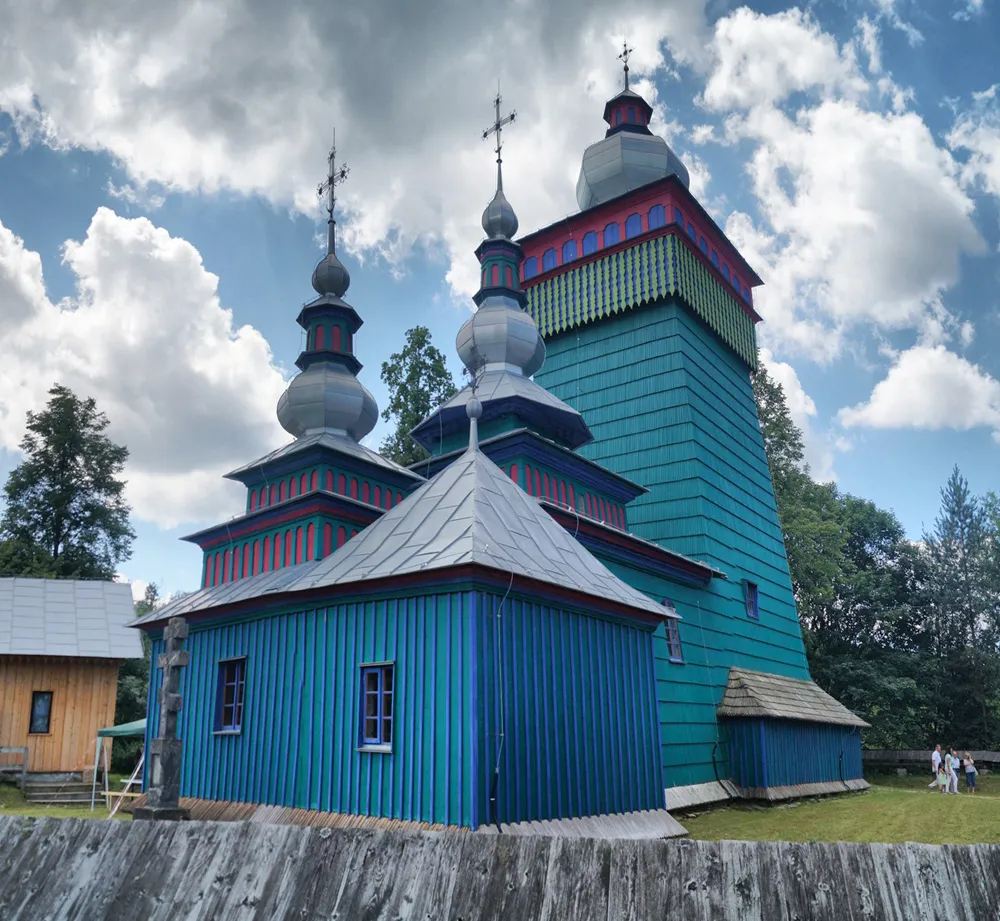
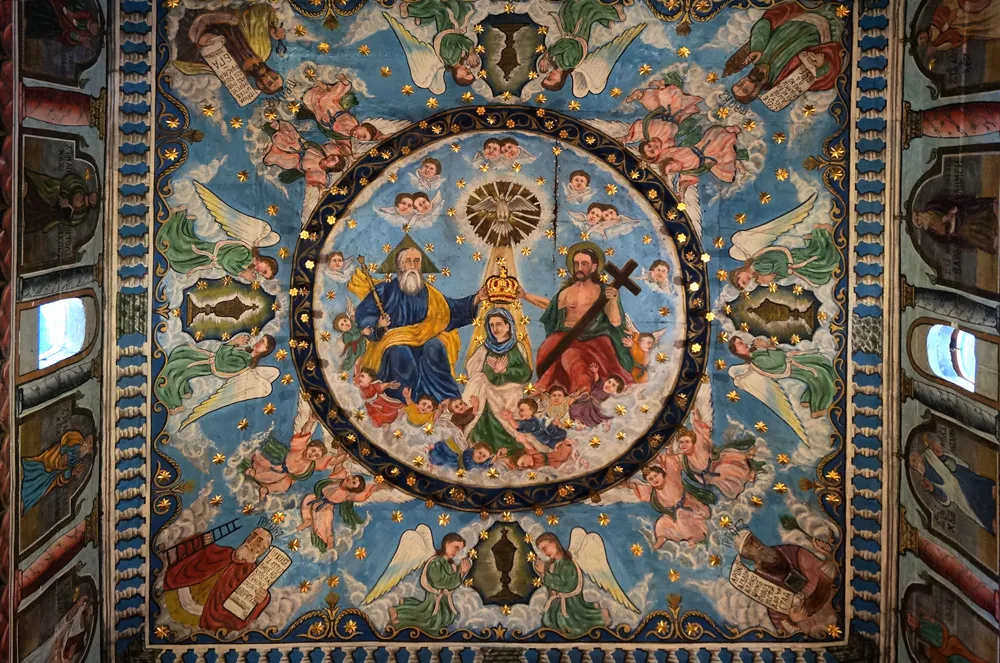
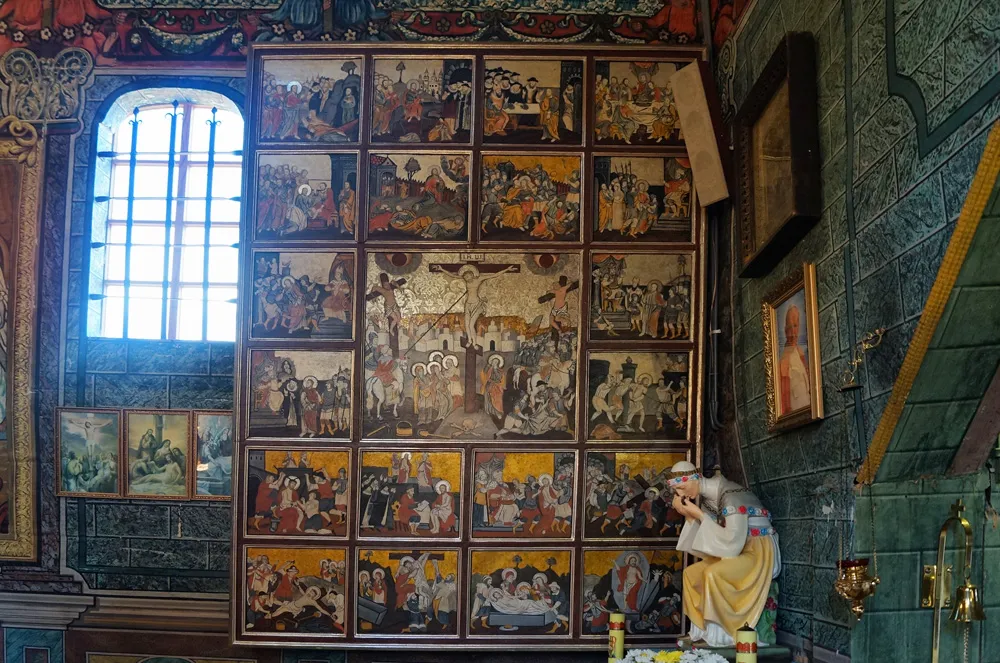
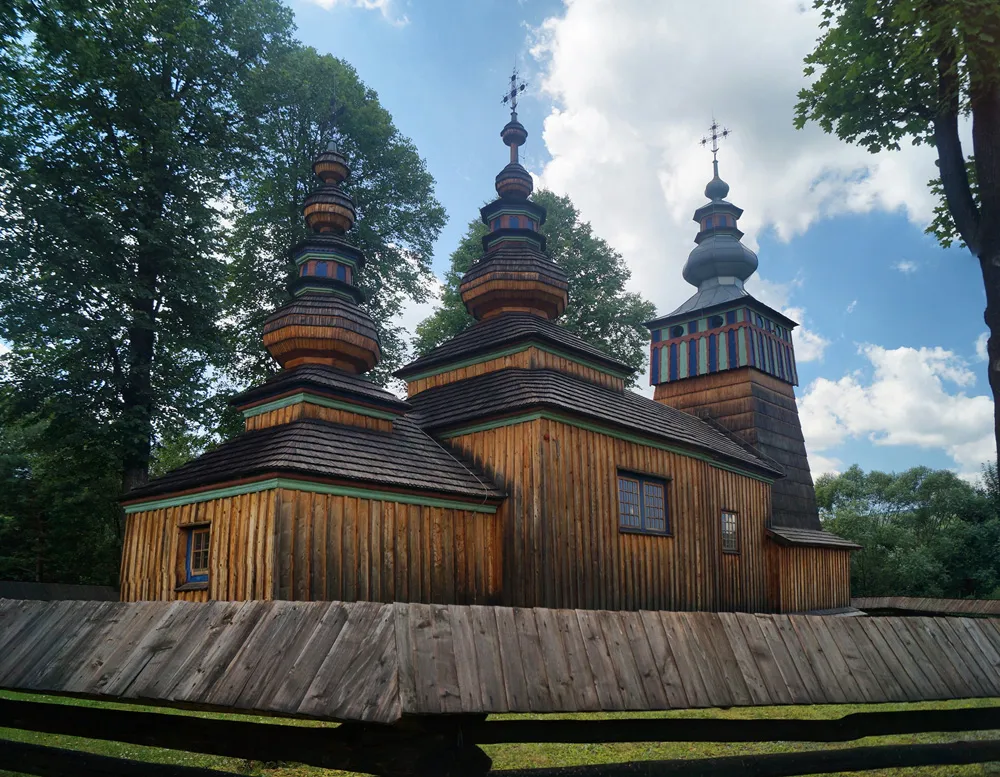
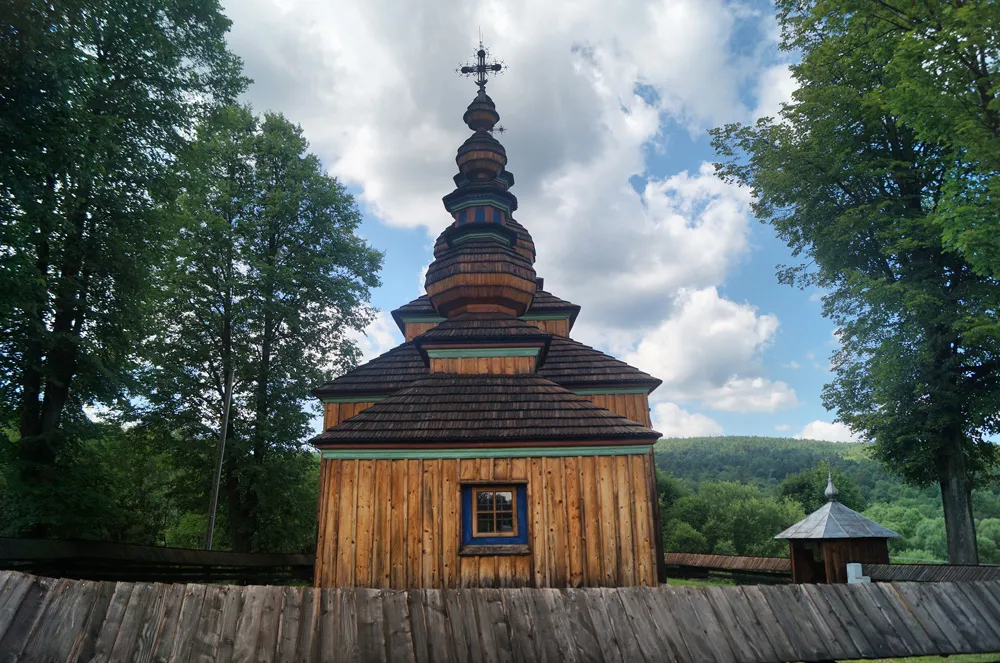
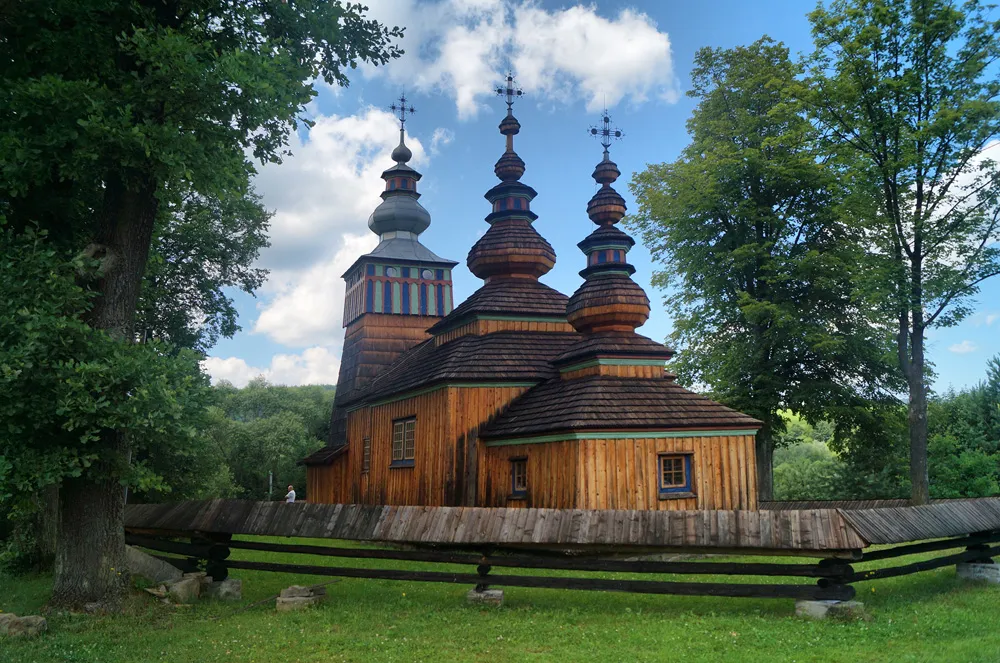
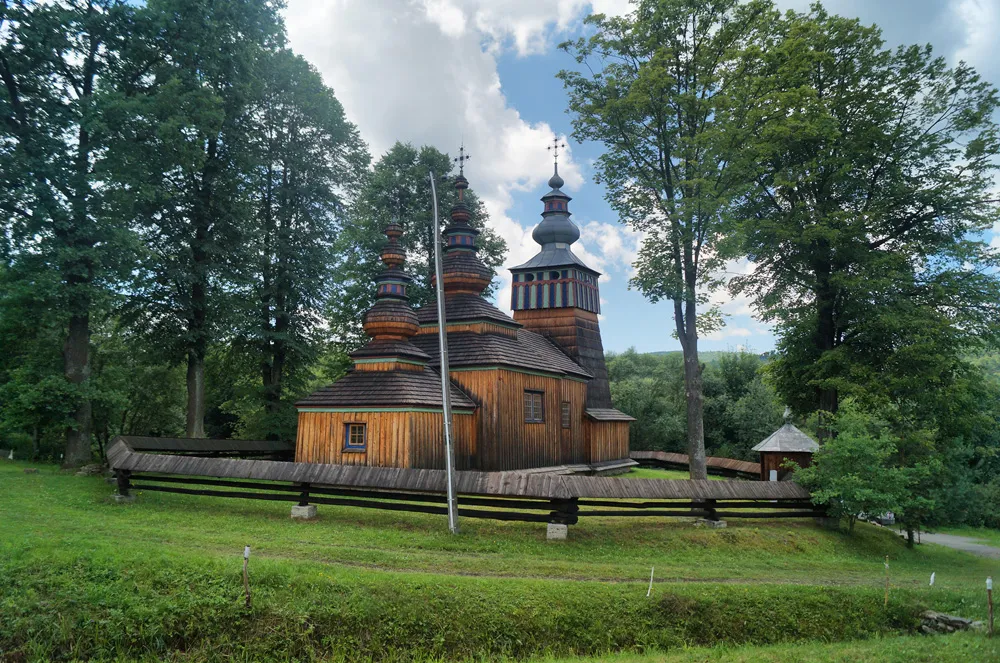
We went to the Church of the Archangel Michael, which is special here: outside it is painted blue (or turquoise; I could not tell in the bright sun), green and red, and in general it is a wonderful example of a West Lemko church, with a tall massive bell tower and shaped Ukrainian Baroque domes. The church was full of people too, and a choir was singing, either a church choir or simply a folklore group. Inside, the church is painted as well, with wonderful murals on the walls and ceiling and a beautiful iconostasis, all in excellent condition. It makes me envious, because in Ukraine only UNESCO sites are looked after this well, and not all of them.
The church was built in 1757. That was no longer the Baroque period, but the craftsmen, who worked with the support of the local patron Petro Pashkevych, paid no attention to this, so in the church not only the domes but also the interior decoration and the iconostases are Baroque. Unfortunately the oldest iconostases have not survived: they disappeared in the 1950s, after the deportation of Ukrainians. Most likely they were stolen.
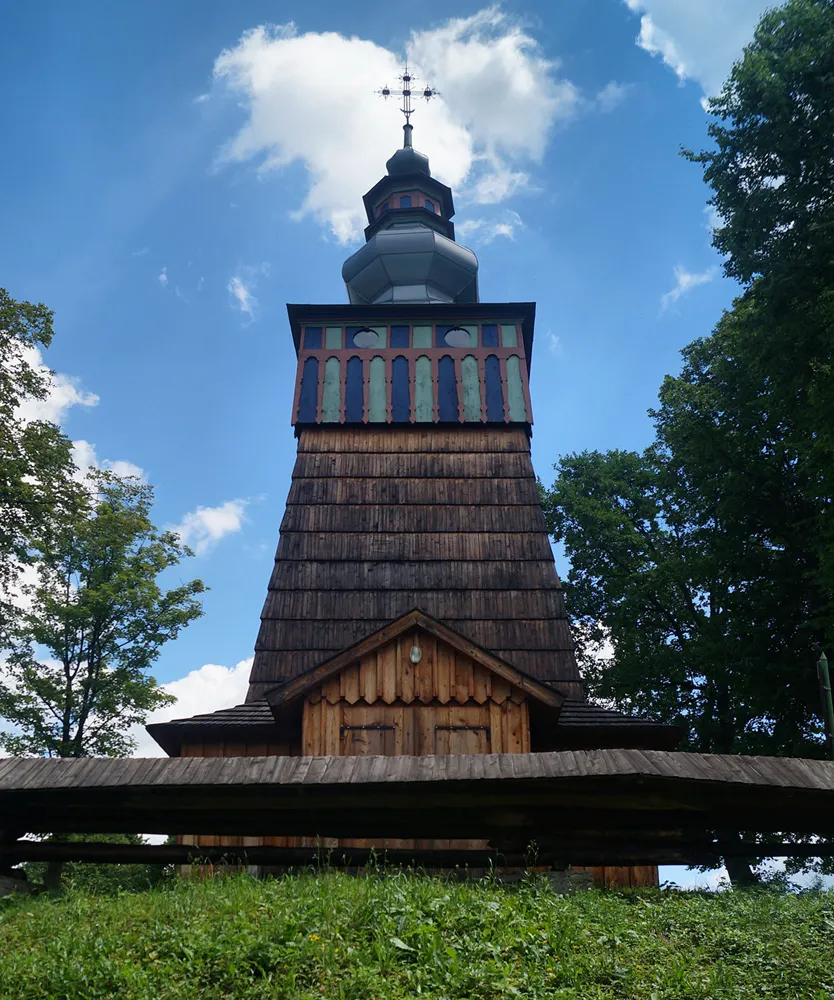
The church in Mala Sviatkova
In neighbouring Mala Sviatkova there is also a beautiful wooden Lemko church, also of the Archangel Michael. It was built in 1762 on the site of a much older one. The Mala Sviatkova church is not painted, but it has preserved genuine Ukrainian shrines: icons painted in the 1670s. One of them bears the inscription «Смиренний Яків іконописець Ліський, року 1673 місяця липня» (“The humble Yakiv, icon painter of Lisko, in the year 1673, in the month of July”). Today the Mala Sviatkova church is a Roman Catholic church.
Both villages, Mala and Velyka Sviatkova, are closely connected. There is also a third village, Svirzhova Ruska, also nearby, but we did not go there.
As for the name of the village of Sviatkova, scholars say that it does not necessarily come from the word “sviato” (holiday) but perhaps from the surname of the founder, a settler named Sviatko. The first mention of the Sviatkova villages dates from 1510. It is assumed that the villages were founded by people from Transcarpathia, and needless to say these were Ukrainian villages. In 1939 Velyka Sviatkova had 830 inhabitants, of whom 820 were Ukrainians, 5 Poles and 5 Jews. In the same year Mala Sviatkova had 320 inhabitants, all Ukrainians. After the deportation no Ukrainians were left in the villages, but already in the 1970s and 1980s, and a little even now, people began to return. Now in Velyka Sviatkova a Lemko family with relatives in Ukraine runs a ski slope with a lift (these are mountains, after all), and a restaurant below it.
Before covid we were lucky to visit Velyka Sviatkova in winter as well. We went precisely to taste genuine Lemko dishes in the restaurant, and we did not regret it. I do not remember all the dishes. Personally I ordered kapushniak, like our thick kapusniak but with porcini mushrooms and beans; khalushky, dumplings with cheese kneaded into the dough, something like lazy vareniki, which can be both salty and sweet; and stuffed cabbage rolls that were almost traditional, but with millet in the filling instead of rice. There was also tasty yellow butter, which we spread on pancake-flatbreads, herbal teas and alcoholic tinctures. And everything was delicious. Ukrainian. Oh, I remembered: there were also vareniki, which they call pirohy ruski, but I did not try them.
Interestingly, the owners of the restaurant are Ukrainian Lemkos, but the cooks and waiters are all Poles, so it was not easy for us to find out about the origin of the dishes. Only one older woman, half Lemko, was able to tell us about those kapushniak, khalushky and pirohy.
Text and photos by Roman Malenkov