Turkey. Ani: a ghost town

· 9 min read
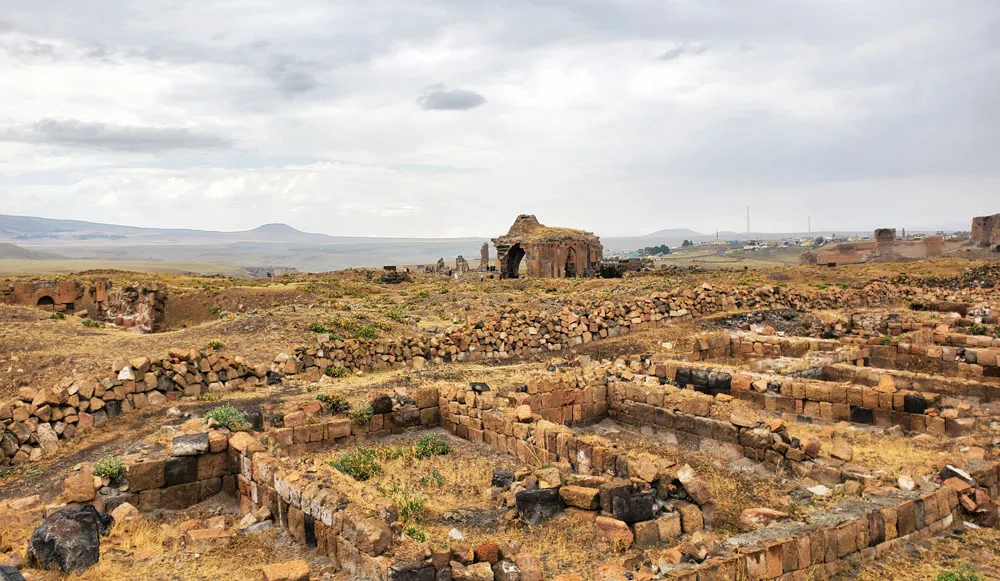
Ani is a legendary city and a ghost town. Its inhabitants abandoned it after the terrible earthquake of 1319, and it has lain in ruins ever since. It is hard to believe that this city was once one of the largest and most beautiful in the world. At its peak Ani was home to 100–200 thousand people and rivalled Constantinople itself. It was called the City of 1,001 Churches, and now it is a ruin. These are by no means pitiful ruins – they are majestic. They certainly deserve a place among the most magnificent ruins in the world… And it is even harder to believe that in 1921 the Turkish commander Kâzım Karabekir refused to carry out an order of the Grand National Assembly of Turkey to wipe Ani off the face of the earth.
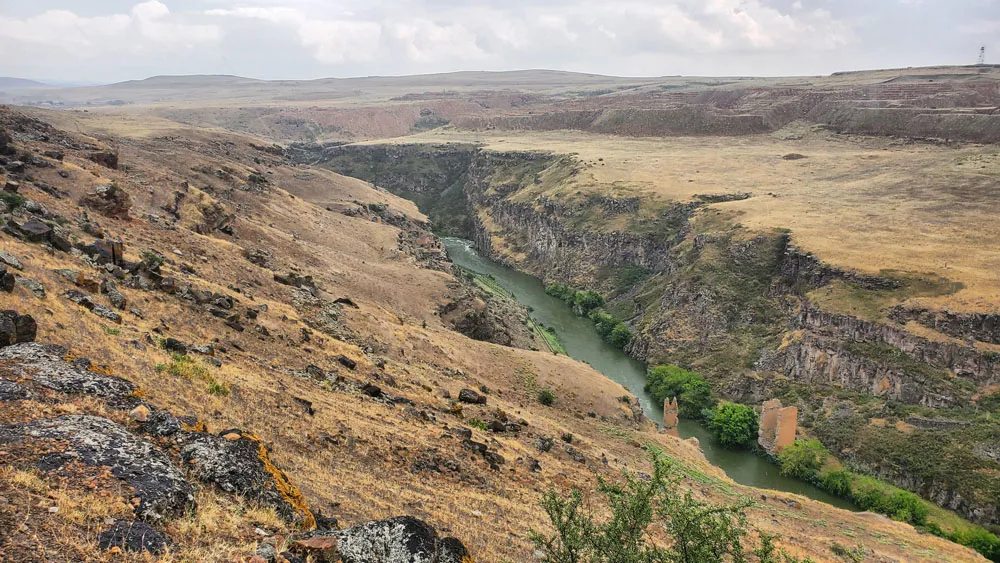
The city of Ani lies in eastern Turkey, 40 kilometres from the city of Kars, right on the border with Armenia. Only the Akhurian River (Turkish: Arpaçay) separates the two countries, but the border has been closed for a long time and likely for a long time to come – perhaps the Turks would open it, but the Armenians are against it. In addition, the surrounding lands (on the Turkish side) are populated mostly by Kurds, who have repeatedly risen up against the Turkish authorities, so east of Kars the Turks established a militarized zone, and Ani fell within it. Only in 2004 was the military ban on photographing the monuments of the ghost town lifted.
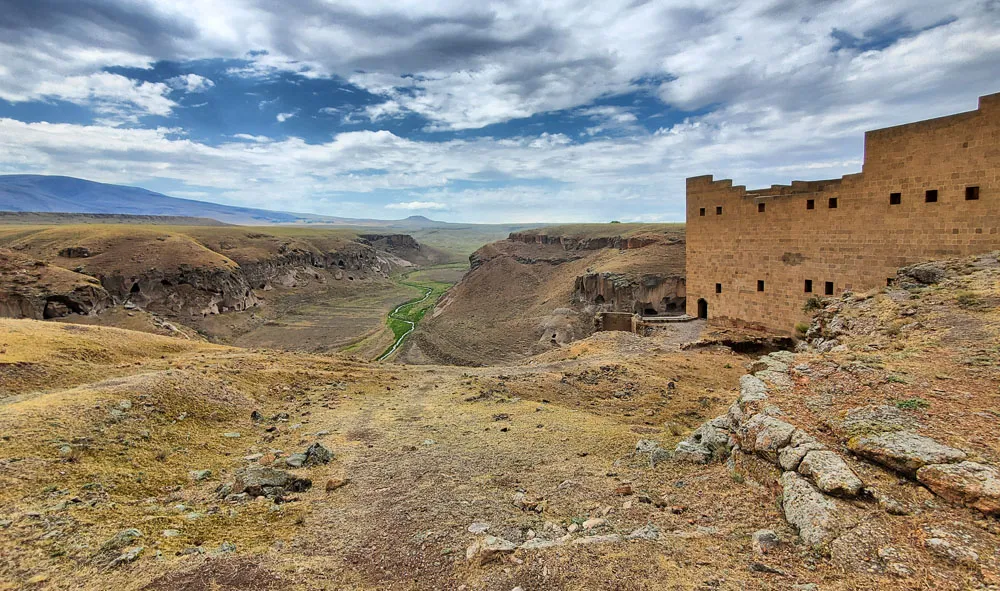
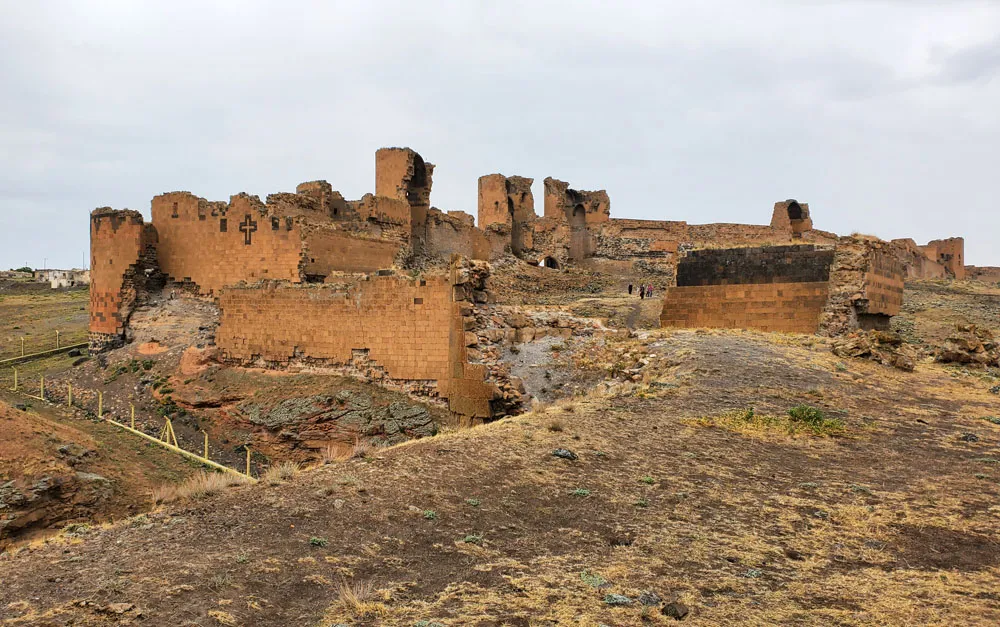
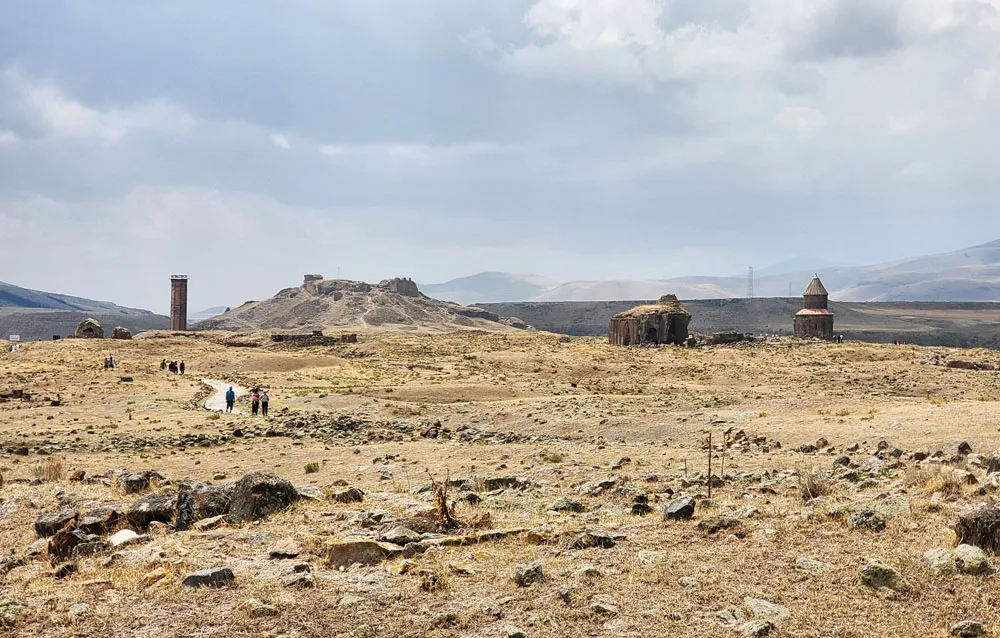
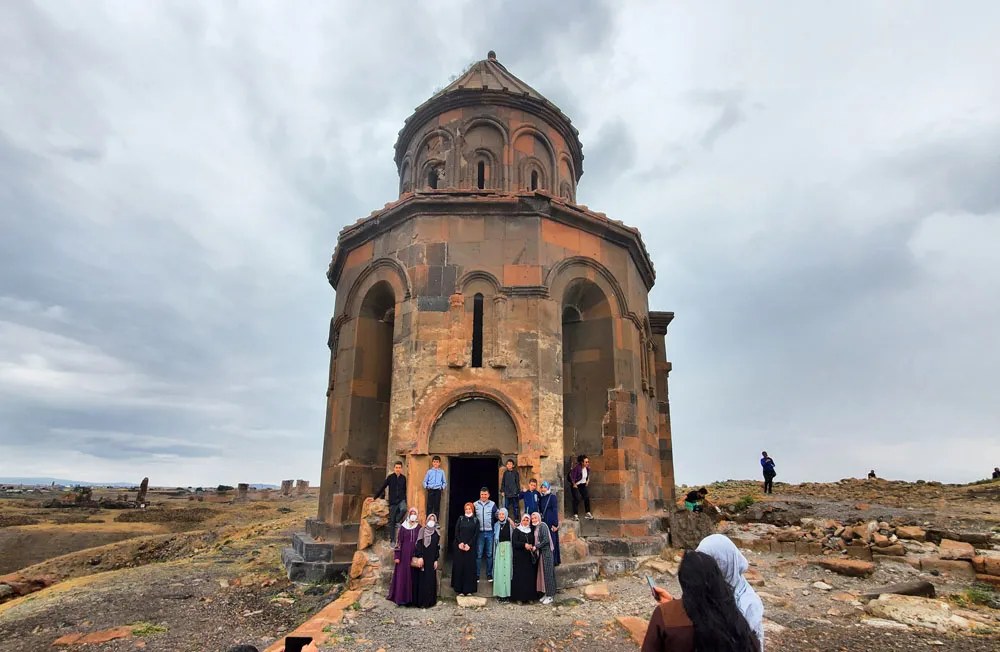
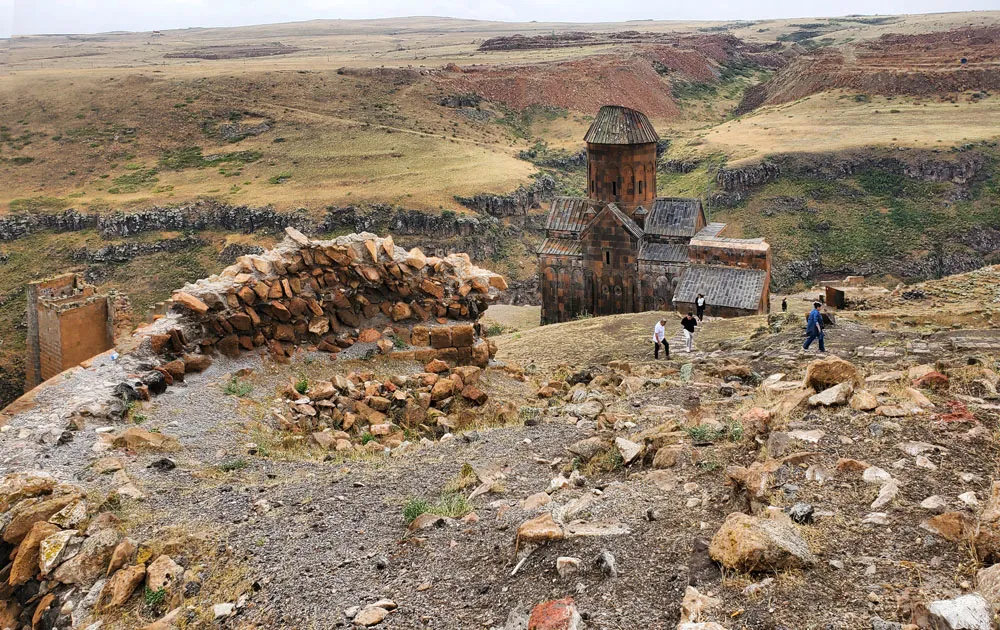
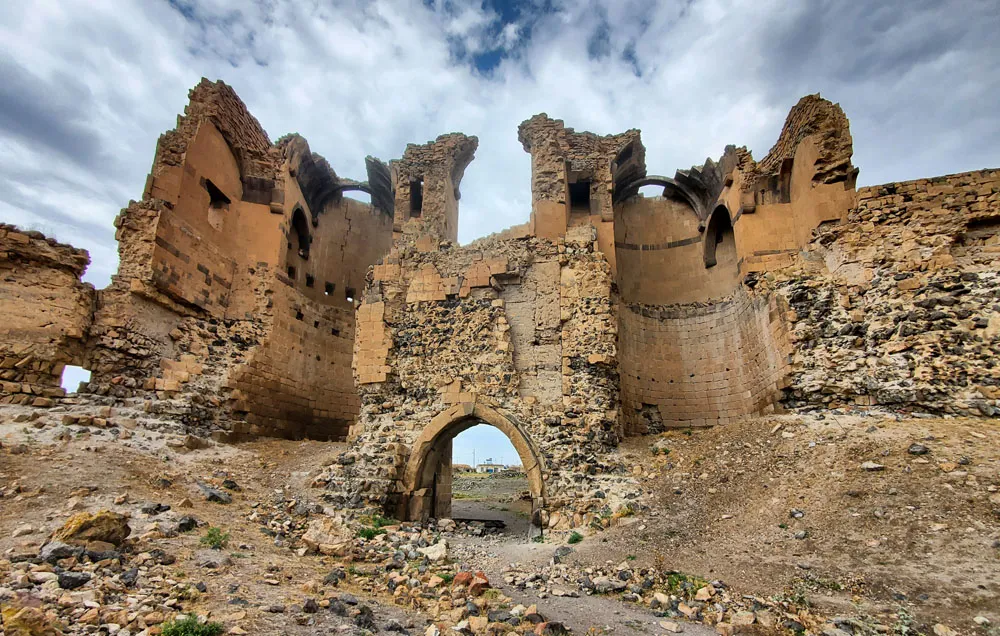
Reading travel blogs from the early 2000s, it becomes clear that Ani is now being taken seriously. Until 2004 a permit was required to visit Ani. As late as 2011, beside the village of Ocaklı, there stood a heap of ruins open to all visitors, with absolutely no future, at least no bright one. Now that Ani has been inscribed on the UNESCO World Heritage List, the territory of the city is fenced off and guarded, large-scale archaeological research is under way, and the temples are being restored and conserved. Some buildings, such as the Seljuk palace, part of which now looks brand new.
The village of Ocaklı is one of hundreds of settlements in eastern Turkey notable for their extreme poverty. The houses here are low and single-storey, and the yards are piled with dried dung, which serves as both fuel and building material. Given the huge number of tourists now visiting Ani, I think the village will develop and shed its poor, dung-heaped look. Then again, who knows – perhaps it is not poverty at all, just the philosophy of life of these people.
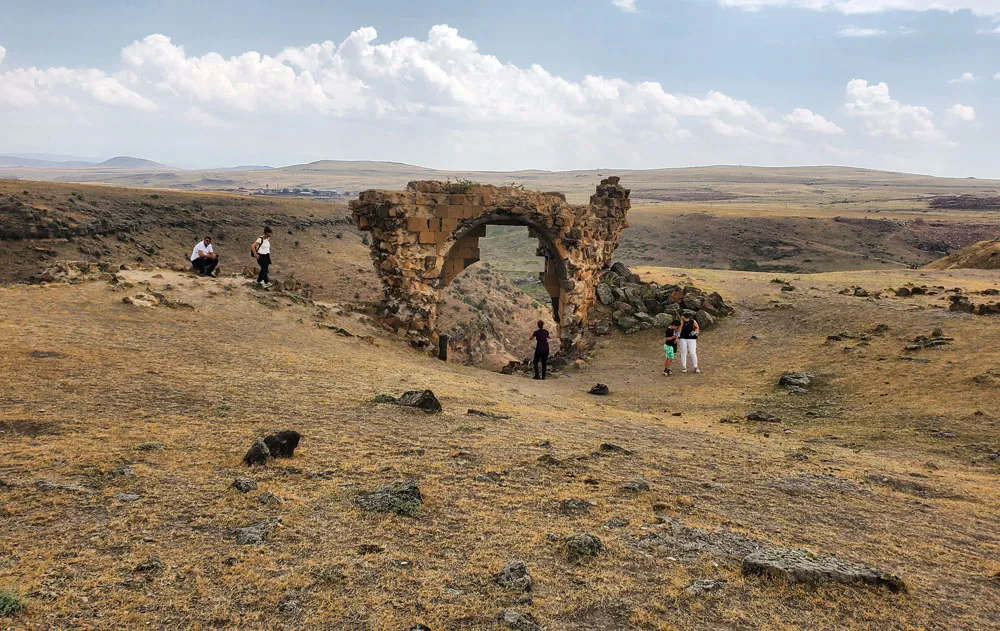
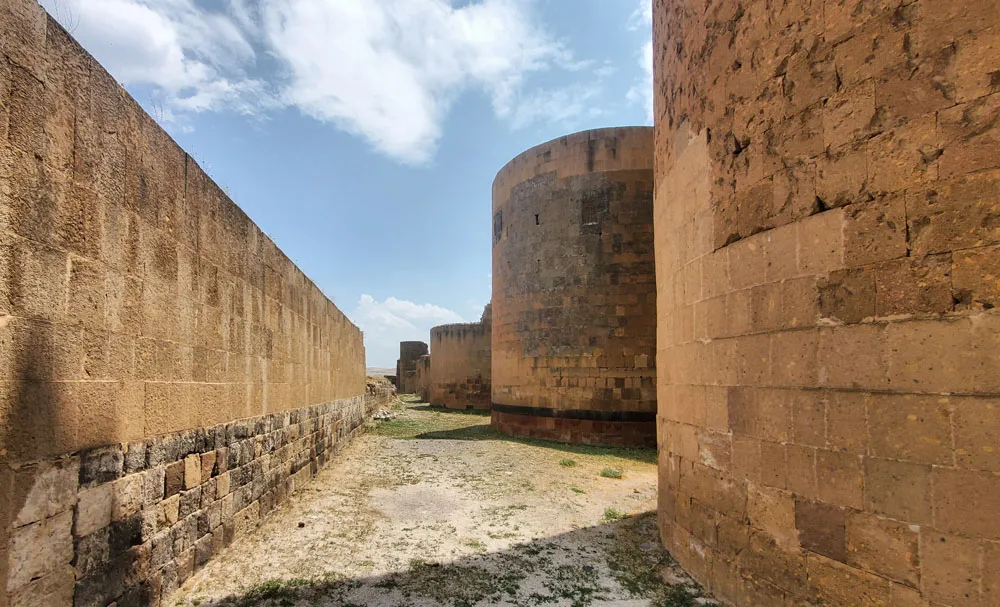
Ocaklı is separated from Ani by a powerful high wall with towers. These fortifications were built between the 4th and 8th centuries and gave considerable defensive strength to the fortress city, which stands on a high triangular plateau. The walls were later extended by Ani’s many rulers, but after the city was taken by the Mongol-Tatars in the 1240s the fortress fell into decline and nobody restored it again.
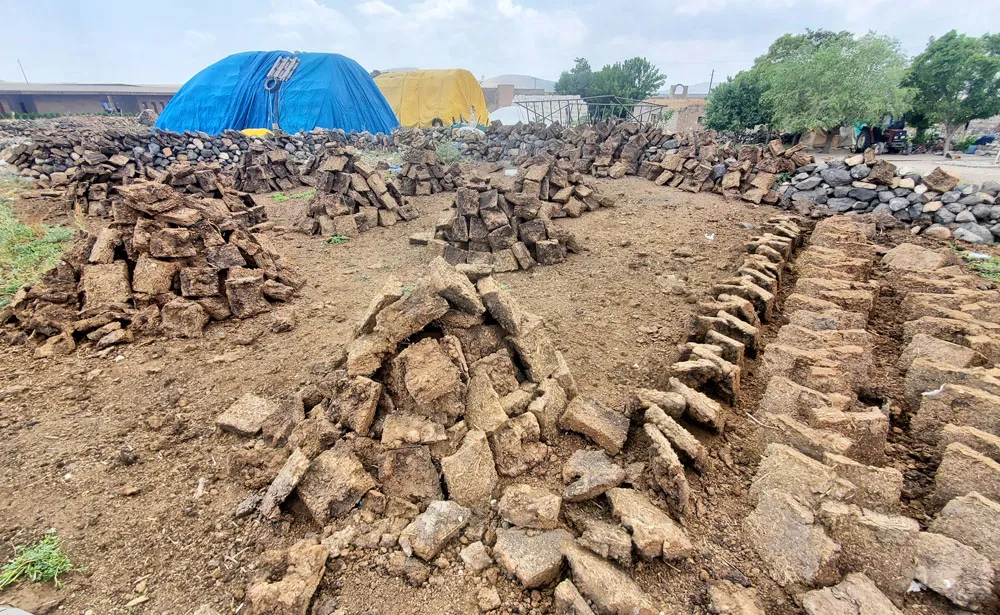
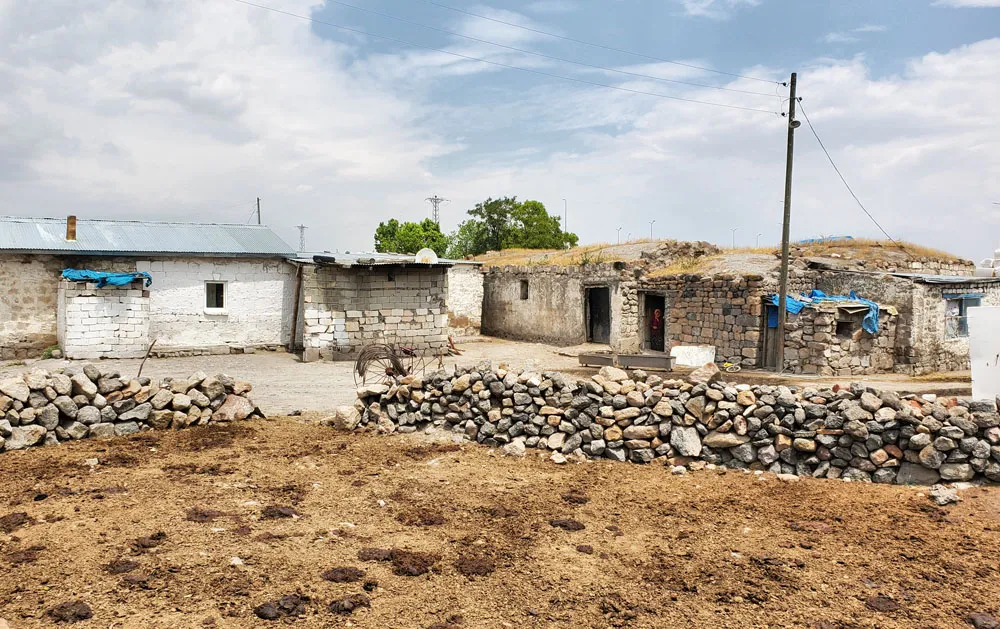
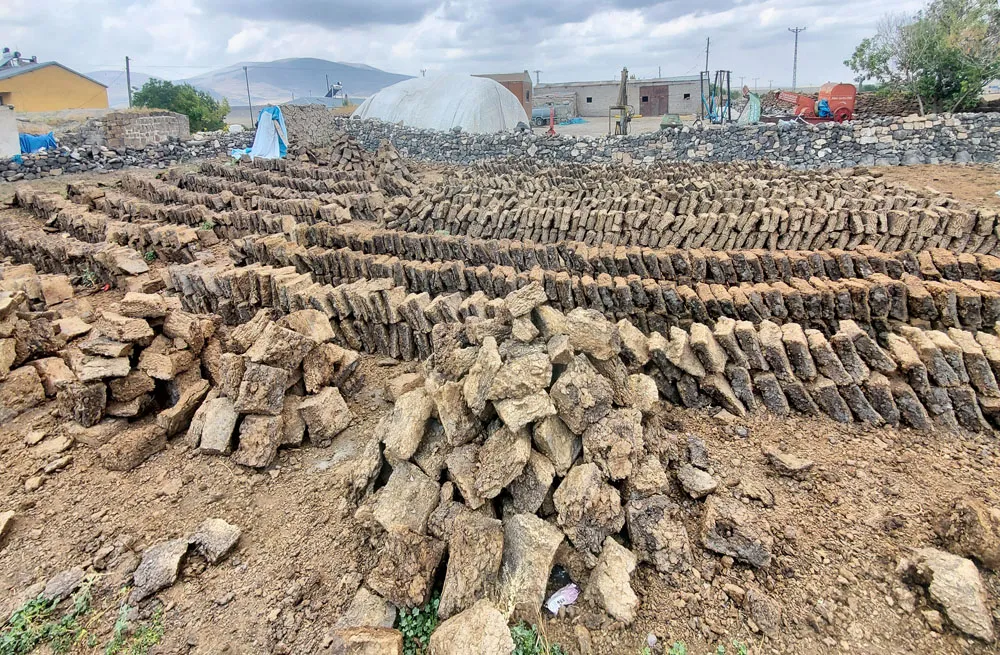
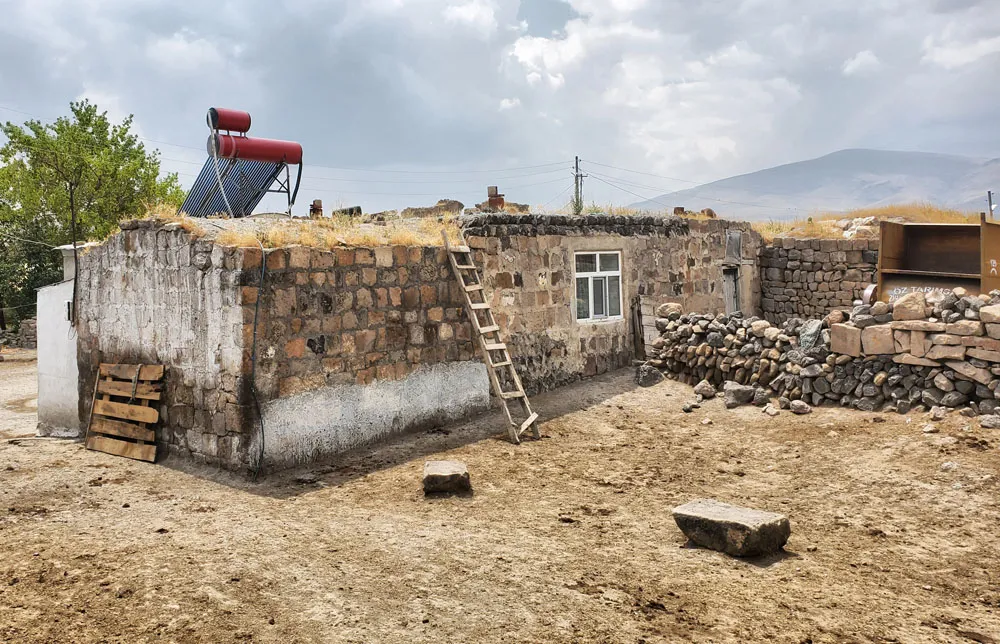
The village of Ocaklı
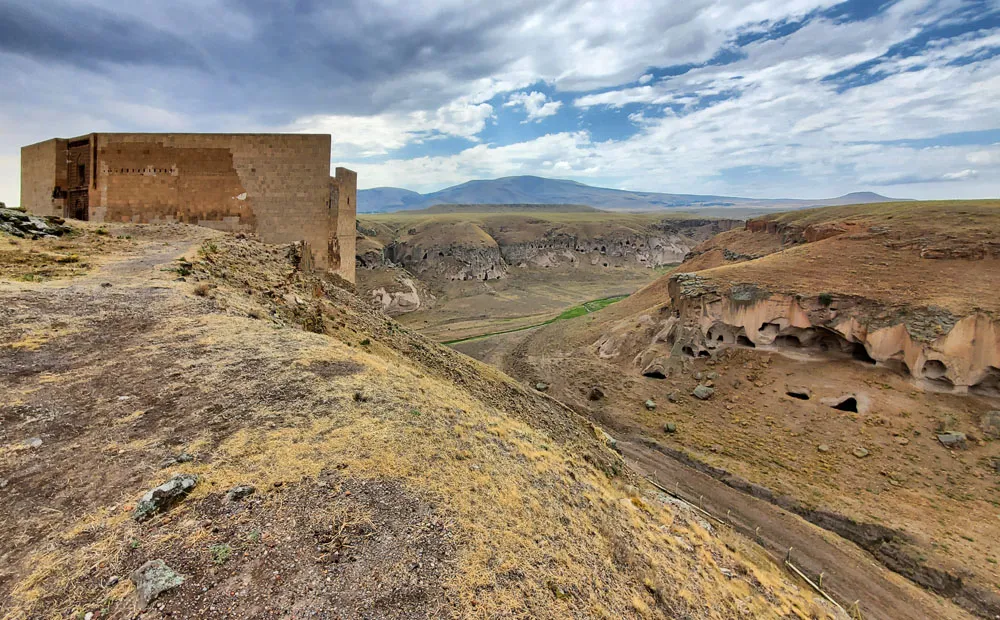
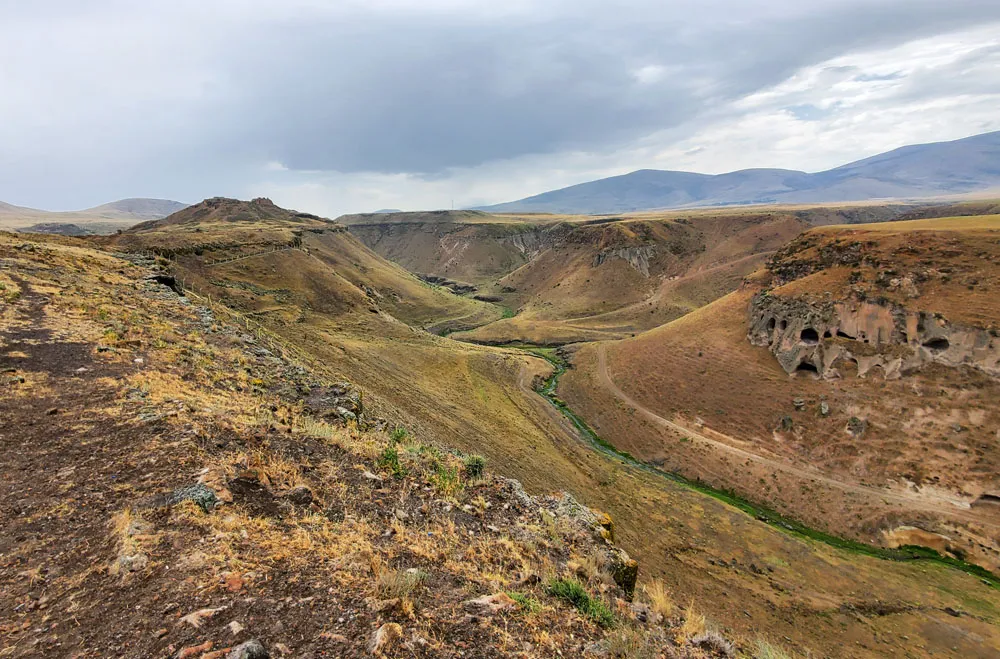
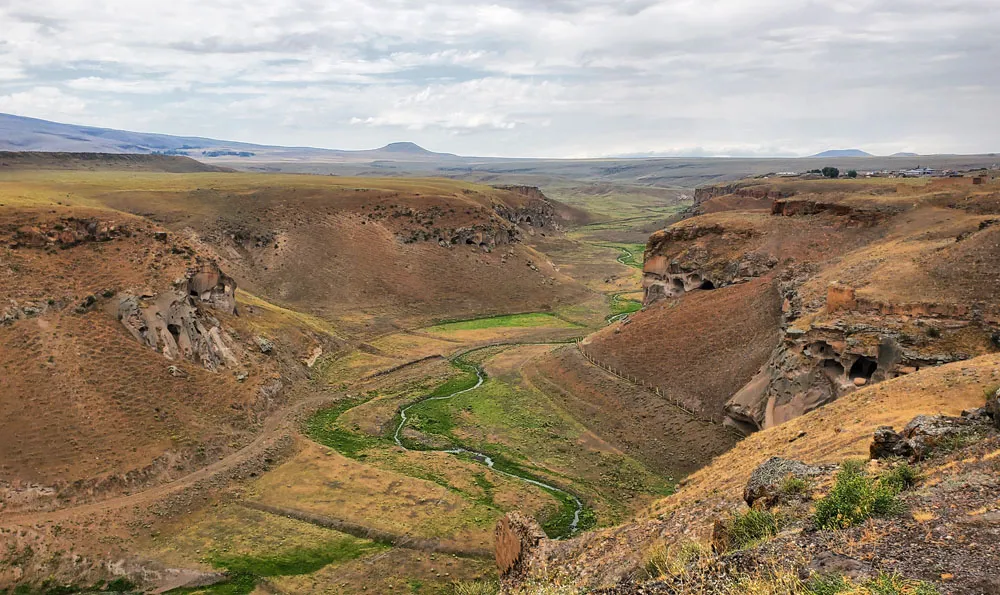
The city was completely surrounded by walls, but the most powerful double walls were built on the side of the plain, where there are no rocky cliffs. On the two other sides Ani was protected by the high stone banks of the Akhurian valley.
It is believed that a settlement existed on the site of Ani as early as the 8th century BC, but the first documentary evidence of this fortified city dates from the 5th century. That was the period of rule of the Armenian princely house of Kamsarakan. In 785 the city was seized by the Arabs, who held it for a hundred years. In 885 the city passed to the Armenian Bagratid dynasty, and it was under them that Ani’s period of rapid development began. From 806 the Bagratids, notably Prince Ashot IV, received from the Caliphate the title of prince of princes (the Armenians say king of kings) and, while remaining in fact a vassal of the Arabs, became the foremost among the numerous Armenian principalities. The Bagratids first made Bagaran (now a village in Armenia), 40 km from Ani, their capital. Then they made Shirakavan, 25 km from Ani, the capital. In 929 the capital became Kars, and in 961 Prince Ashot III made Ani the capital.
The city began to grow and turned into one of the most powerful Christian centres of the East. In 992 the Catholicosate (the seat of the Catholicos, the patriarch of the Armenians) moved here. This was the reign of King Gagik I, the period of Ani’s greatest flowering. It was then that the city began to be called the polis of 1,001 churches.
Naturally, a rich city is always a coveted target for invaders. Ani too was repeatedly stormed and plundered, first by the Byzantines, then by the Seljuks. In 1072 the Seljuks sold Ani to the Kurdish Shaddadid dynasty. Later the Georgians captured the city four times. On the fourth attempt the Georgian army, led by Queen Tamar, managed to drive out the Shaddadids. The Zakarid dynasty was installed to rule Armenia. This happened in 1199, and 40 years later the city was captured by the Mongol-Tatars and its decline began.
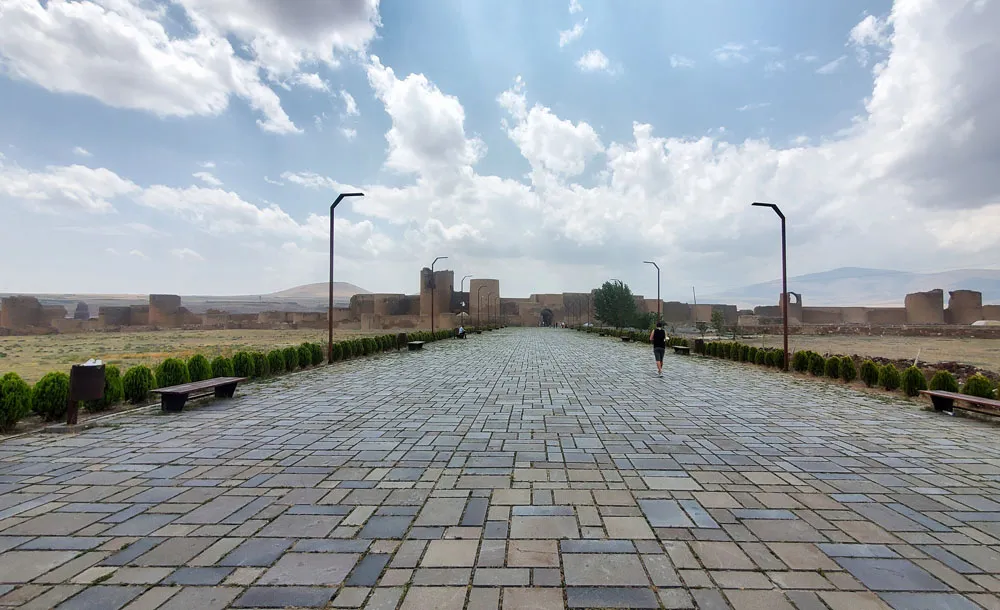
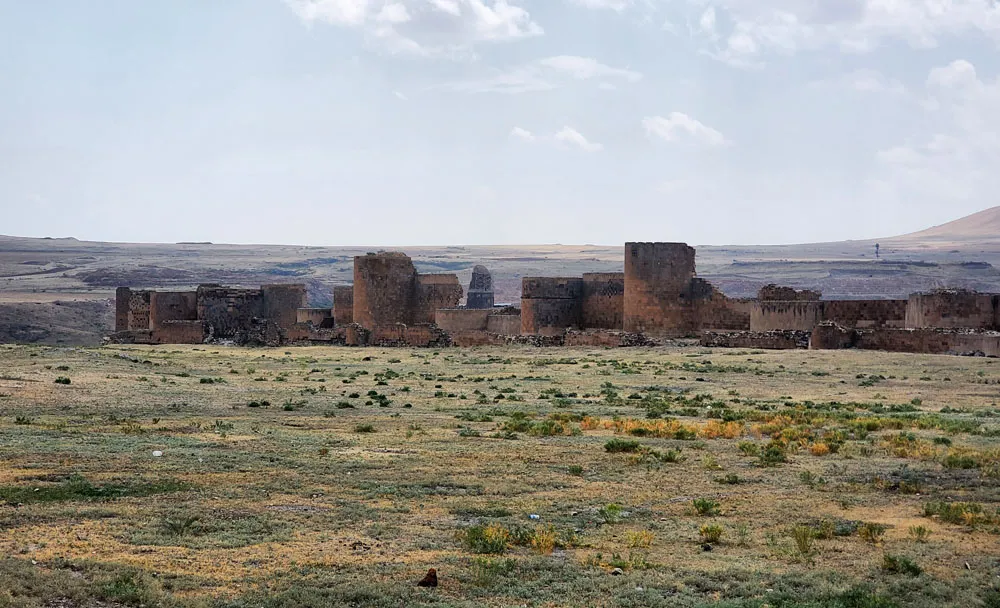
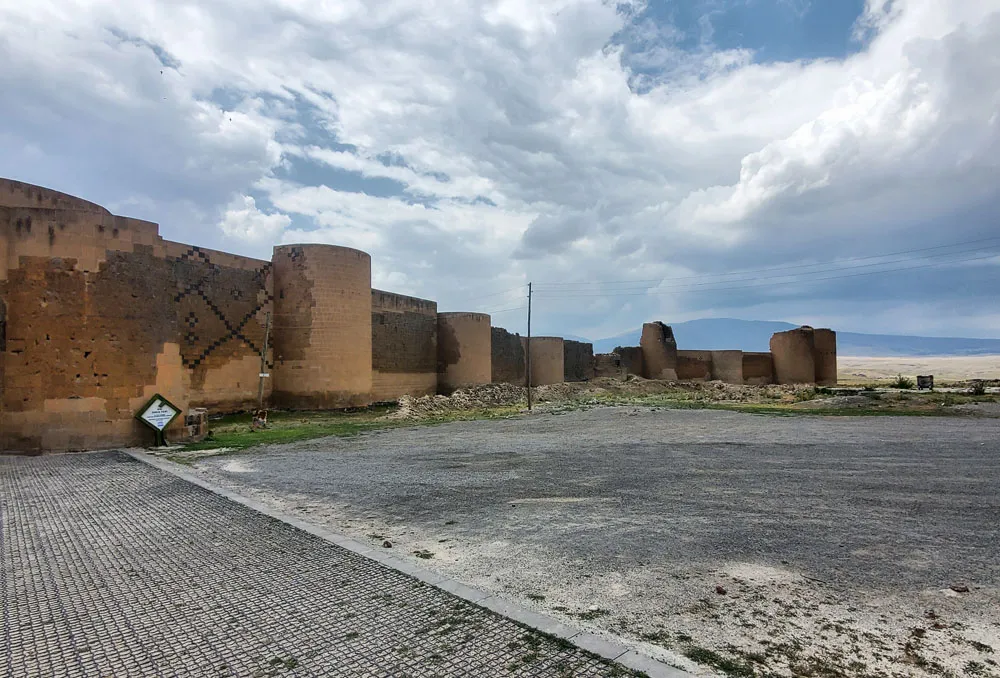
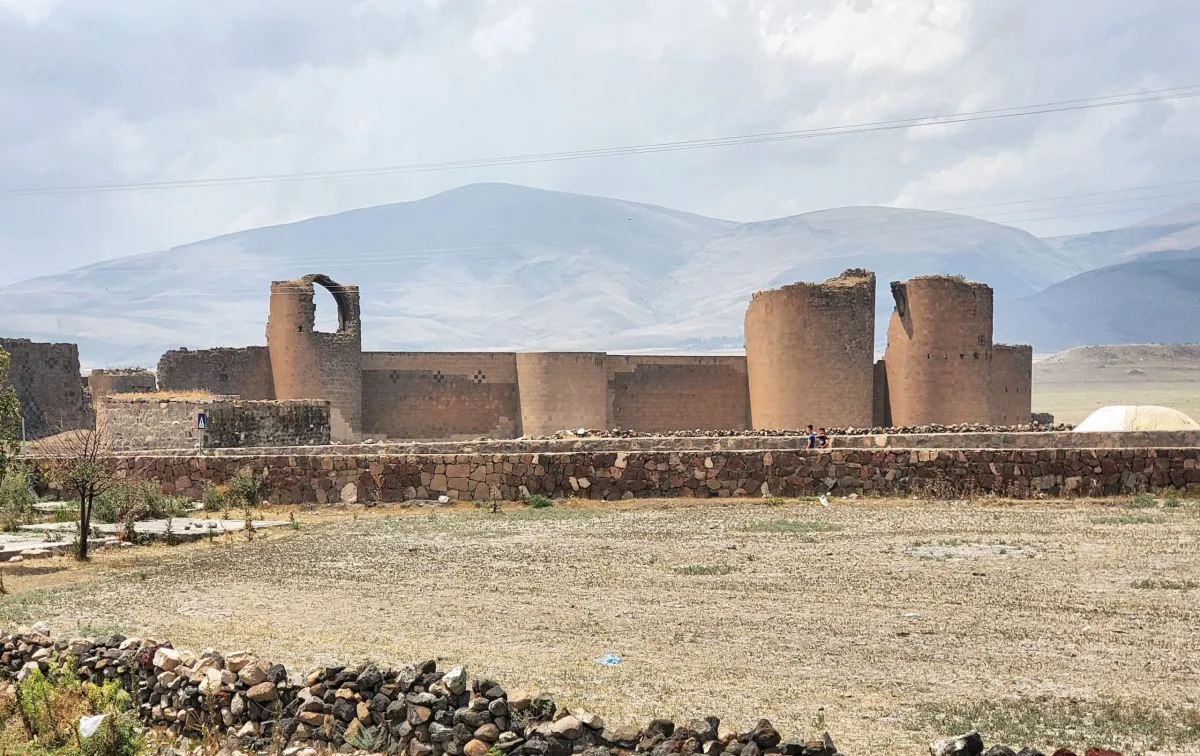
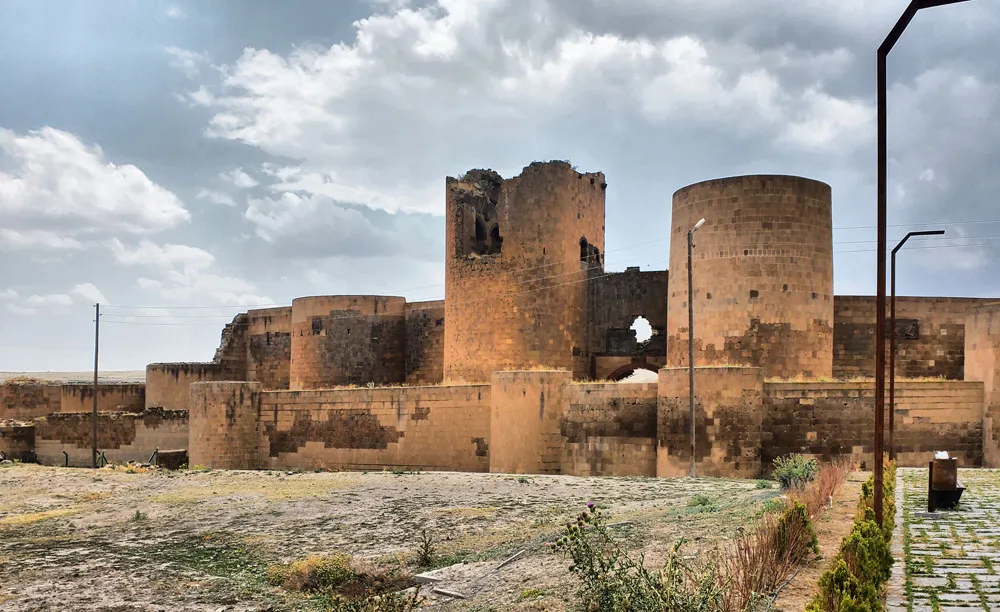
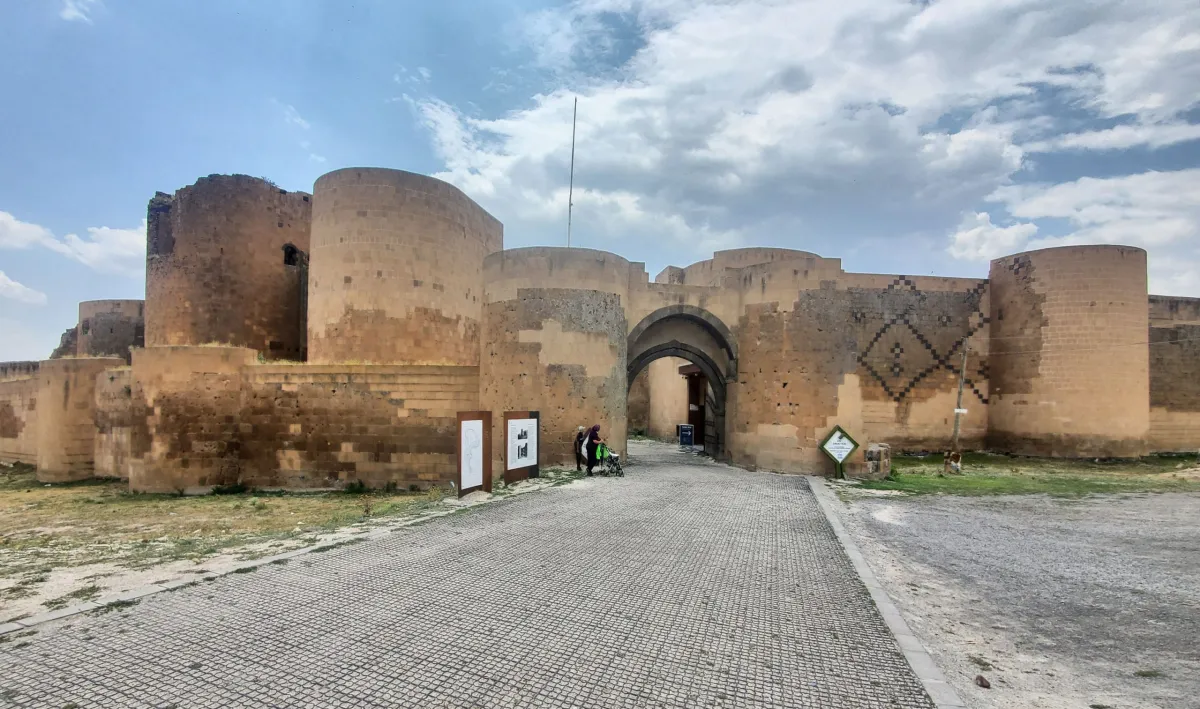
Walls and towers
I will say right away that to see all the monuments of Ani even quickly you will need at least three hours. The distances between sites here are very great: for example, from the corner where the Church of St. Gregory stands to the citadel, in another far corner, it is about three kilometres. Be ready to walk a lot. Before the entrance you can have some Turkish tea and a bite to eat – a few years ago an infrastructure complex was built here, with a café, souvenir stalls and a car park.
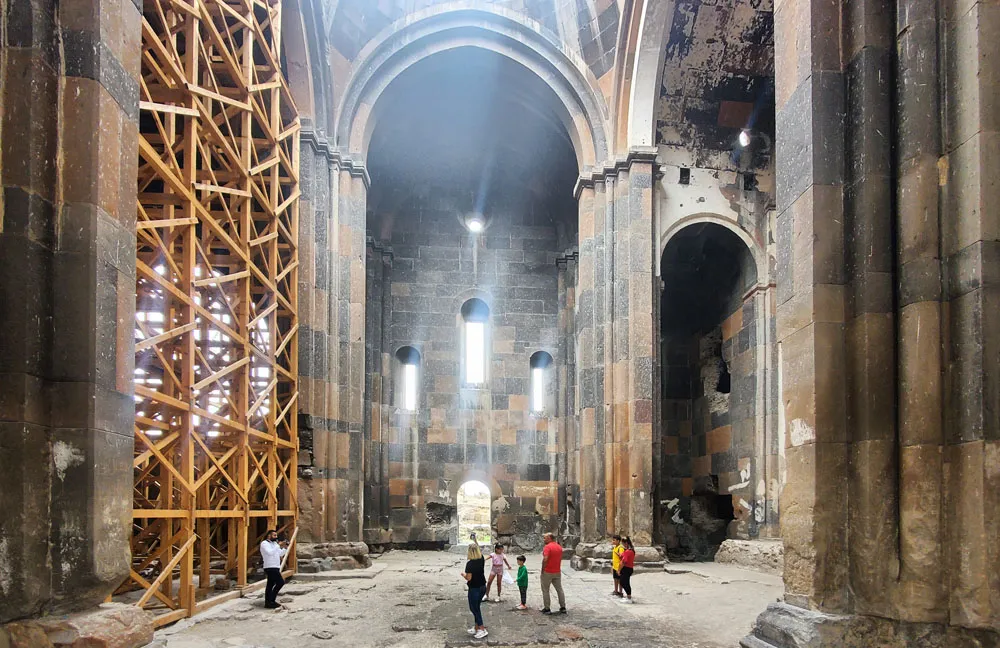
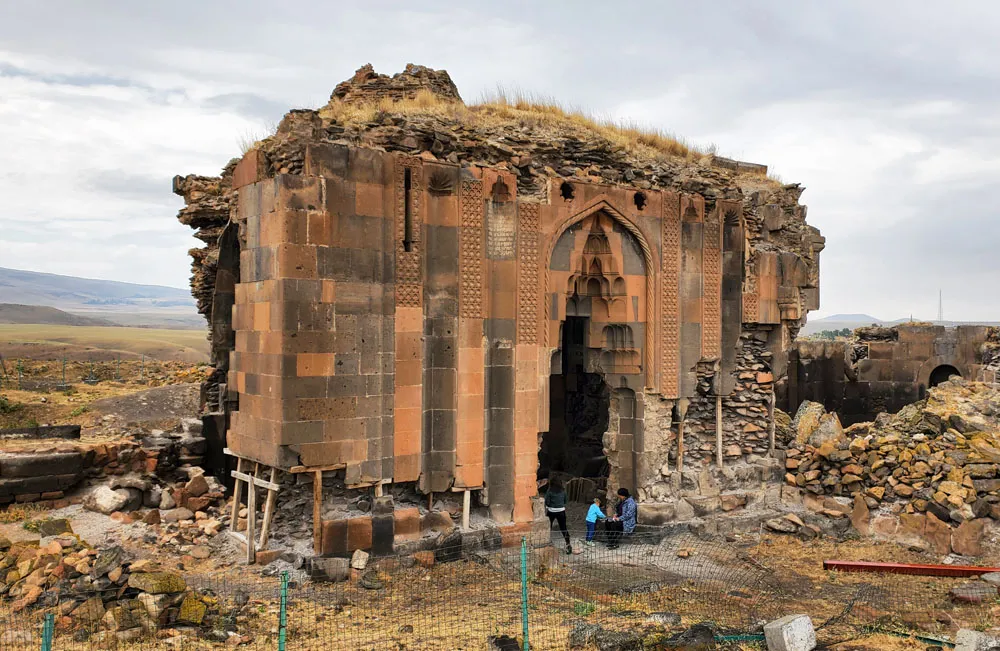
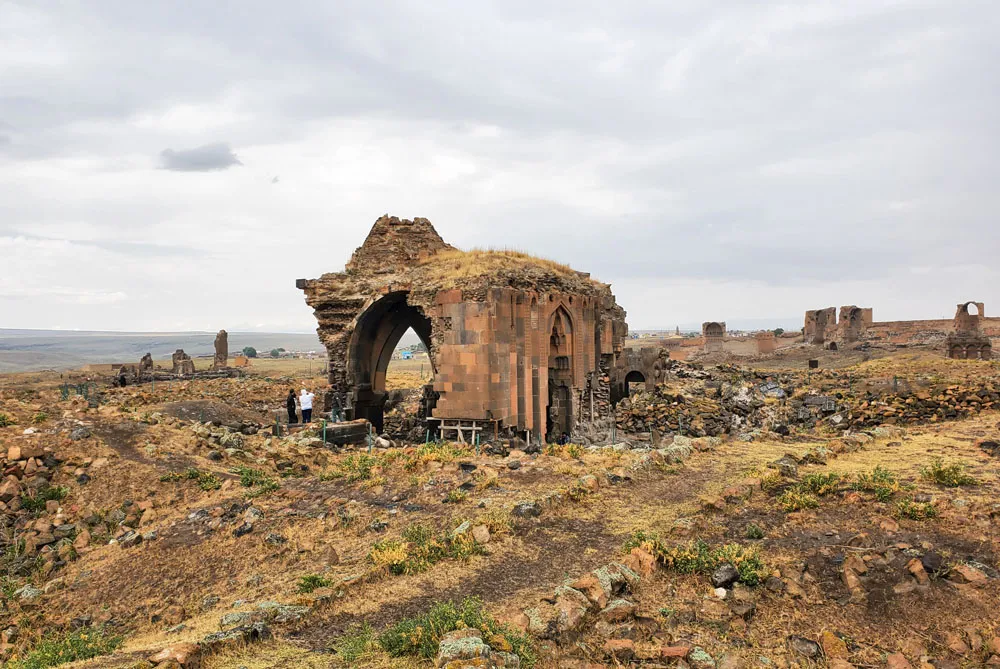
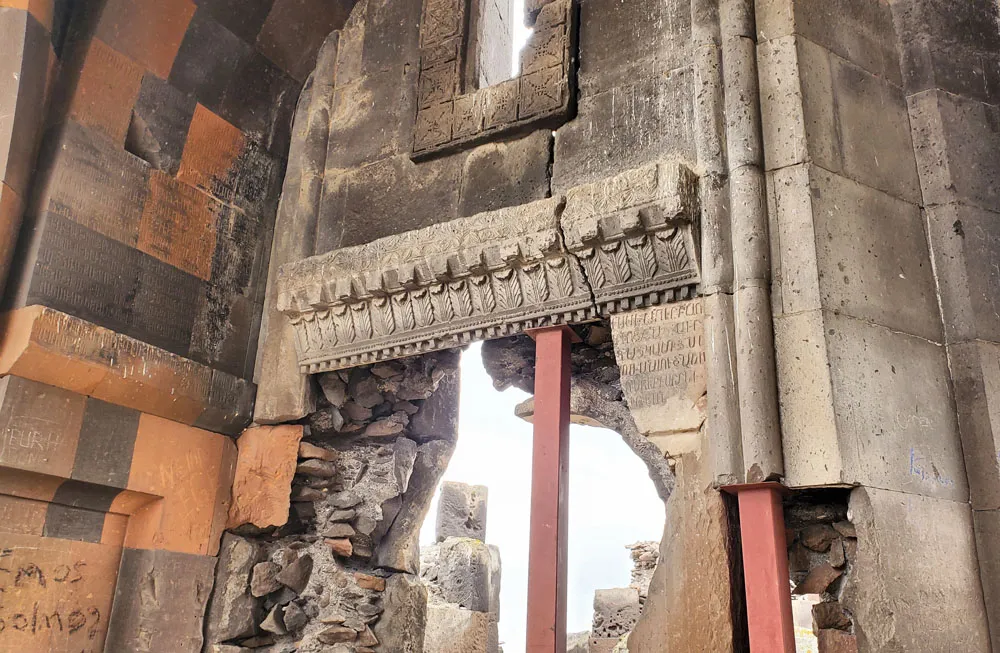
Having entered Ani through the central gate, I recommend moving clockwise. Passing numerous fragments of foundations, the first significant structure is the Church of the Holy Saviour – or rather half of it, as if cut from top to bottom by some enormous knife. At one time this was a unique church, which housed a piece of the Cross of Jesus obtained in Constantinople by Prince Abulgharib Pahlavuni. Today the church is propped up from inside by powerful metal scaffolding, and probably only that keeps it from collapsing. Outside, the walls bear many reliefs and inscriptions; inside, old frescoes barely show through the plaster. A photographer in the church told me that he is taking pictures for a special programme that can model the frescoes so that they can be reproduced.
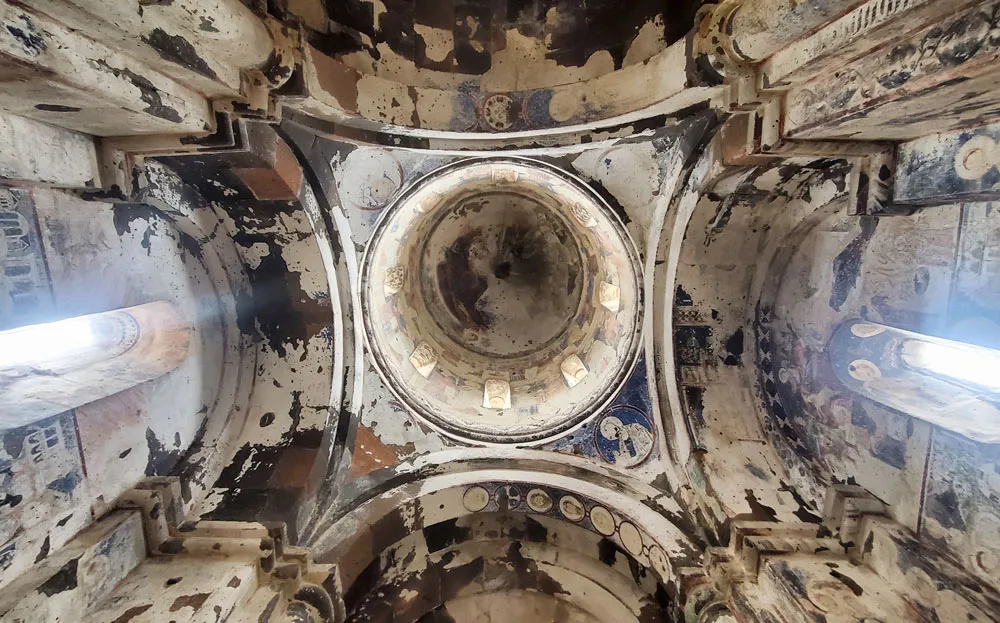
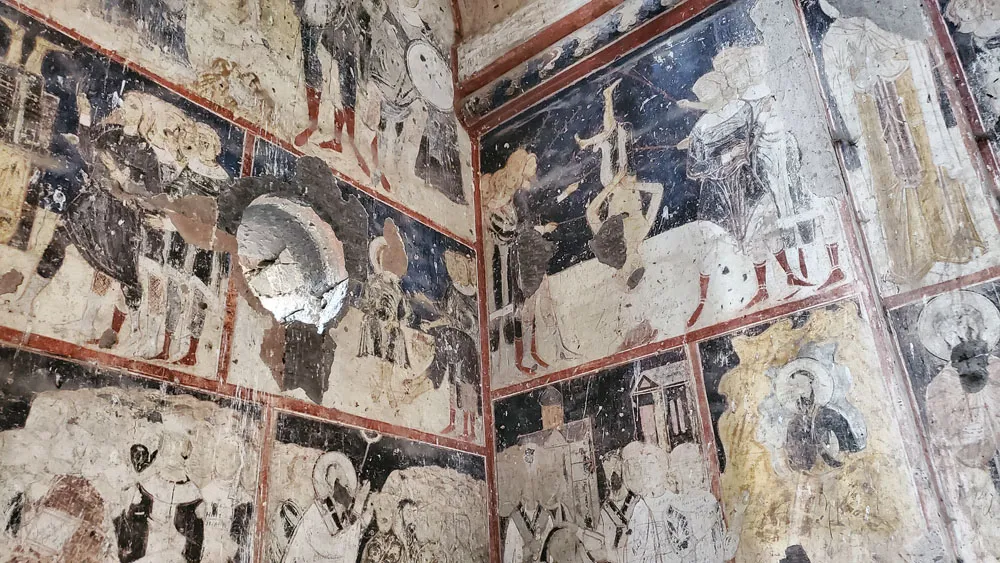
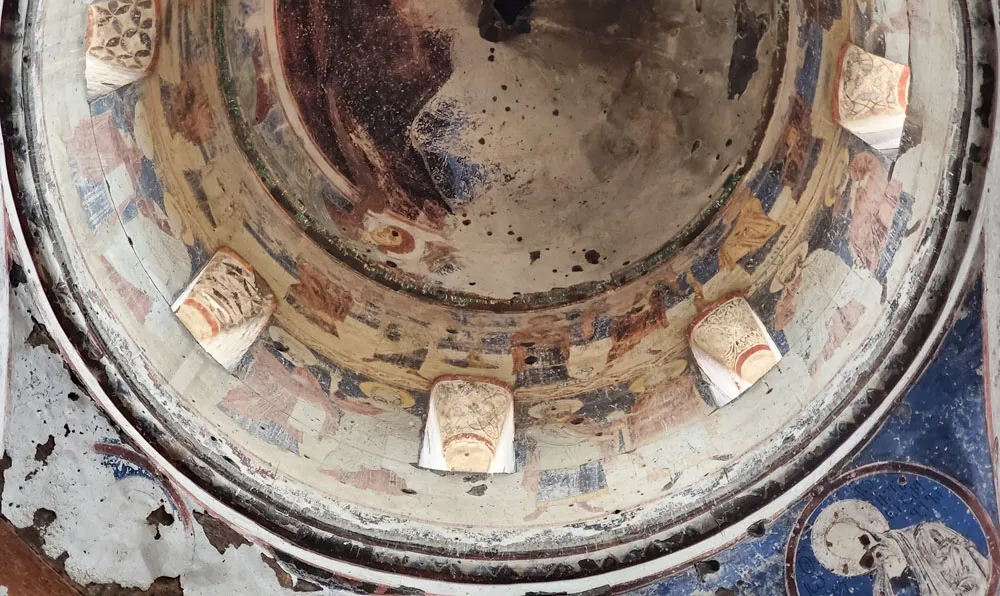
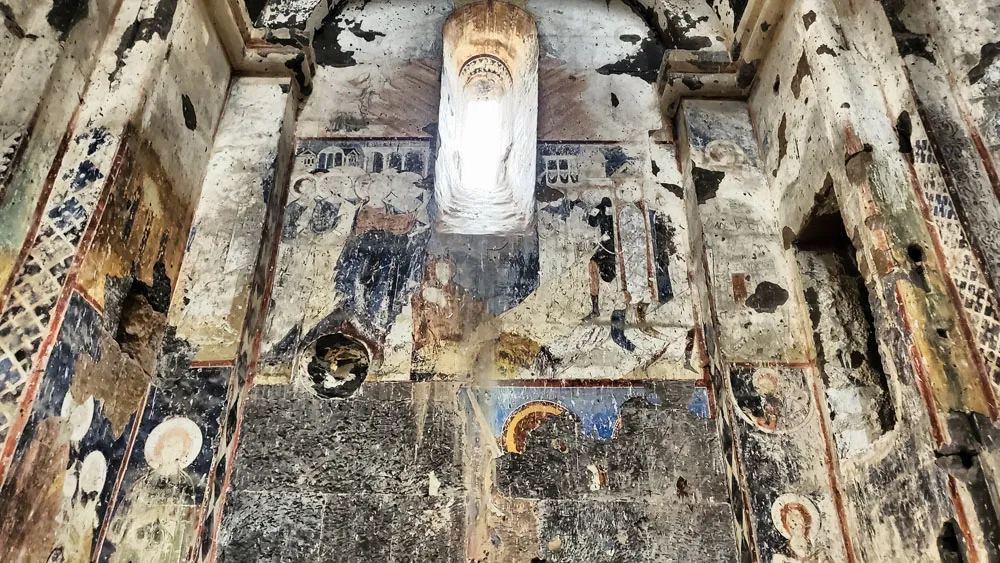
South-east of the Church of the Holy Saviour, on a small terrace above the gorge of the Akhurian River, stands the best-preserved church of Ani – the Church of St. Gregory, built to the order of the rich merchant Tigran Honents, and therefore often called by the founder’s name. The church was built in 1215, when the city was part of Georgia, so it was painted by Georgian masters, and these fairy-tale frescoes have by some miracle survived to our day. They tell of the life of Jesus and of Gregory the Illuminator, the baptizer of Armenia.
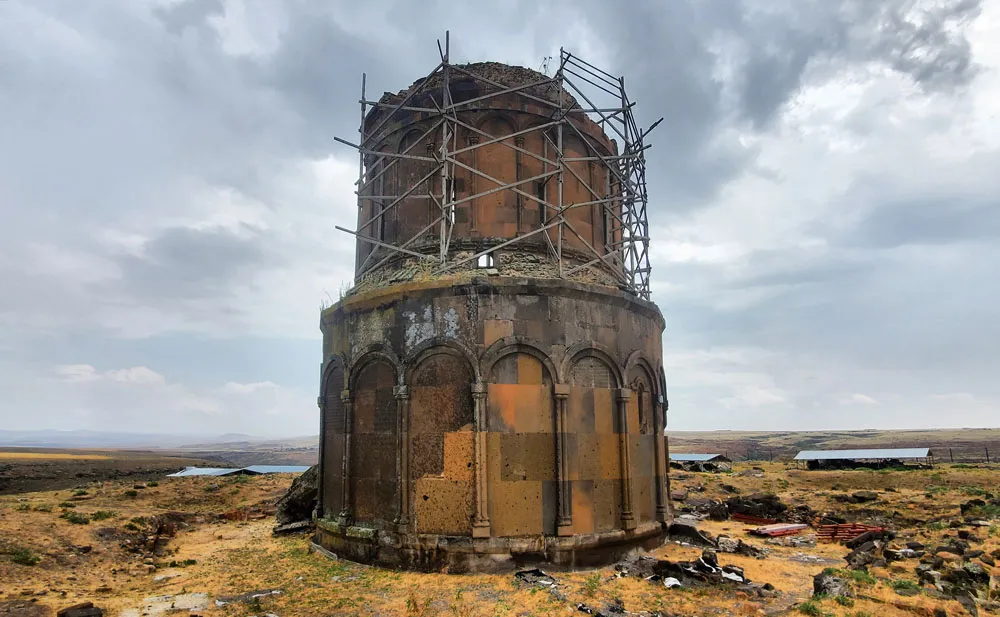
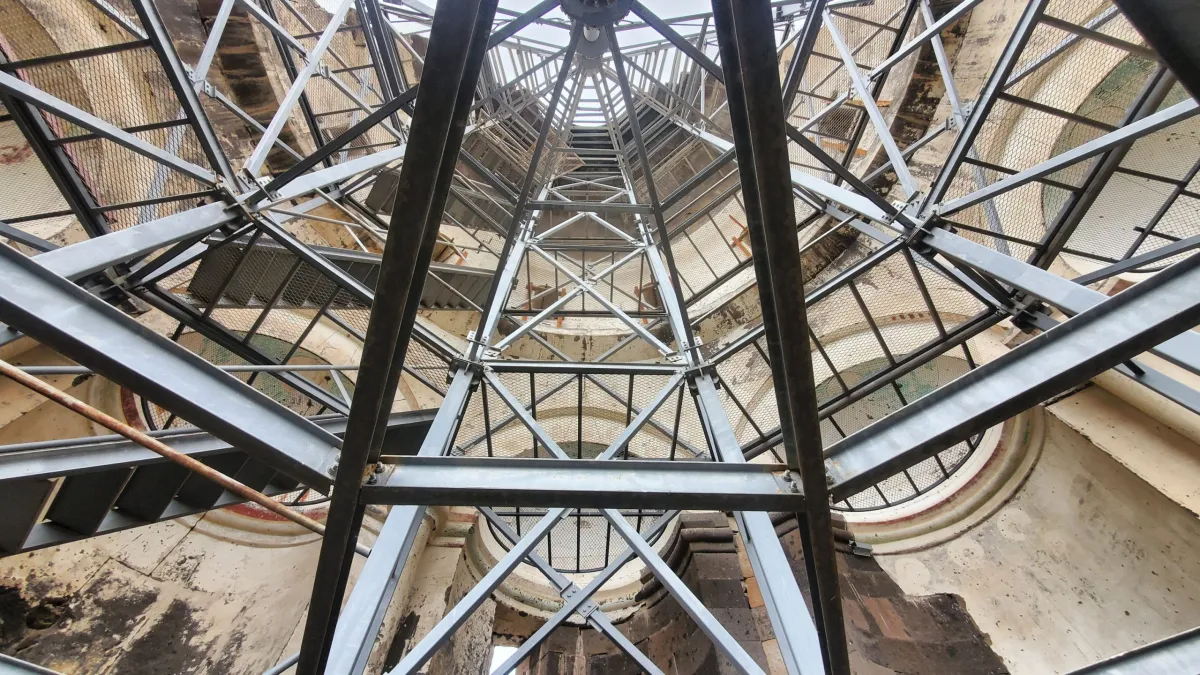
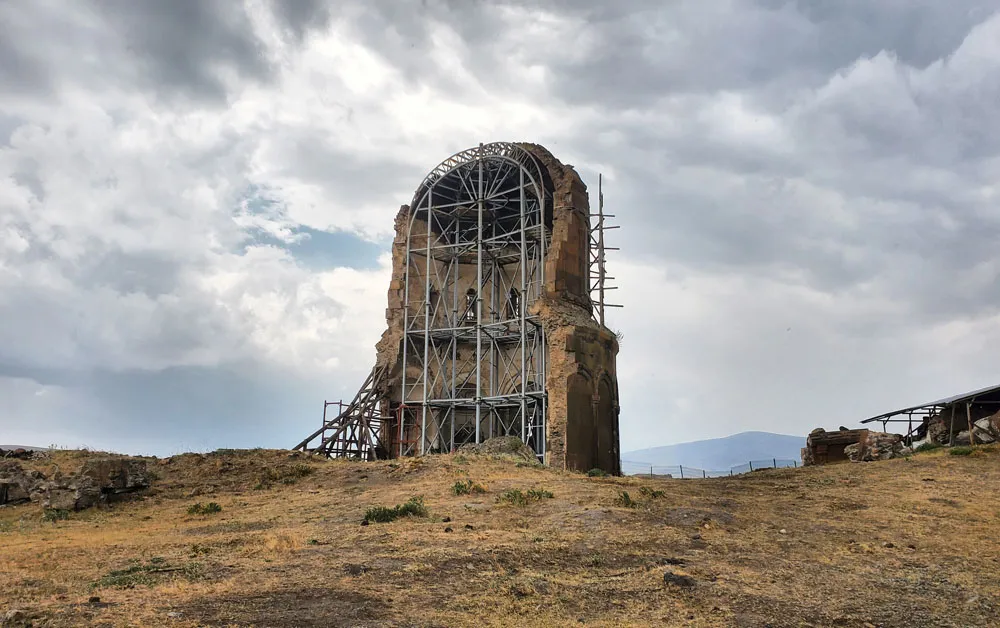
The Church of the Holy Saviour
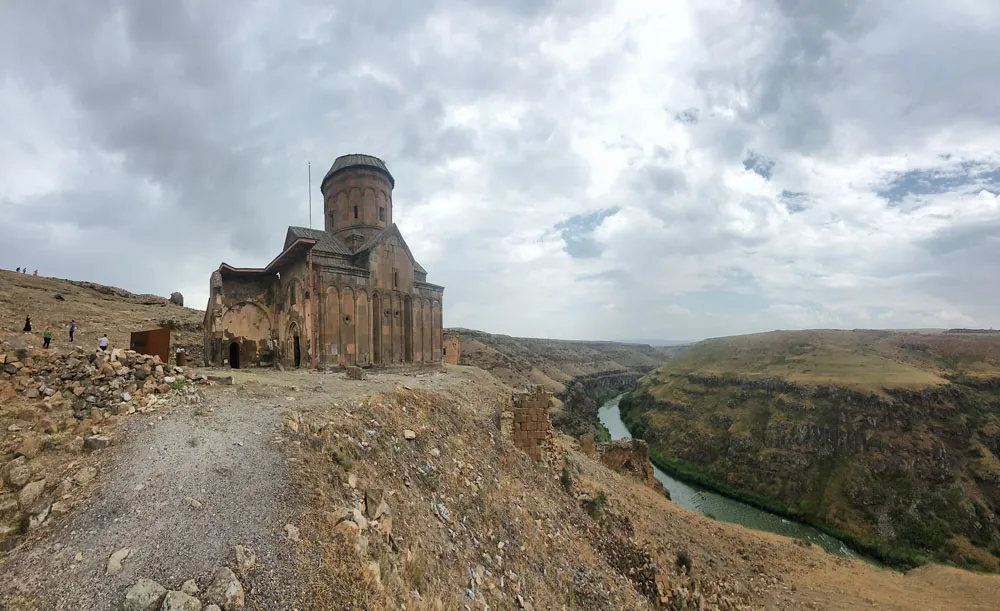
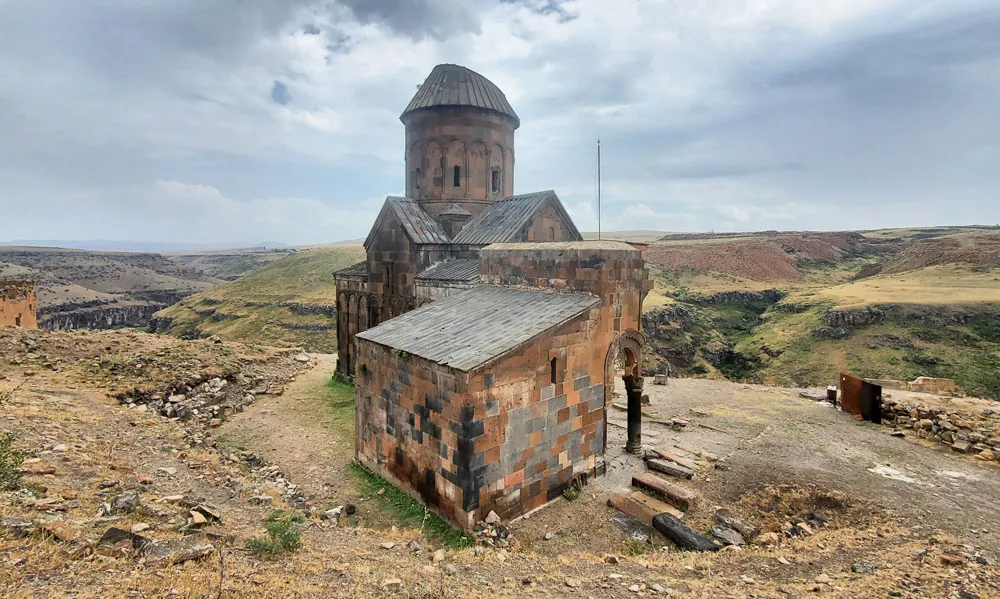
The Church of St. Gregory of Tigran Honents
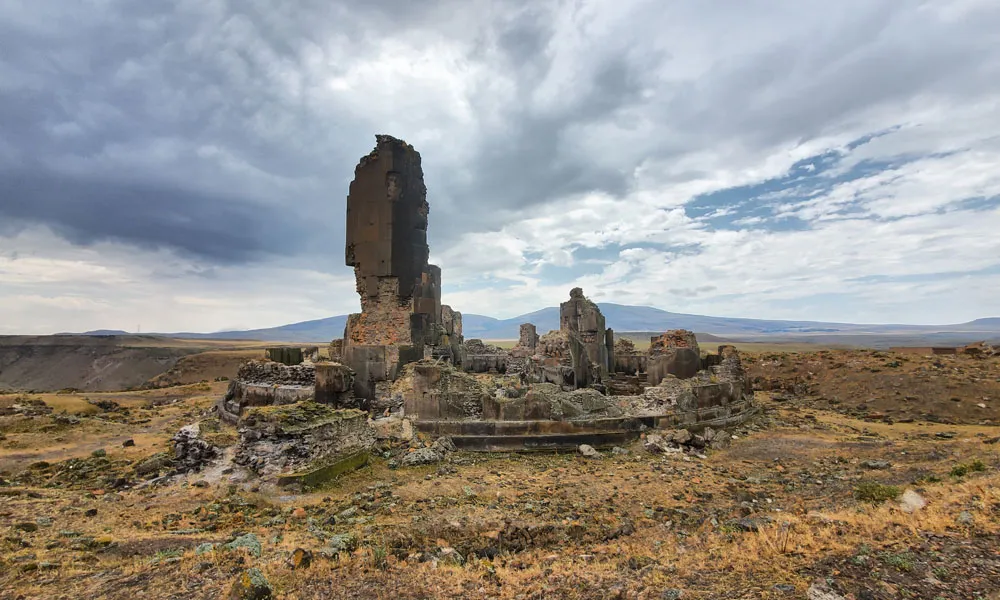
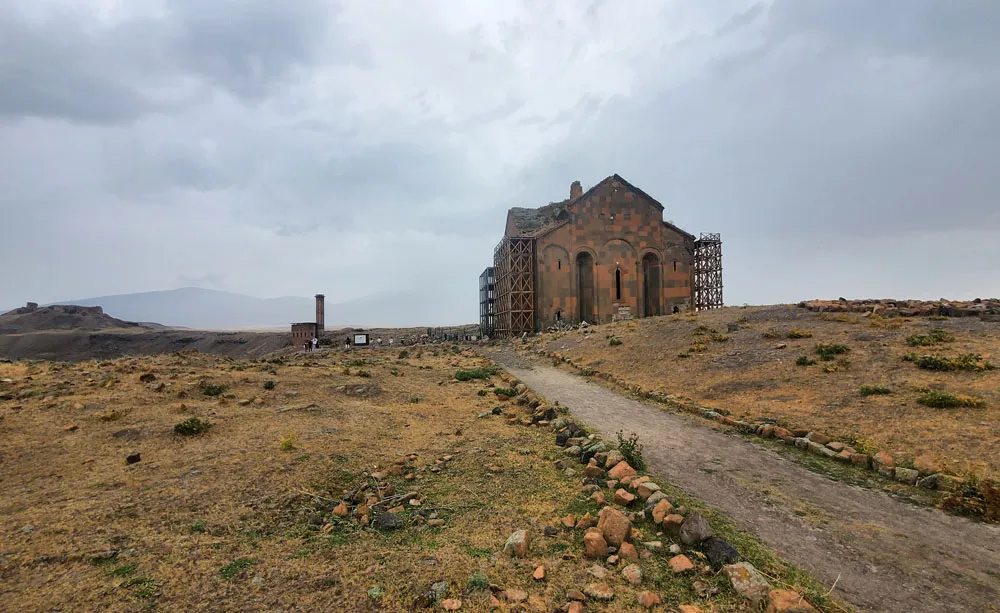
West of the Church of St. Gregory stands the massive cathedral. Even as a half-ruin it looks very impressive. It was built under several kings from 989 to 1001. It was meant to be not just a church – it was built as a symbol of faith, as a talisman that was to protect the city from enemies. In 1064 the Seljuks, who had captured Ani, converted the cathedral into a mosque, burying a cross in front of the entrance – Muslims going to pray trampled the cross. In 1124 the Georgians won Ani back and returned the church to Christianity.
The enormous dome of the cathedral fell during the earthquake of 1319. It is believed that the church was already out of use by then, and nobody restored it afterwards.
250 metres west of the cathedral stands another church dedicated to St. Gregory – the Armenians really did revere him greatly. It is called Abughamrents. This fairly typical faceted twelve-sided rotunda was built in the 10th century by Prince Grigor Pahlavuni as his family church. The prince was buried here. They say his grave was plundered quite recently – in the 1990s.
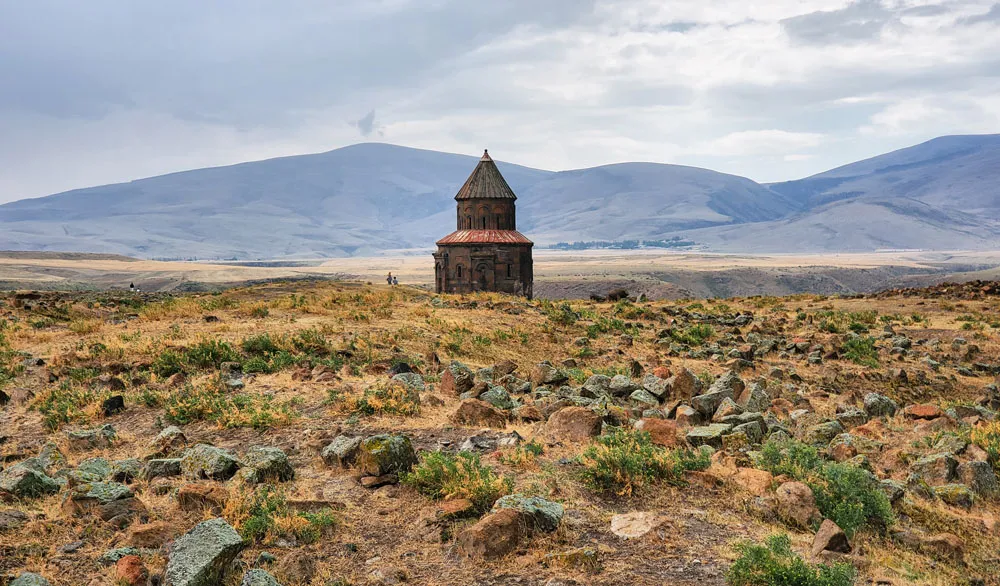
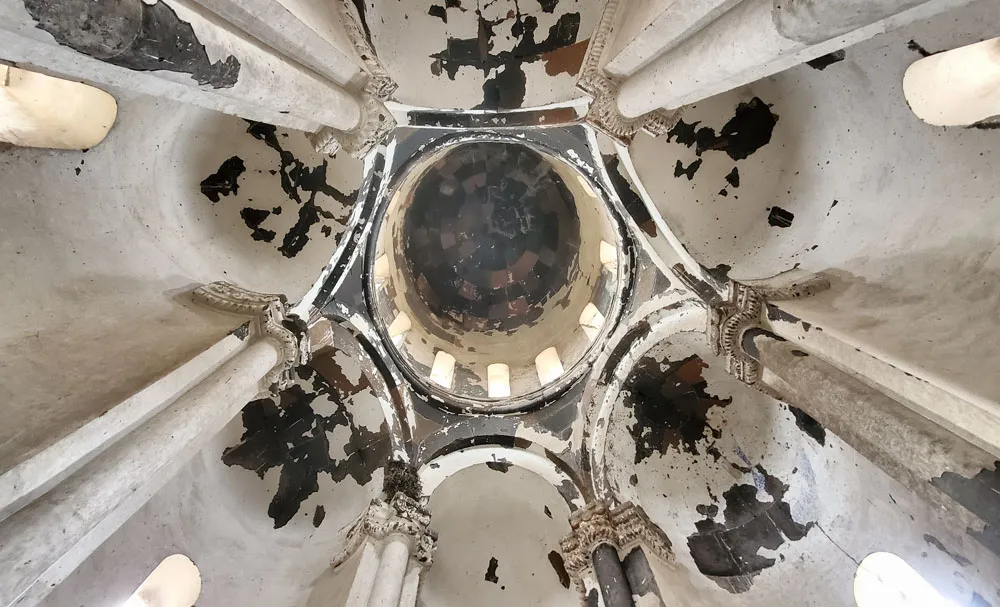
The Church of St. Gregory Abughamrents
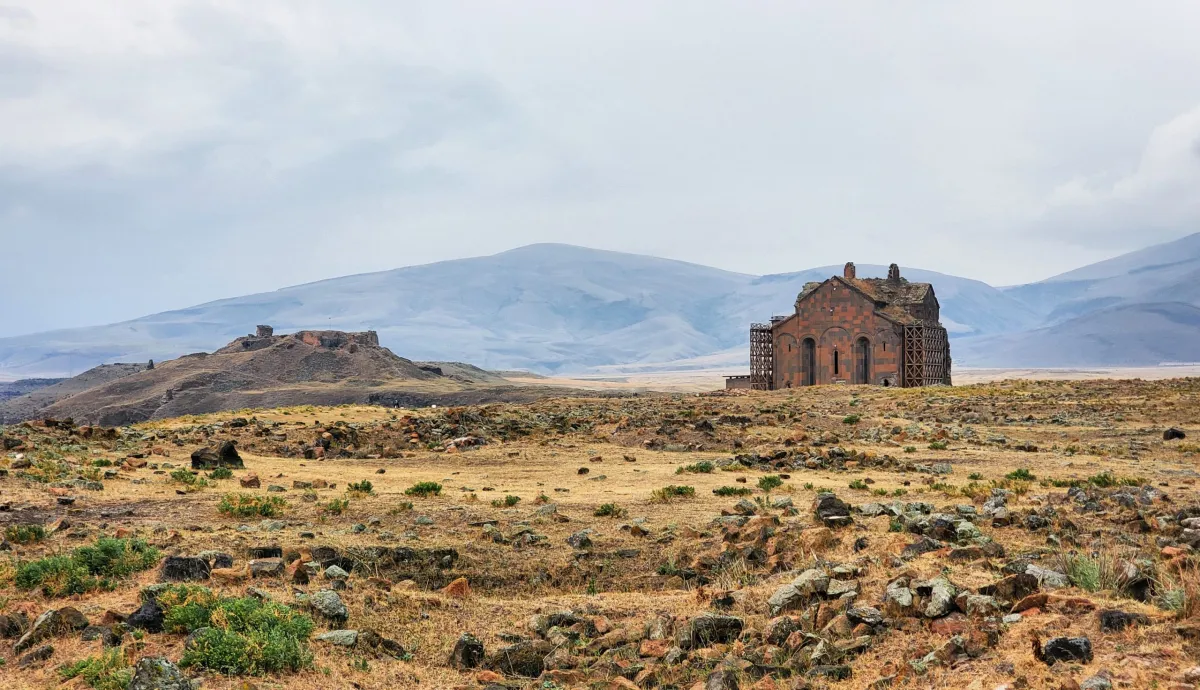
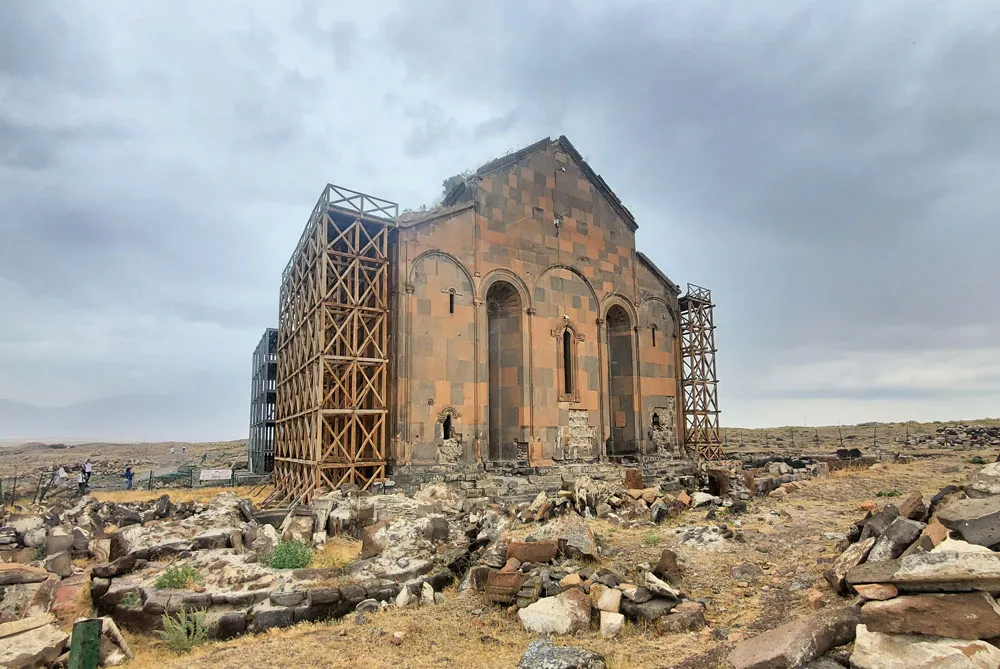
The cathedral
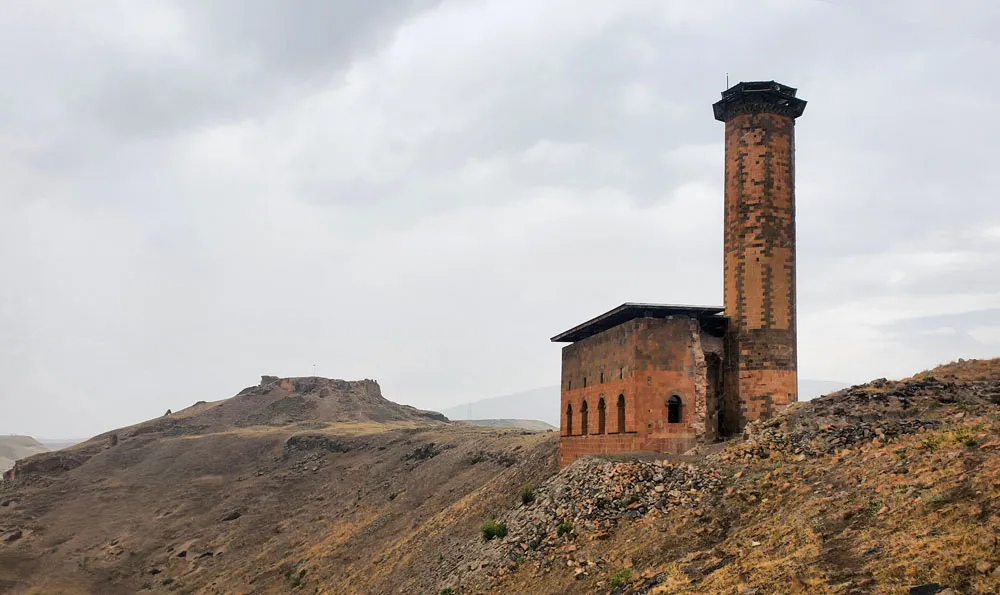
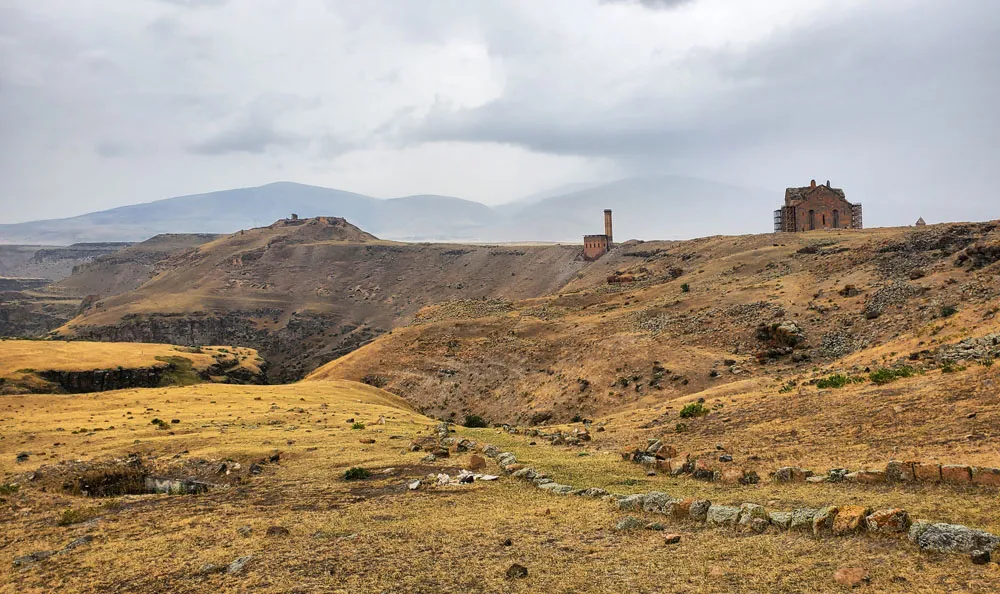
Most of Ani’s churches were built close to the edge of the precipice so that they could be seen from afar. The Seljuks did the same when at the end of the 11th century they built the Manuchihr Mosque (Minuchir). There is a huge number of conflicting claims about this building. The Armenians say that it was originally their customs house, which the Seljuks adapted as a mosque. The Turks say that it was built as a mosque and is even the oldest of the Seljuks. Others say that only the minaret remains of the old mosque – the walls were built much later. Who knows whom to believe.
Undoubtedly there were once quite a few mosques in Ani, but only one has survived. There are, however, also the remains of a minaret and the foundations of the mosque of Abu’l Muammaran.
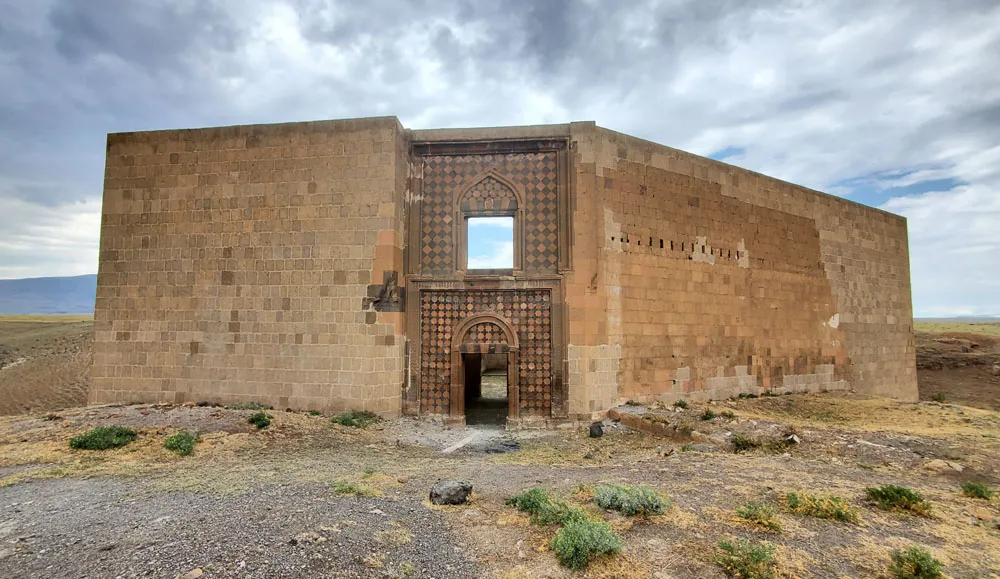
The last line of defence of Ani was the citadel. It has come down to our days in a very ruined state. It was built in the 10th century around the Bagratid palace – the heart of the city’s life. Only ruins remain of the palace and the citadel, but Ani has one more palace – probably the palace of the governor in Seljuk times, which has been heavily reconstructed.
At one time the largest structure in Ani was the Cathedral of St. Gregory the Illuminator, built by King Gagik I as the church of the millennium. It was built to resemble Zvartnots near Vagharshapat, and it had a similar fate – it collapsed after an earthquake, leaving majestic ruins. Probably Ani too could have been left with similar ruins, had UNESCO not singled out the city. Now one can be a little calmer about the fate of the great polis. The Turks have realized that these are not just old Armenian stones – this is historical and cultural heritage on which one can also earn some money.
Text and photos by Roman Malenkov.
Mosques of Ani