Skalyvatka. Cossack cemetery

· 2 min read
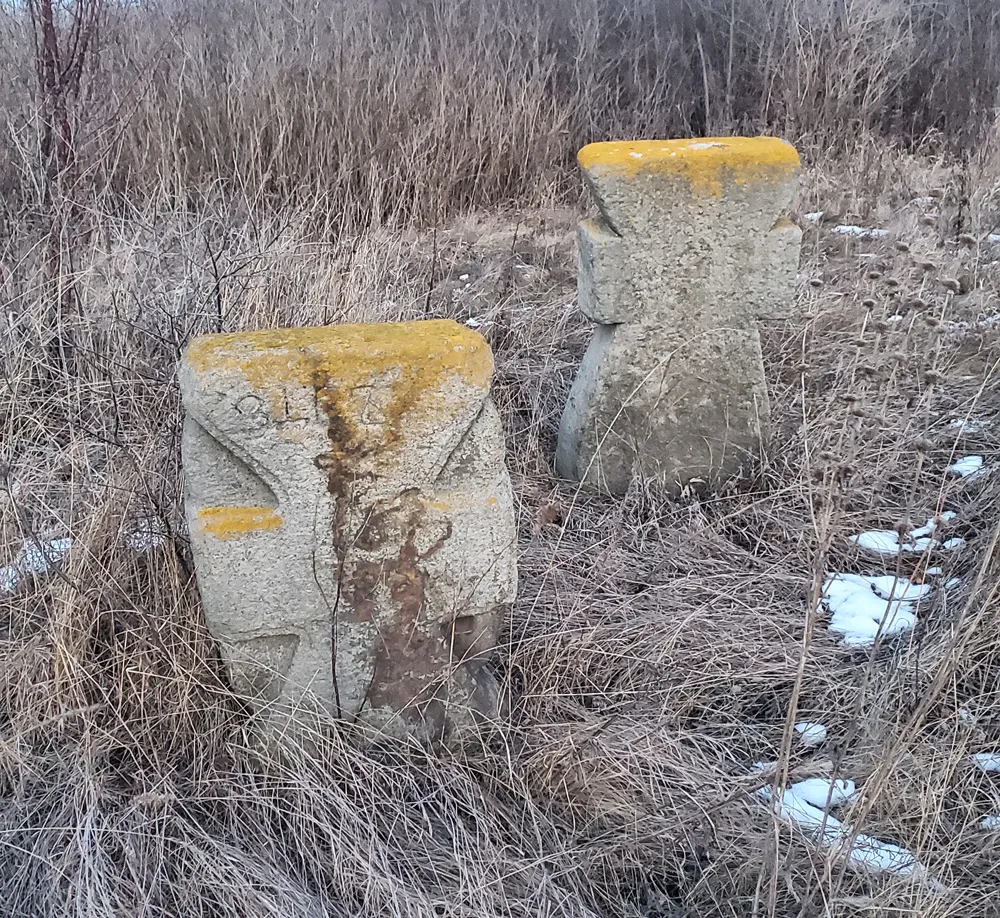
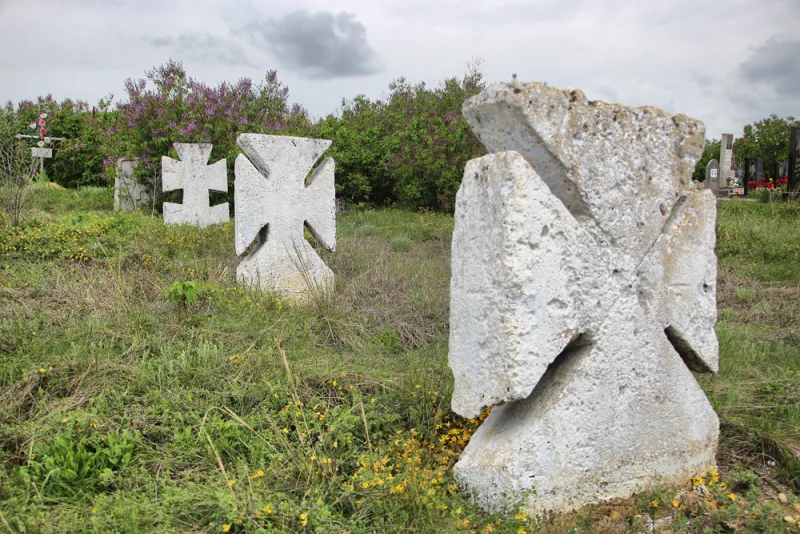
To avoid arguments right away, let us note that it is the local population who call the cemetery in Skalyvatka Cossack. There is no documentary proof that the graves are indeed Cossack, although we may suppose that the first settlers were Cossacks. The point is that in the 18th century a significant part of the population of the town of Kalnybolota (present-day Katerynopil) were Cossacks. They had their own kuren (company) at the Sich, and so took regular part in Cossack campaigns. Even the burghers of Kalnybolota considered themselves Cossacks. They took an active part in the Haidamaka uprising. After the uprising was crushed, a large detachment of Kalnybolota men, led by Makar, withdrew to the Sich, and after the latter was abolished, returned to their native lands. It is assumed that the Cossacks of this detachment founded Skalyvatka.
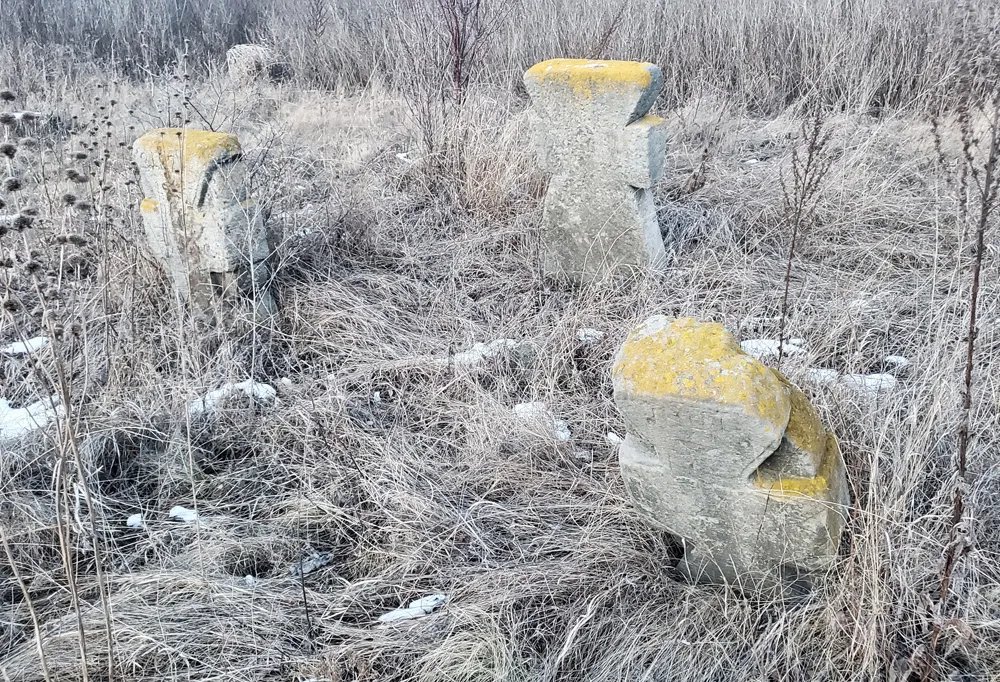
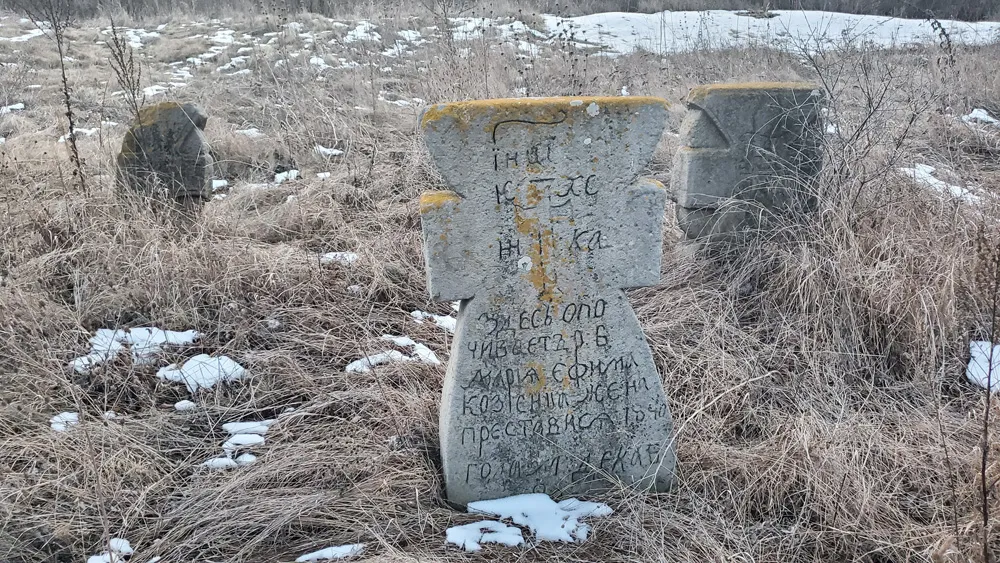
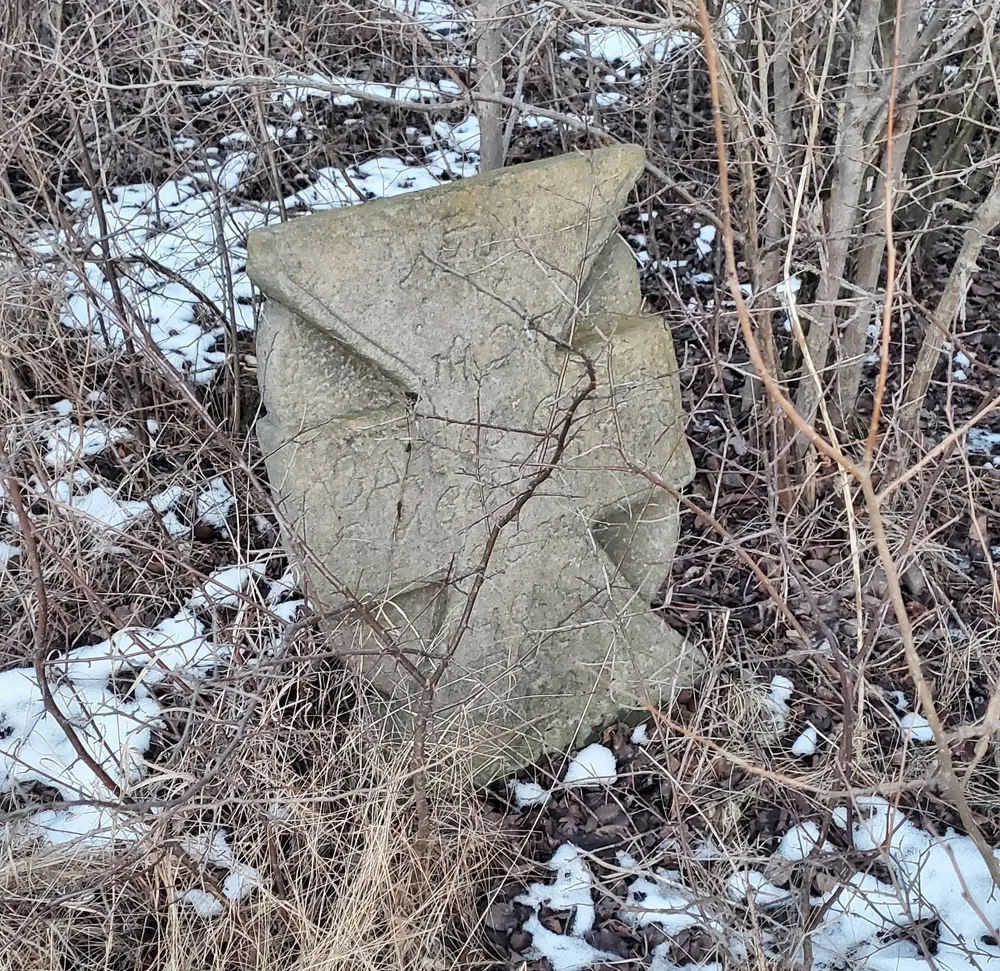
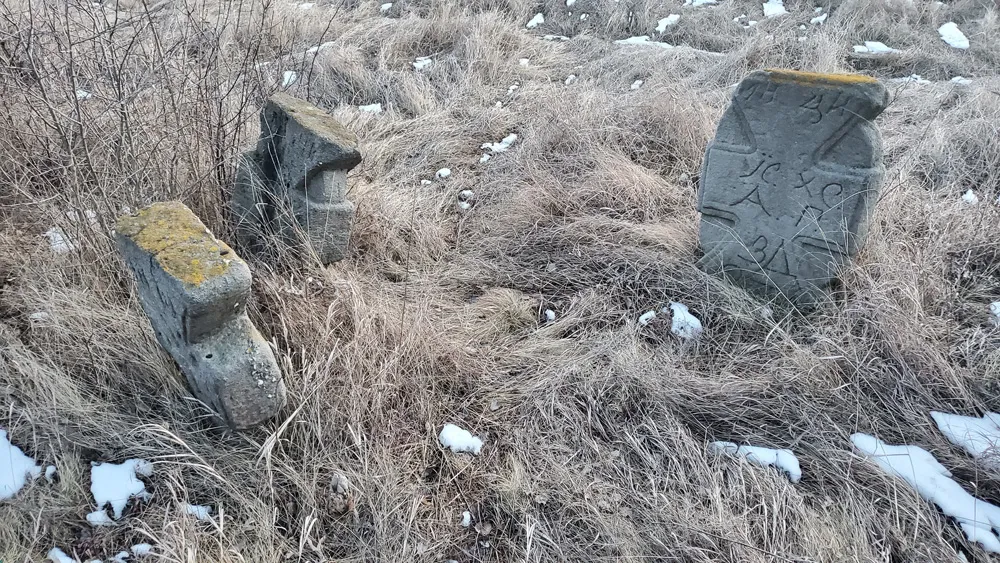
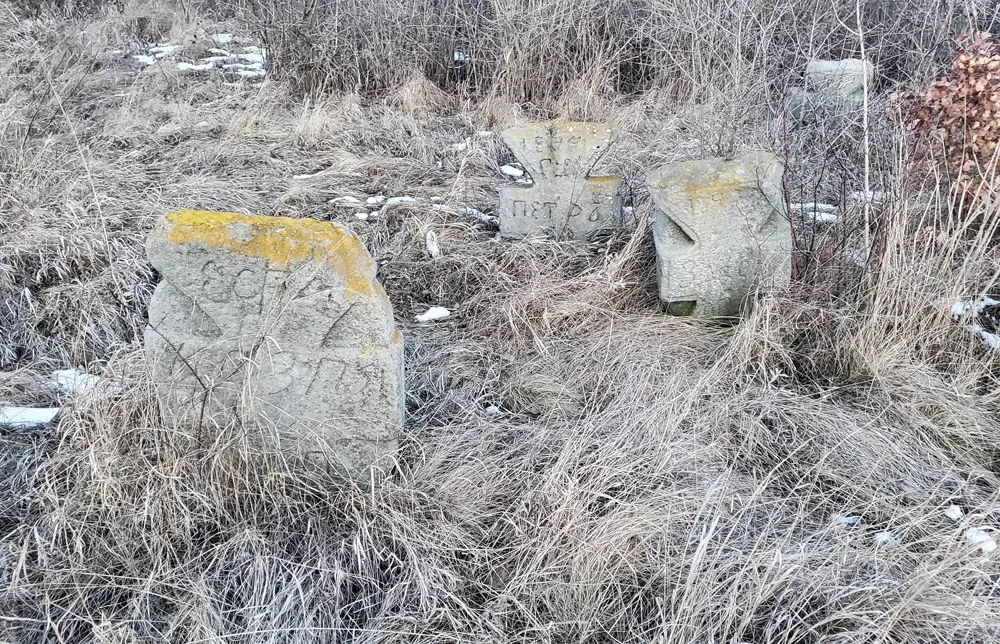
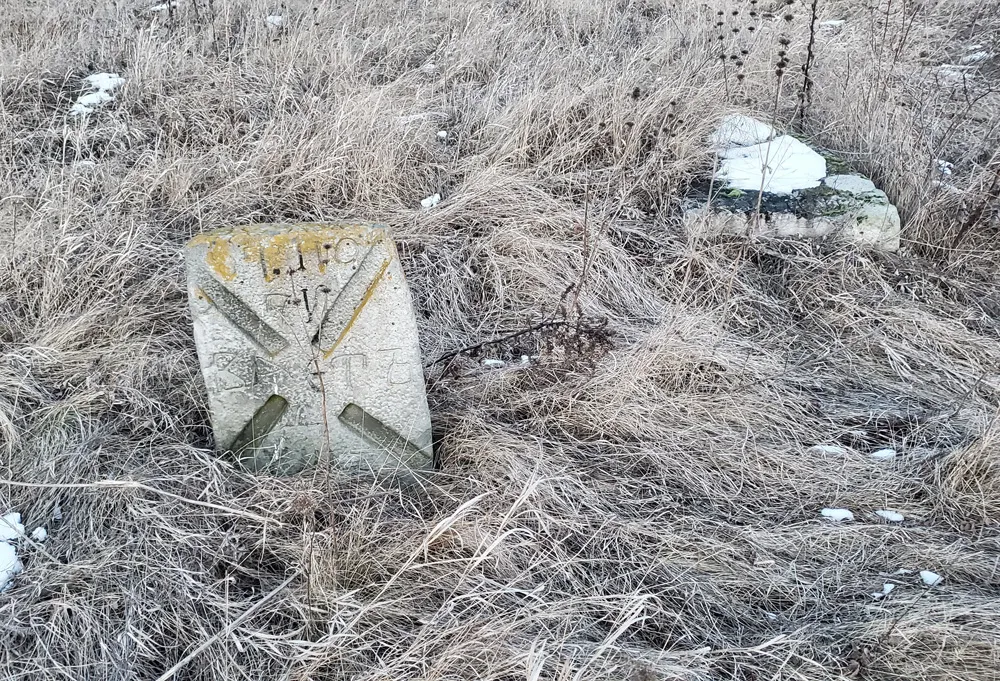
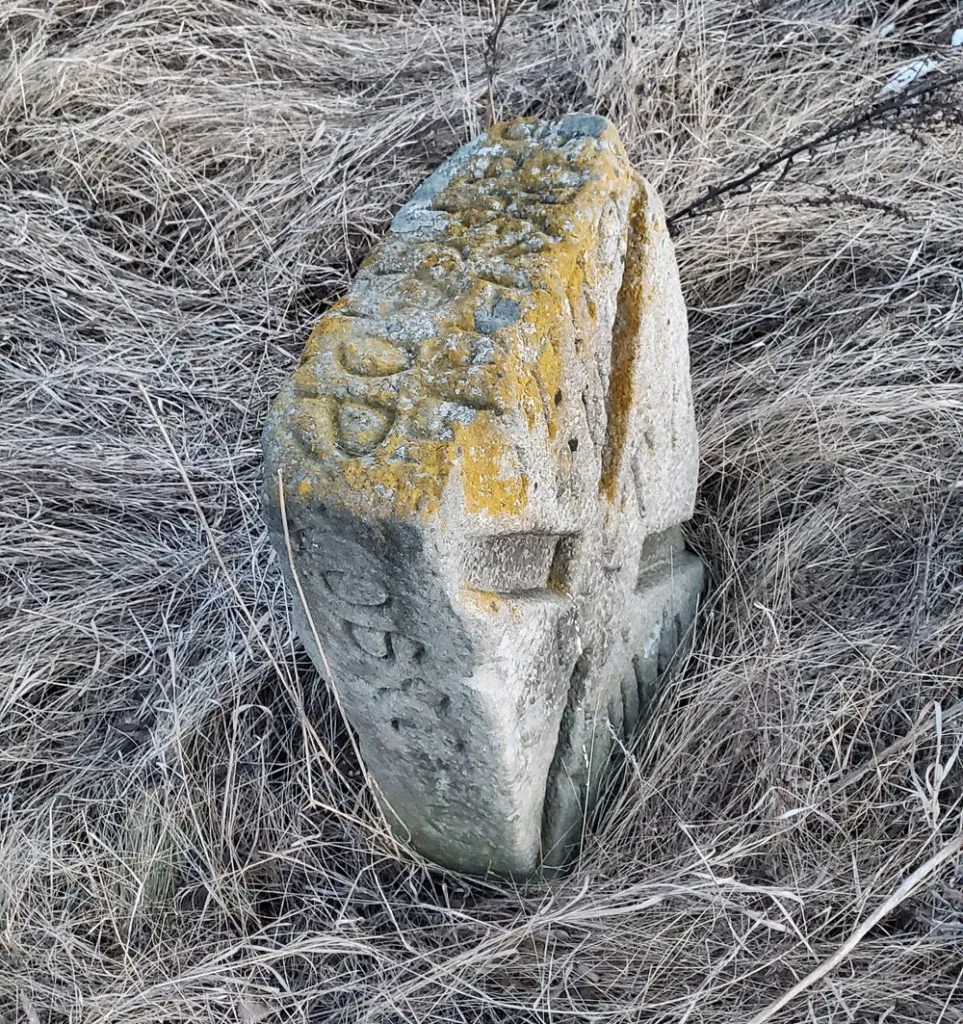
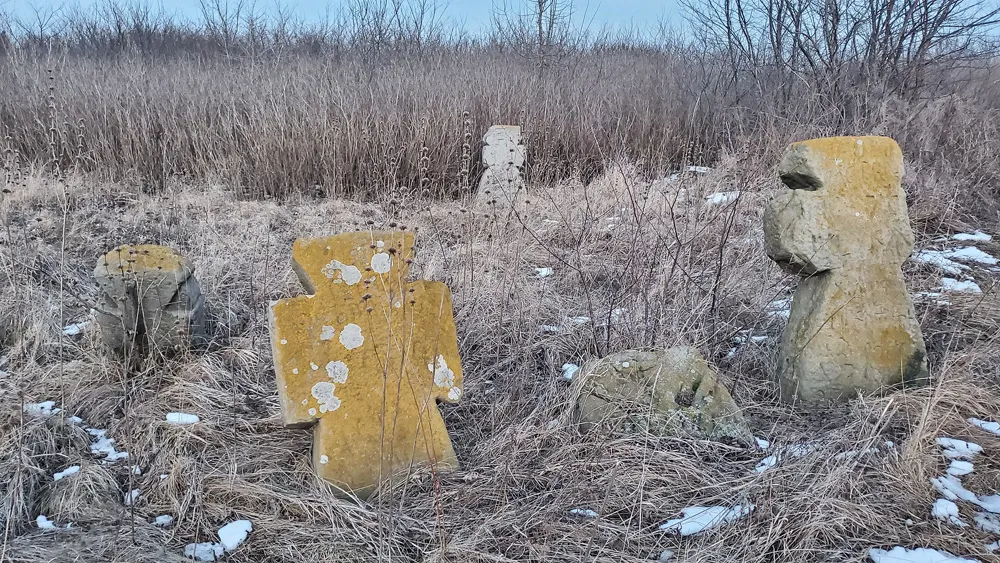
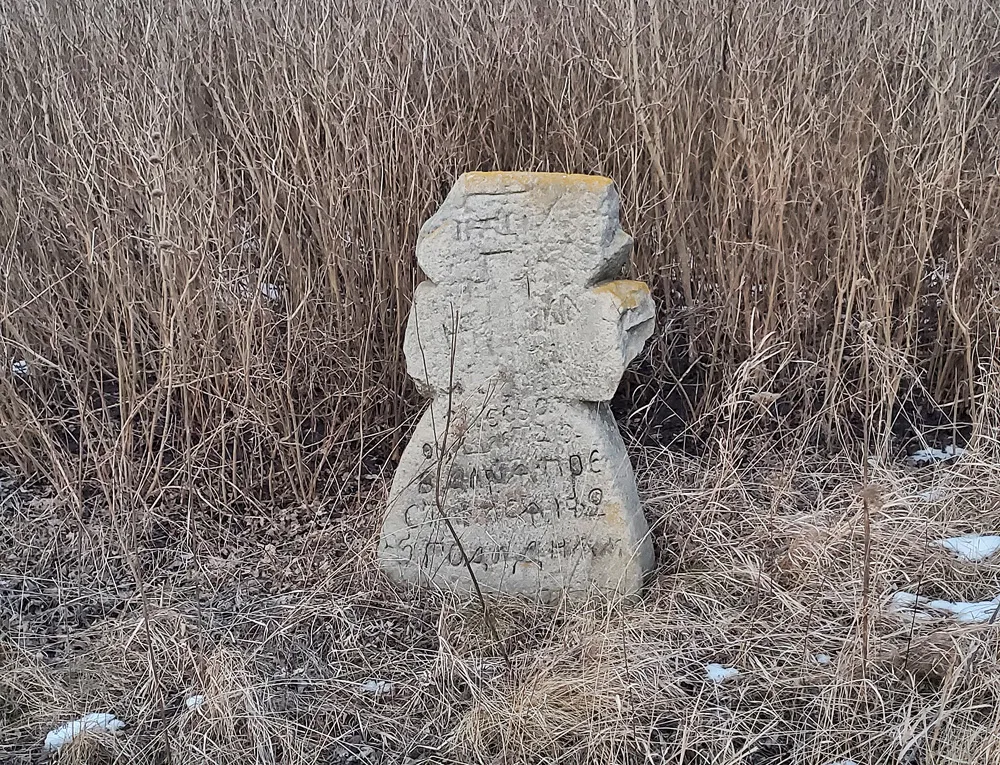
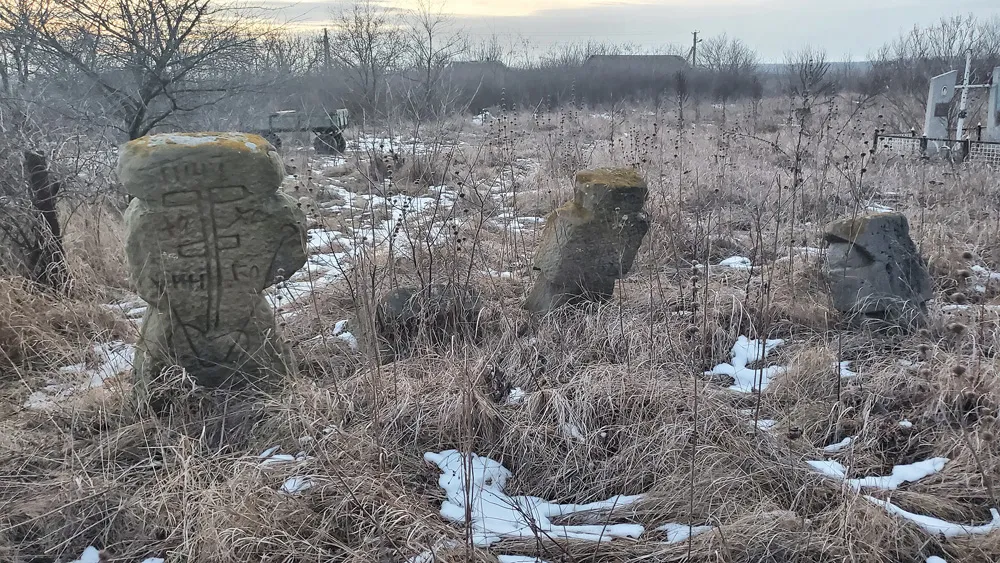
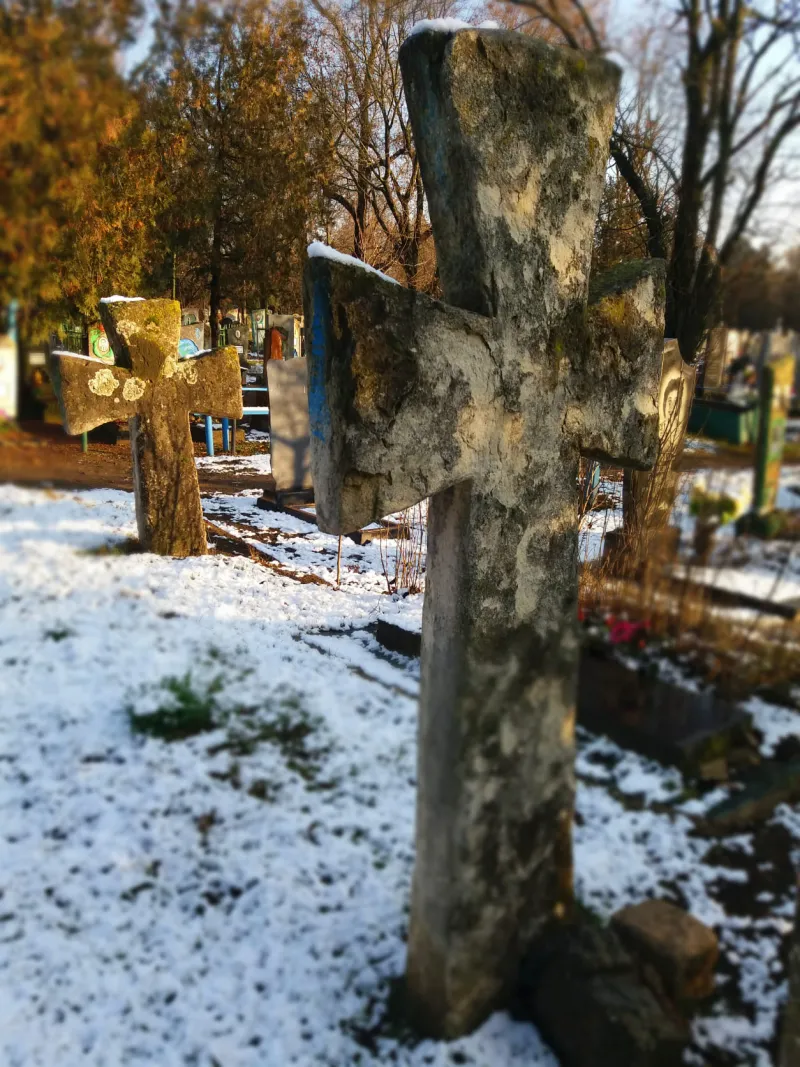
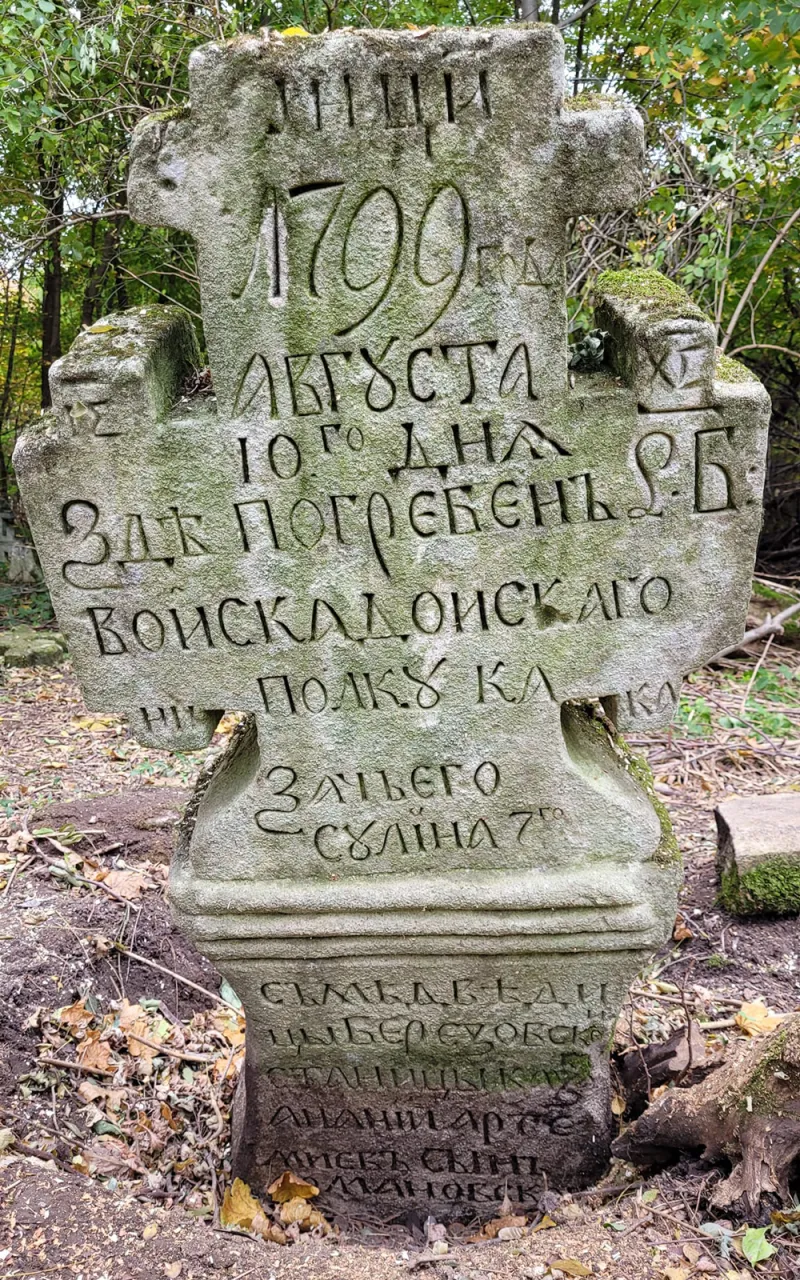
Nobody knows exactly when the village was founded. The oldest witnesses to Skalyvatka’s history are precisely the crosses in the cemetery, the oldest of which date from the late 18th century. We did not manage to count the crosses in total – a considerable part of the cemetery is covered with dense thickets. On one side the cemetery is bordered by a local resident’s homestead.
At the end of the Polish-Lithuanian Commonwealth, Skalyvatka belonged to the starosty estates – it was owned not by a particular proprietor but by the starosty. Under the Russian Empire the starosty estates passed into state ownership. Cossacks who had lost their status on the Right Bank, living on state-owned lands, were not serfs. They actually remained free, and so continued to live by Cossack customs and traditions and called themselves Cossacks. Being free, they often practised crafts and were therefore wealthier than serf peasants. That is why in the Skalyvatka cemetery we see stone, ancient Ukrainian, not cheap crosses, which the people call Cossack.
Text and photos by Roman Malenkov.