Poland. Toruń. The city of gingerbread and Copernicus

· 8 min read
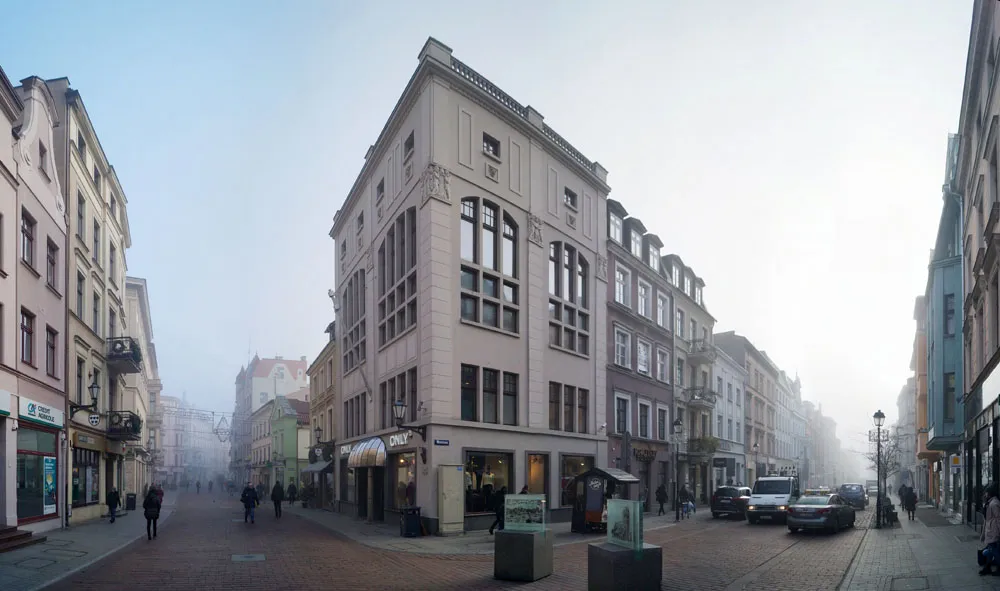
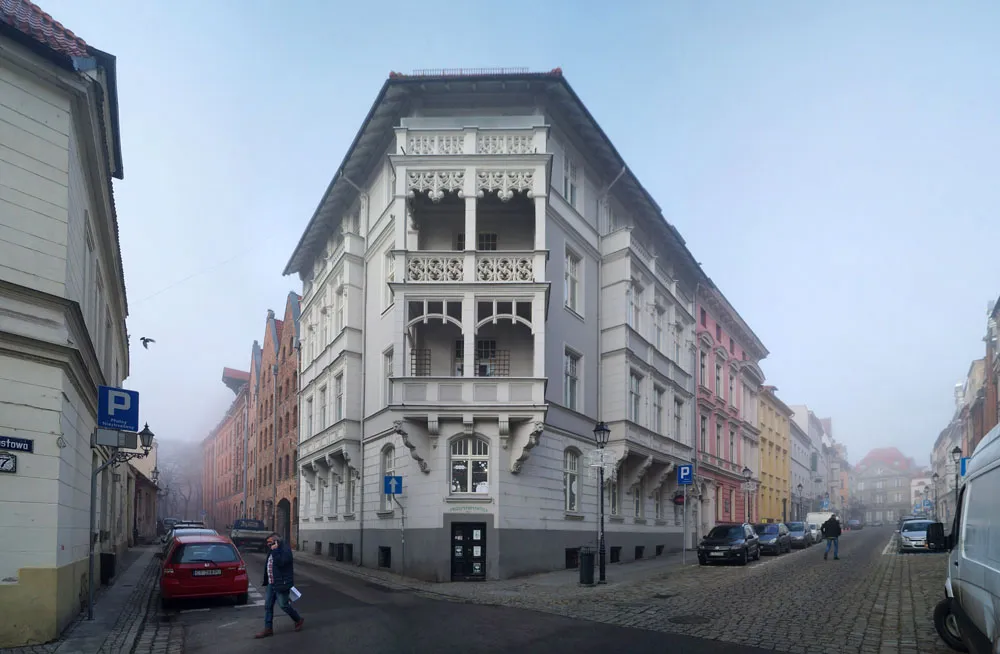
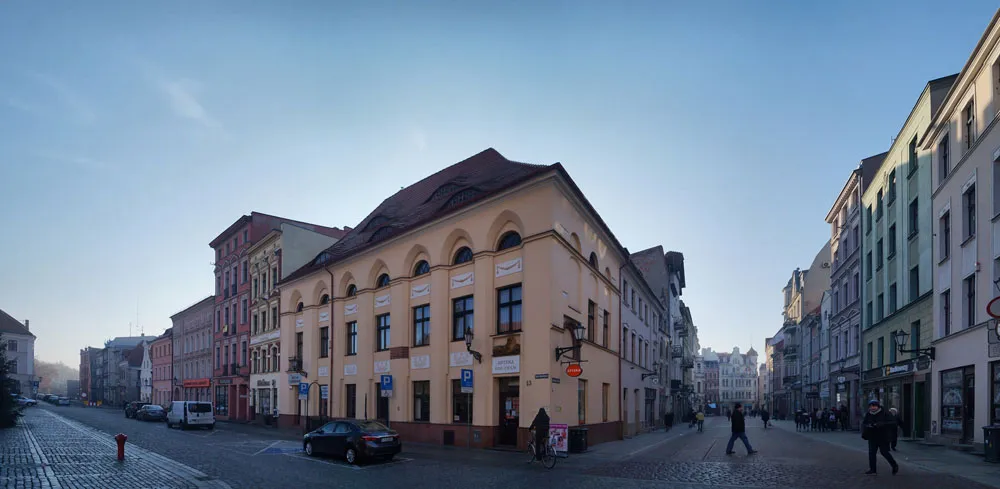
Toruń is without doubt one of the most interesting cities in Poland. Its medieval streets are always full of tourists, who often call Toruń “little Kraków”. What nonsense, to name one city after another. Toruń is Toruń: a city with a vivid personality and an extraordinarily valuable urban architectural ensemble, which UNESCO has recognised – the historic centre of Toruń is a World Heritage Site. Among the similarities with Kraków I would single out the location of both cities on the banks of the Vistula, the great Polish river, and the large number of Gothic buildings.
Toruń is called the city of gingerbread and Copernicus. Toruń gingerbread (pierniki) has been made here since as early as the 14th century. The shapes of the gingerbread have survived to our time in images, but the taste – who knows; to me it is perfectly ordinary: flour, honey, spices – tasty, but I have eaten the same in Kyiv. Yet Toruń has gingerbread museums and gingerbread festivals, legends about gingerbread, and gingerbread tied to legends, such as the katarzynki (Catherine cakes), which an old baker’s daughter once baked, with the recipe shared by bees. It is curious how they told her about ginger, which is one of the essential ingredients. Toruń has old gingerbread factories, and shops selling it stand almost at every step. The main Gingerbread Museum is on Rabiańska Street, two blocks from the Market Square, and a block from it, on Kopernika Street, is the Copernicus Museum, devoted to Toruń’s main hero. It occupies two houses, one of which belonged to the Copernicus family in 1464–1474, and the great scholar was probably born there. He died in Frombork, another wonderful Polish town we have already written about.
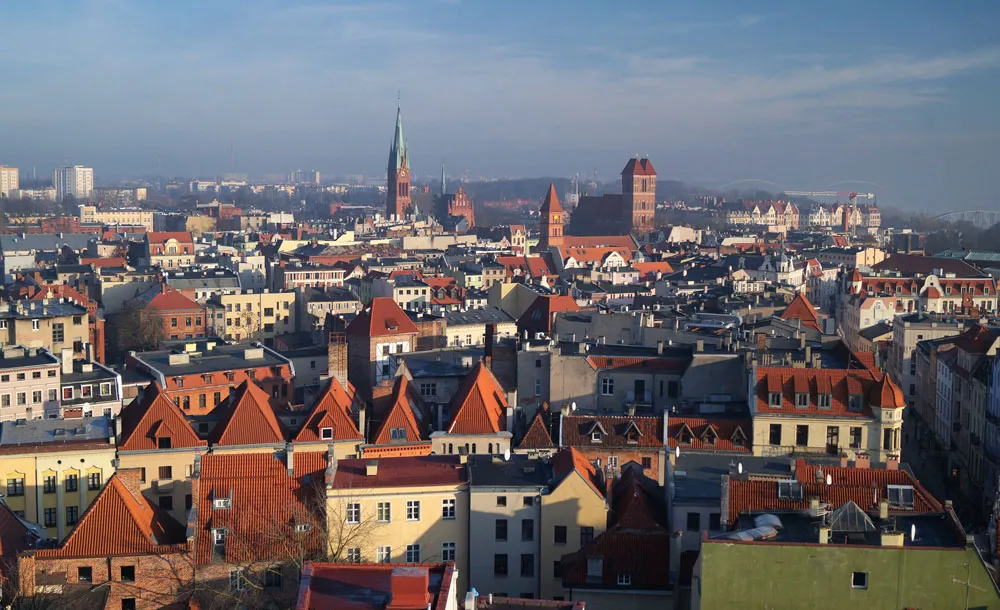
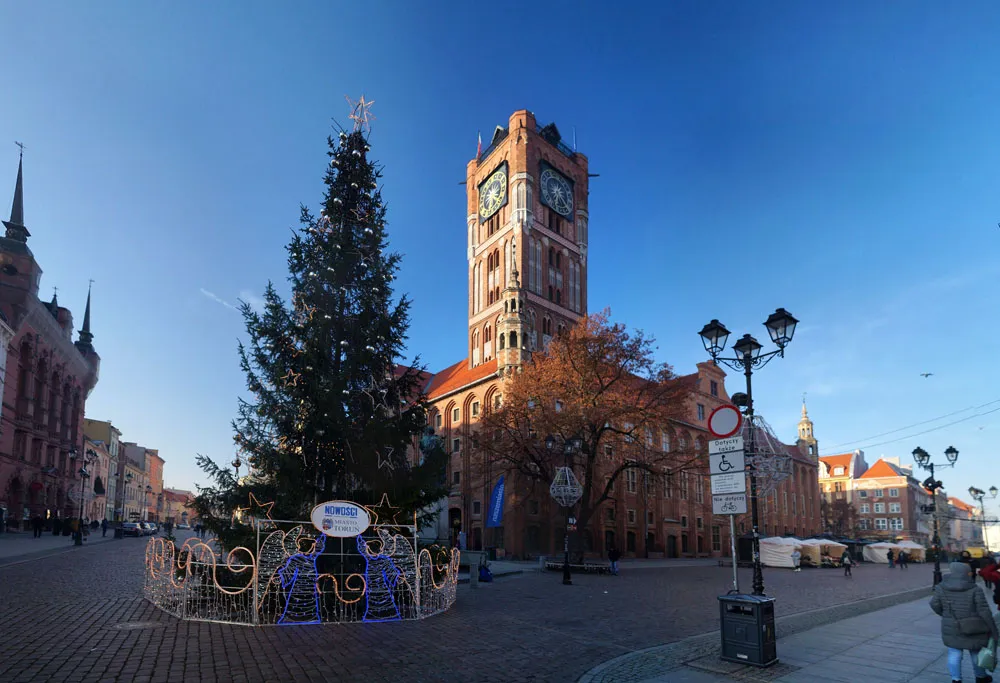
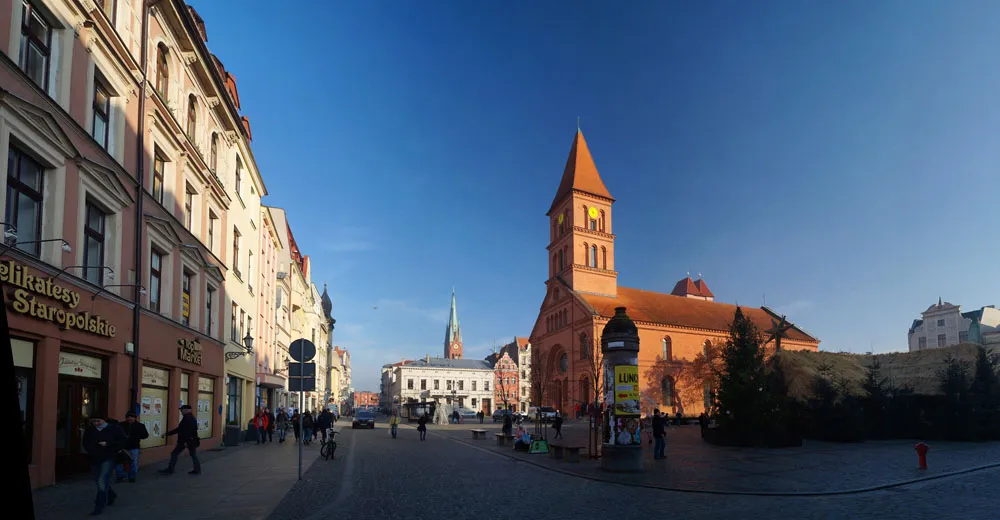
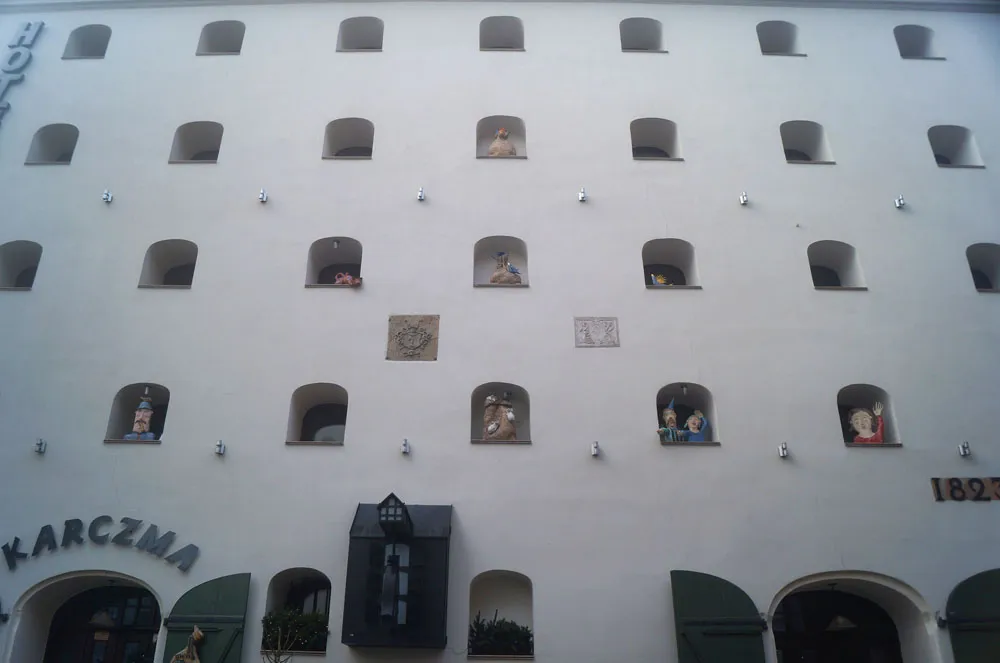
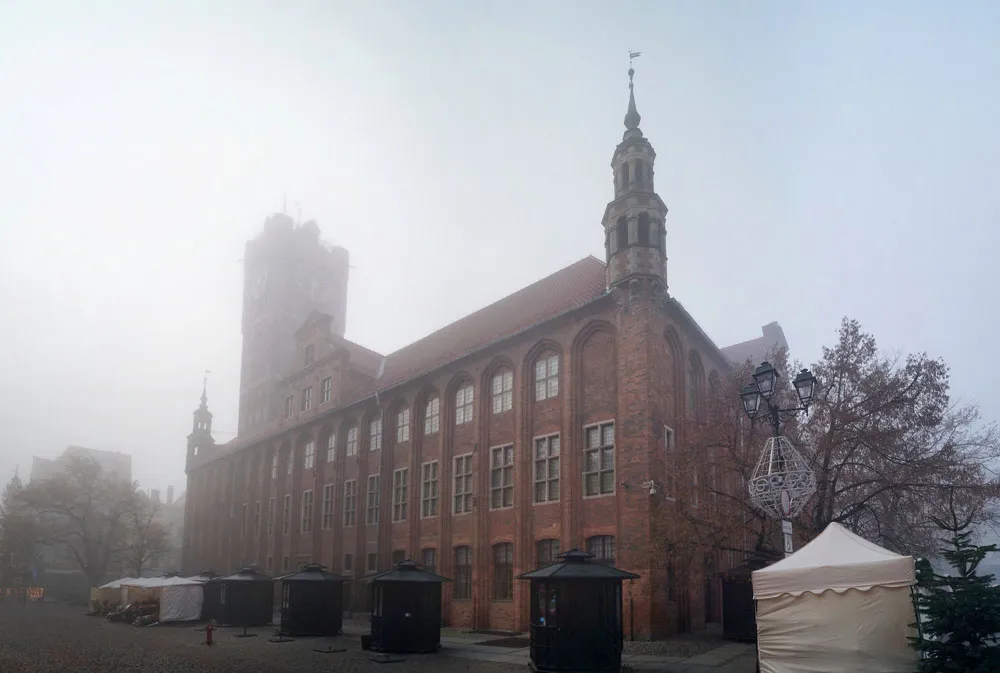
The monument to Copernicus stands on the Market Square next to the Town Hall, where I recommend starting a tour of the Old Town. It is an outstanding building, raised in the 13th–14th centuries by the Germans, who were effectively the founders and builders of Toruń, although the last additions date from the 19th century, when another storey was added to the town hall tower, making it forty metres high. Be sure to climb the tower – a tour of any city is best begun from such tall landmarks, and Toruń is no exception. And go straight to the Regional Museum, which is located right there, in the Town Hall.
Besides Copernicus, the Market Square also has a monument to a raftsman-musician who once saved Toruń from an invasion of frogs with his fiddle, or rather his music. Around the bronze fiddler are bronze frogs, one of which grants a wish if you rub it. But nobody knows which one, so they are all rubbed shiny.
Next to the Town Hall is the Church of the Holy Spirit, which until 1945 was a Lutheran church. A Baroque building with a Neo-Baroque bell tower (64 m high) added in 1899, it is more interesting for its history than its architecture. The point is that it was built as a Lutheran church in the centre of a Catholic city. Funds began to be collected in 1724, then came a ban from the king, a permit, and another ban. Only in 1754 was the church finally allowed to be built, but it had to be modest and small, so when it was completed in 1756 it was 46 metres long and 14 metres high and could hold 1,300 worshippers. In 1793 the north of Poland was annexed by Prussia, later to become part of Germany. Protestantism became the dominant confession, and the church became one of the main ones in the city.
The castle and the town walls
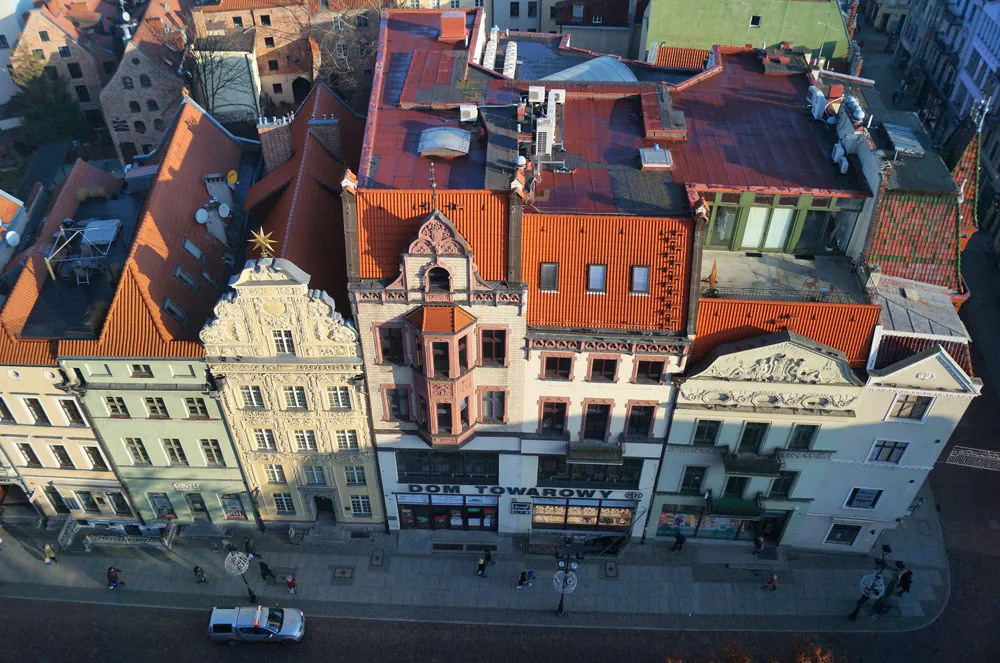
There are very many interesting buildings on the Market Square, but the Artus House (Court) stands out in particular. Meetings and congresses of the merchants of the Hanseatic League were once held here, and for Toruń, which was a member of the League for a long time, this was a very important building. I immediately remembered the Artus Court in Gdańsk, also on the main square. This Artus must have been a rich fellow. Who was he? It turns out that Artus is a mythical figure known to us as King Arthur, leader of the Knights of the Round Table. The Hanseatic merchants called their round table, and the hall where it stood, the Court of Artus (Arthur). That’s how it is.
In Toruń only the courtyard remains of the Artus House. The building in which momentous documents were once signed, for example the Peace of Toruń, was demolished at the beginning of the 19th century because of its dilapidated state. The present Neo-Gothic palace was built in 1829.
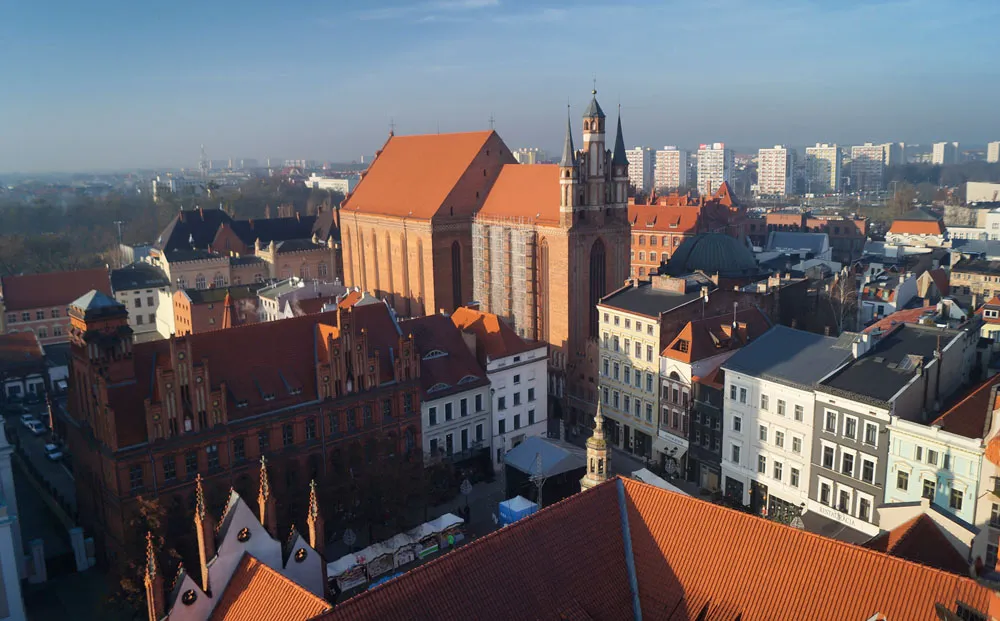
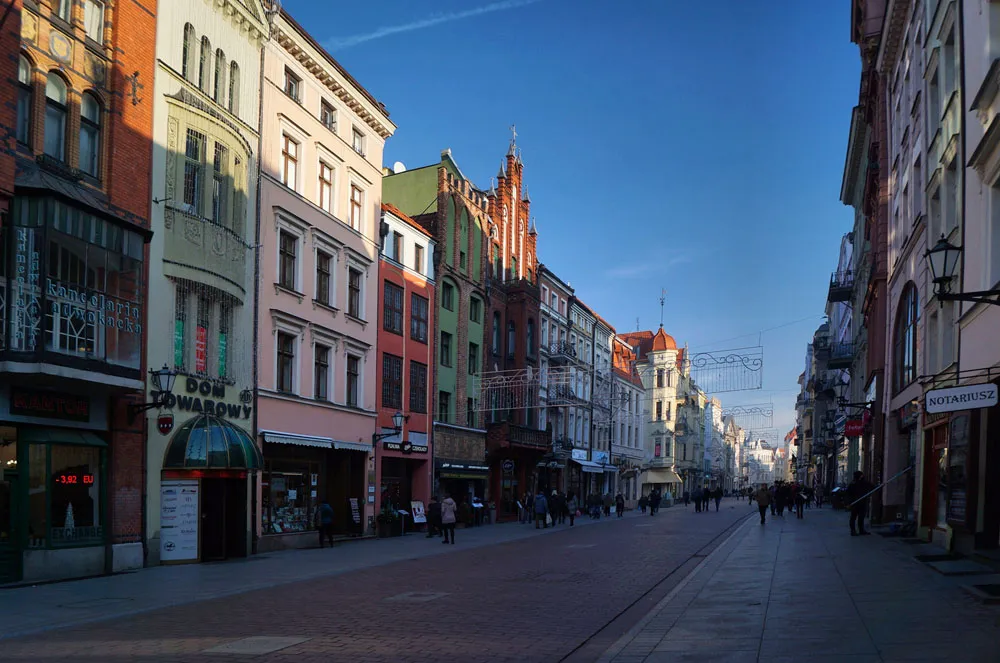
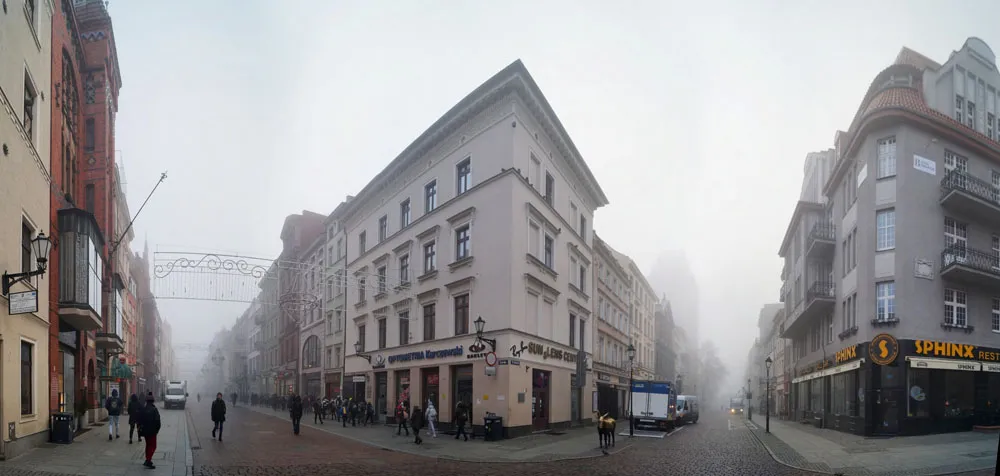
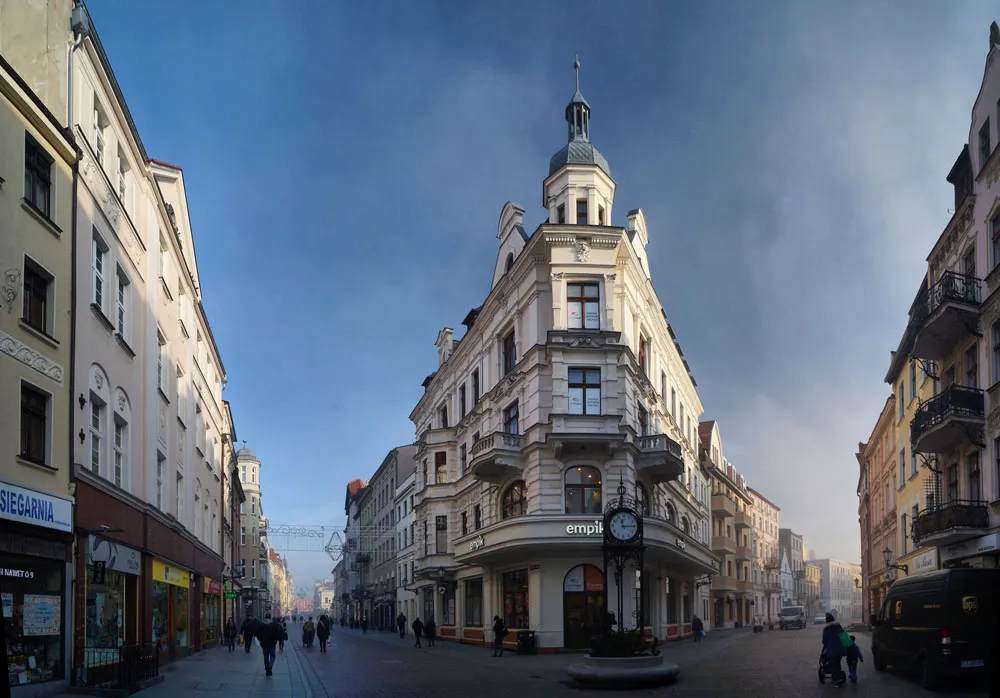
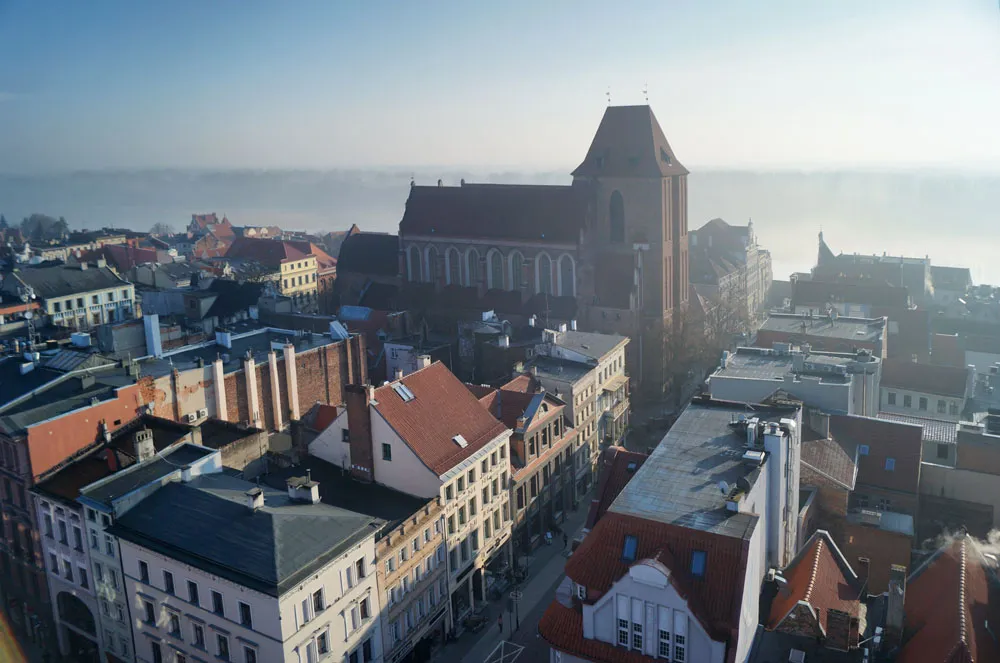
From the Market Square, Toruń’s main pedestrian street runs east; it is called Szeroka (Wide) Street. It is full of museums, boutiques, galleries, cafés and restaurants. This street leads to the theatre, and also to the new old town – a term that can be applied to most Polish cities, where there is a very old part and a newer one that is also old compared with the modern city. Toruń’s New Town was built mainly in the 19th century. It has its own main square, the New Town Market, and its own main church, the Neo-Romanesque Church of the Holy Trinity, built in 1824. Nearby is a much older church, a Gothic church with a double tower, begun in 1309. This is the Church of St. James – an incredible structure. I liked it no less than the Cathedral of St. John the Baptist and St. John the Evangelist, a gigantic Gothic church founded by the Teutonic Knights in 1270. The cathedral is not far from the Town Hall, on Żeglarska Street, and you will see it at once from the Market Square. Nicolaus Copernicus was baptised there, as a bust by the font indicates. The bell of the Church of St. John weighs seven tonnes and is called the Trumpet of the Lord.
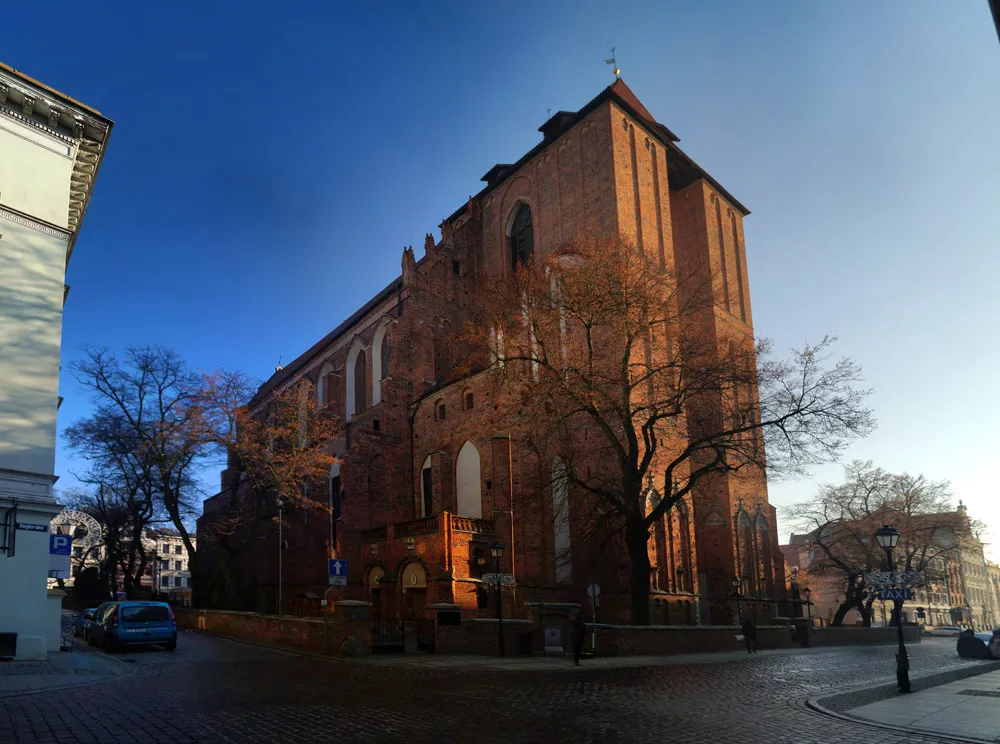
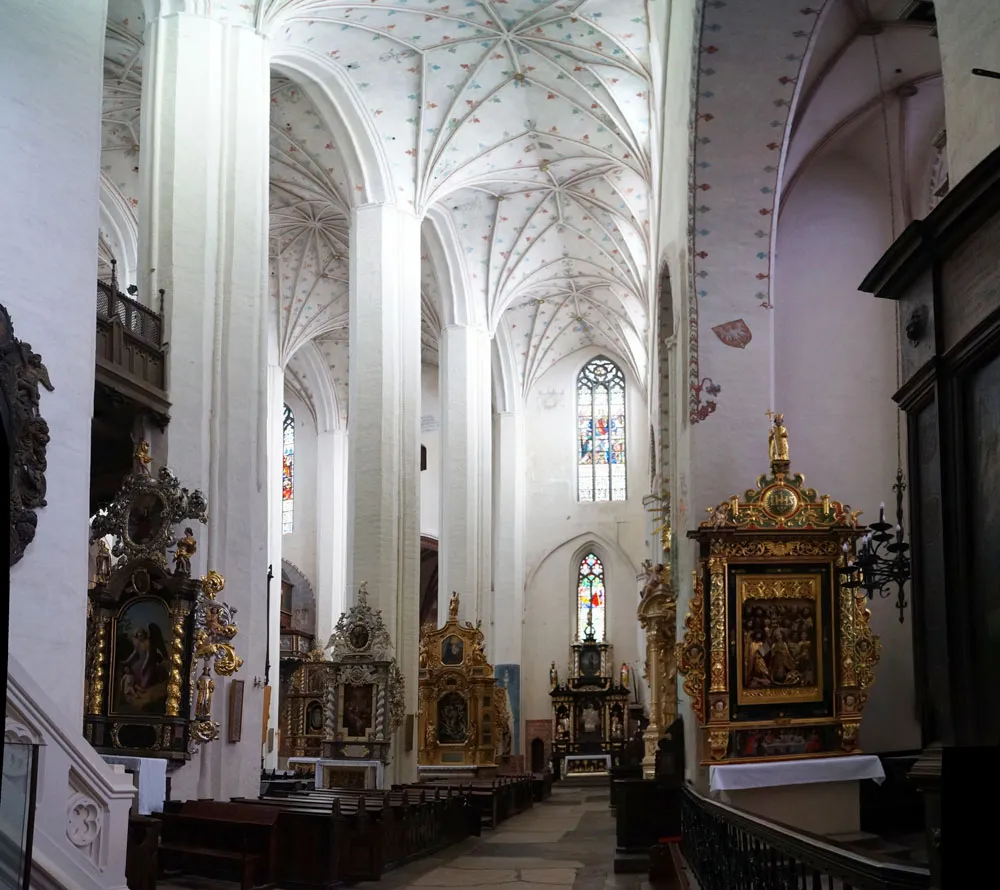
Cathedral of St. John the Baptist and St. John the Evangelist
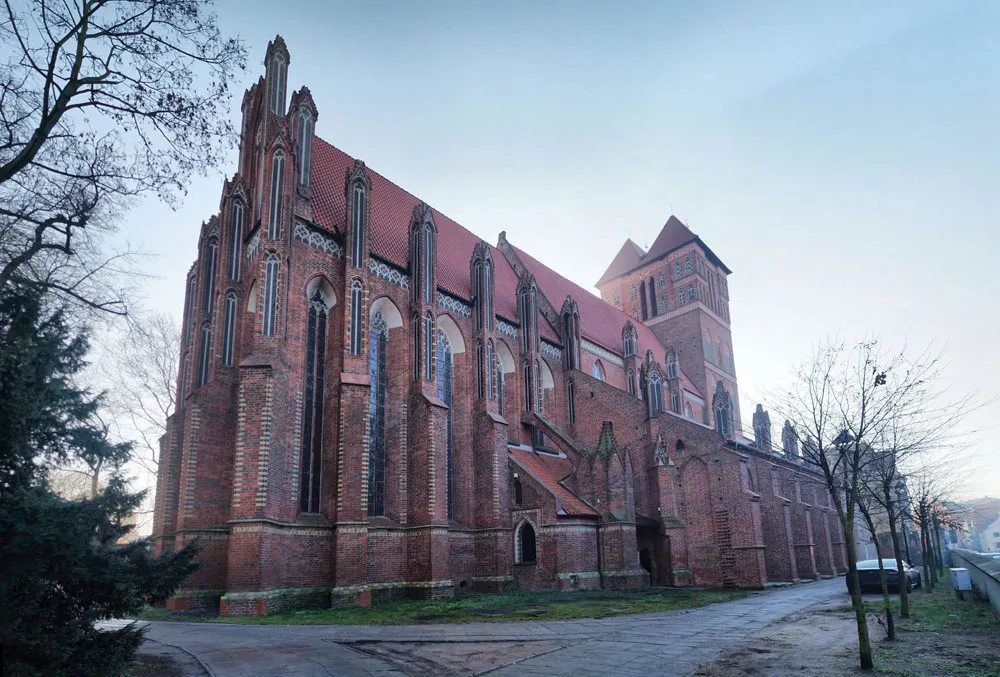
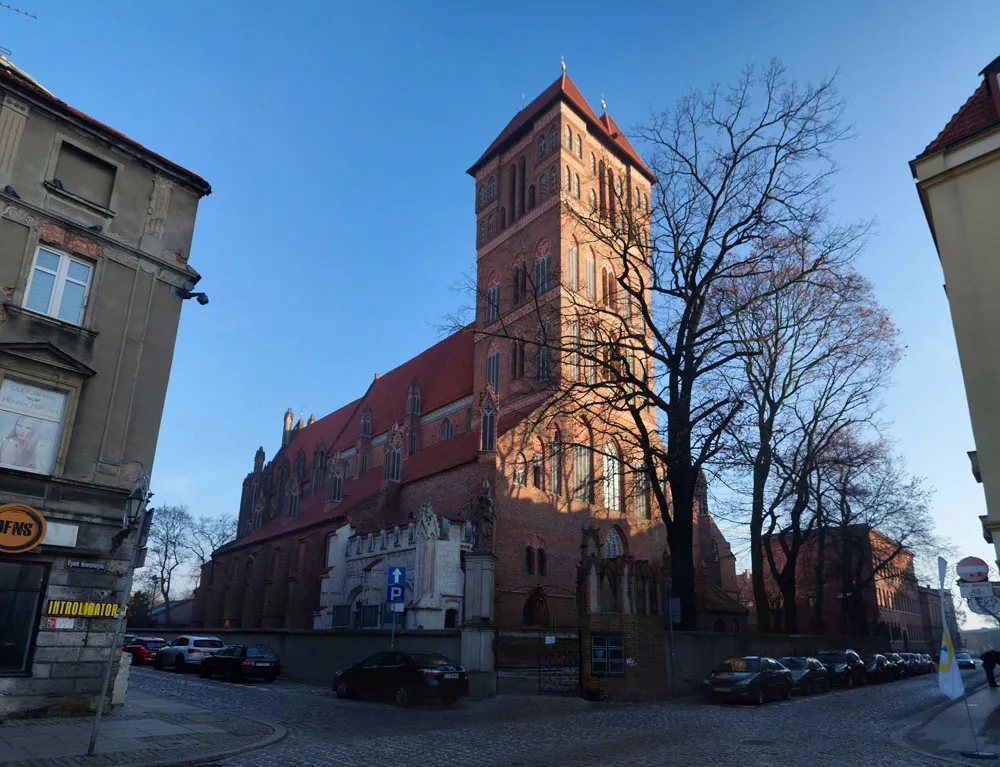
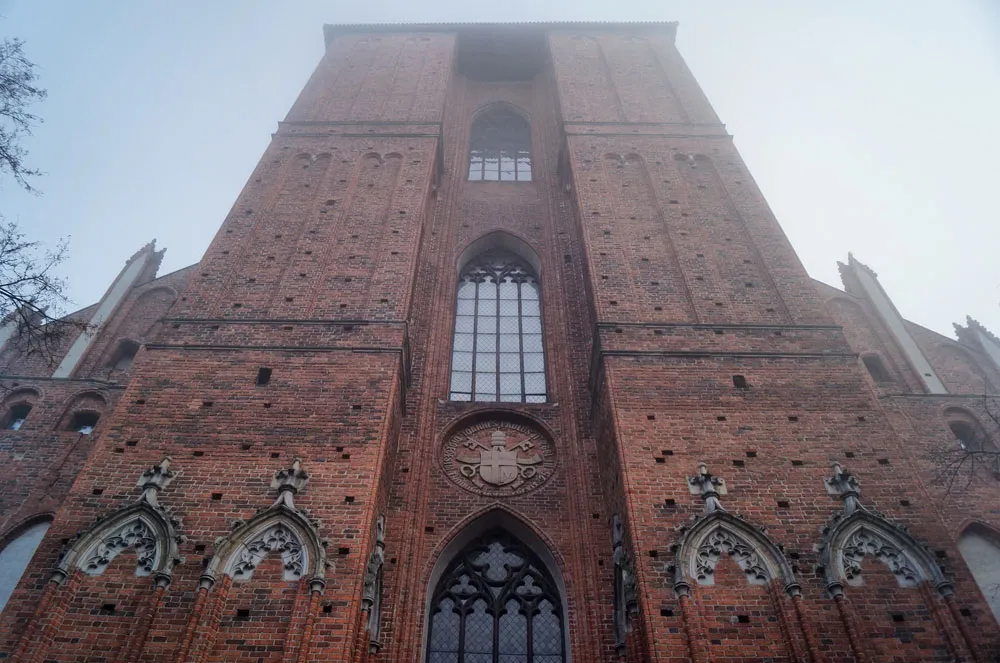
Church of St. James
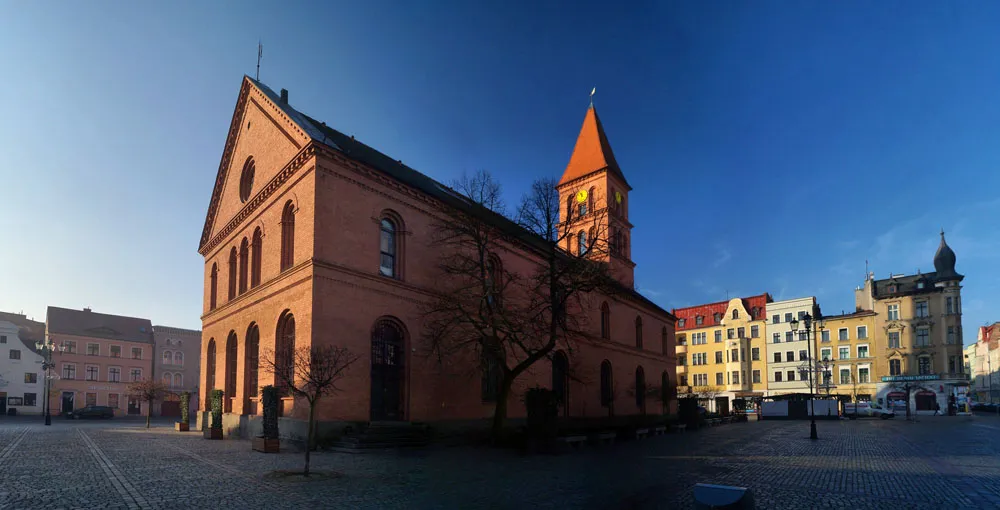
Church of the Holy Trinity
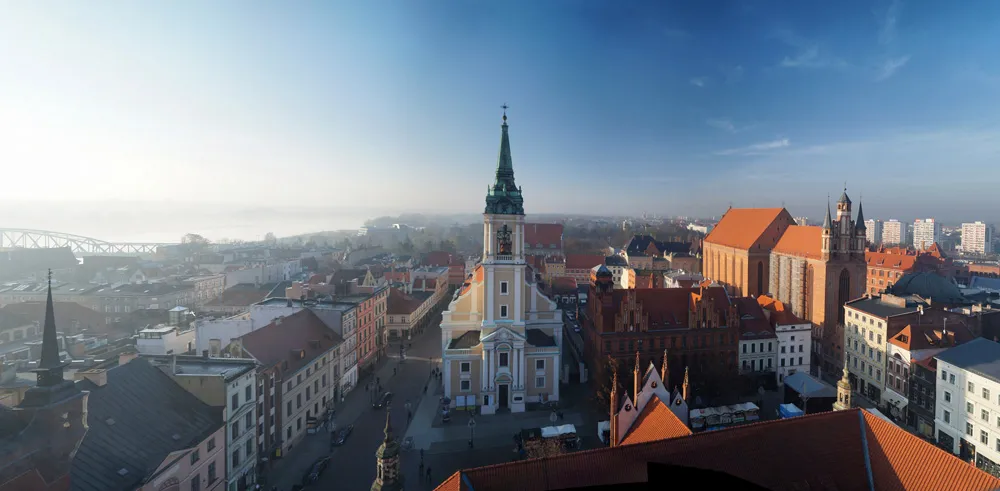
Church of the Virgin Mary
North-west of the Town Hall stands the Church of the Virgin Mary, another Gothic shrine of the city. It was built by Franciscan monks in the second half of the 14th century, although the heterogeneity of the building’s various parts points to repeated additions in later periods. Buried in the church is the sister of King Sigismund III Vasa, the Swedish princess Anna Vasa – a well-known benefactor, patron of artists and scholars, a zealous Lutheran and the first person in Poland to grow and smoke tobacco. The Catholic Poles disliked Anna, so they forbade her burial in royal Kraków. King Władysław IV Vasa buried the princess in Toruń in 1636.
West of the Church of the Virgin Mary nestles a prison housed in a wide multi-storey tower, and behind it are the Gothic buildings of the university. This corner of the Old Town is called the corner of education.
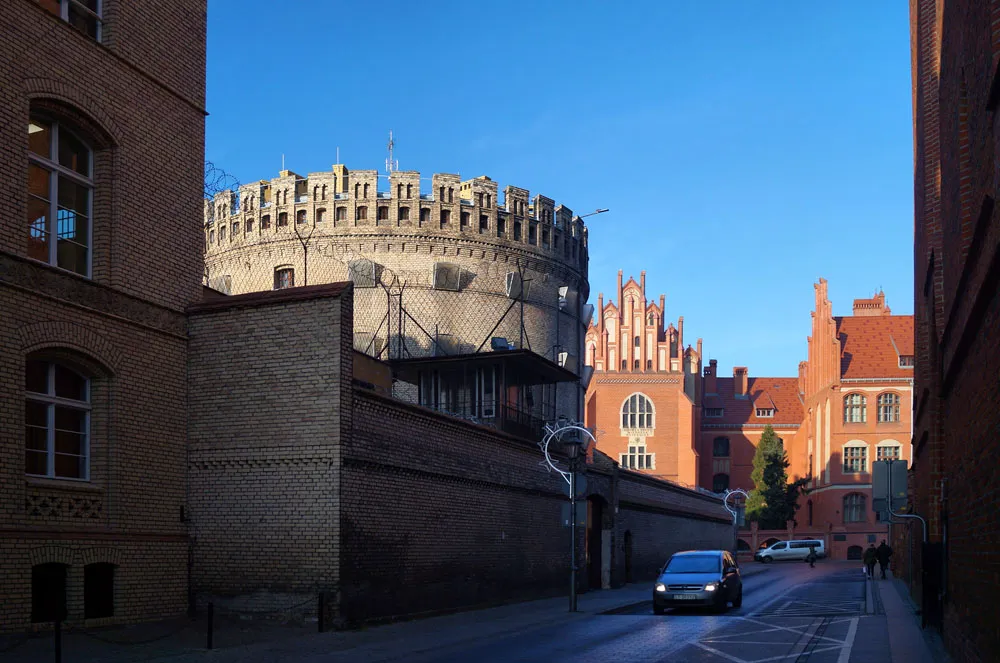
The prison
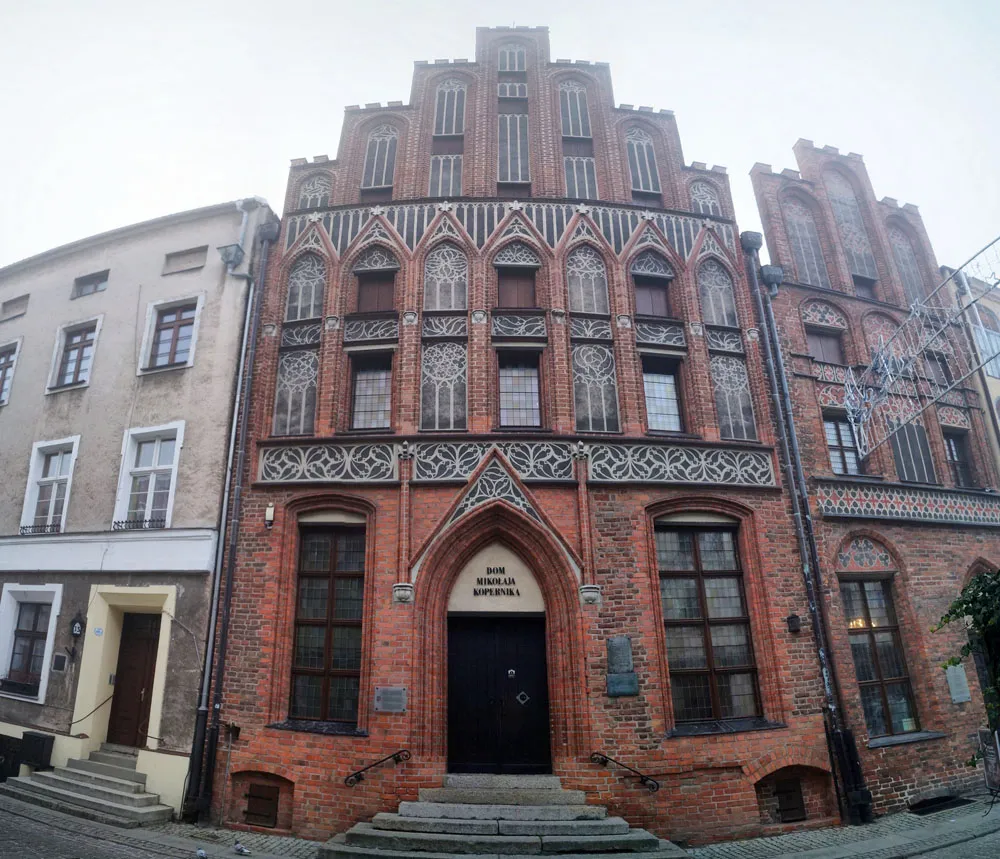
Copernicus House
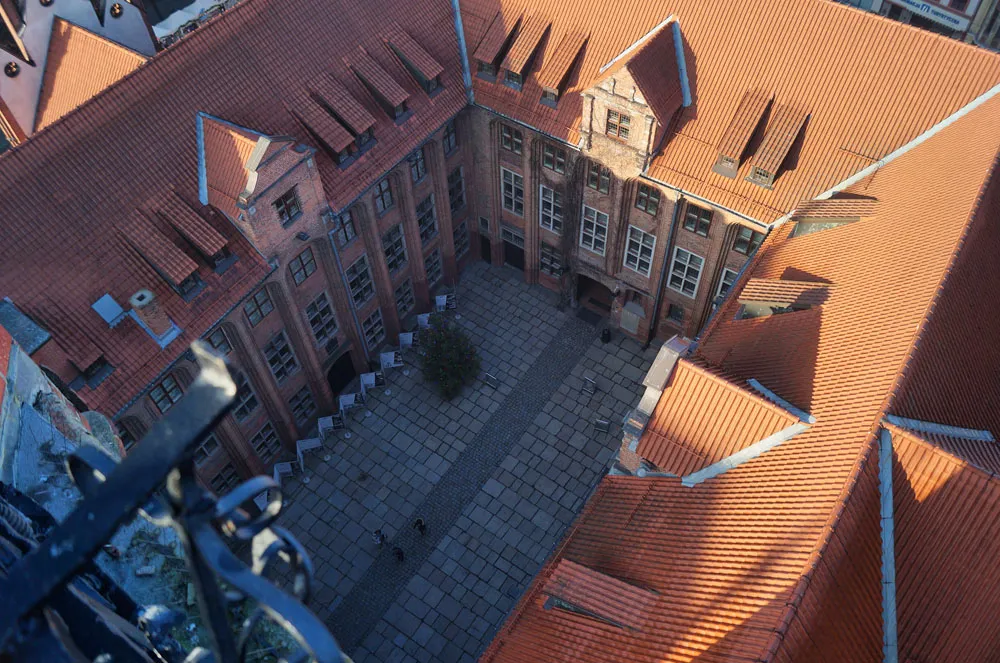
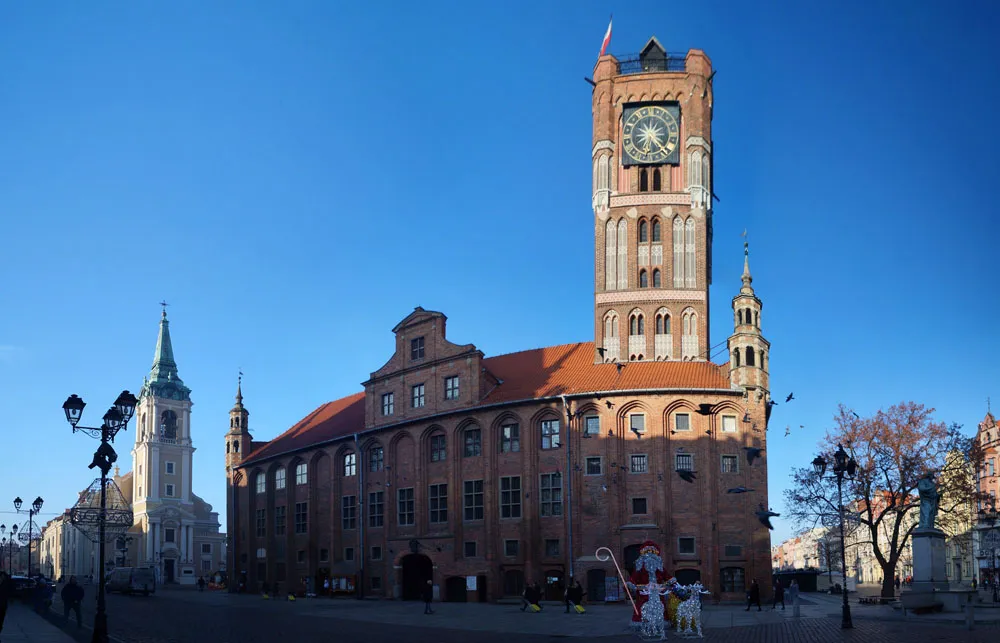
The Town Hall
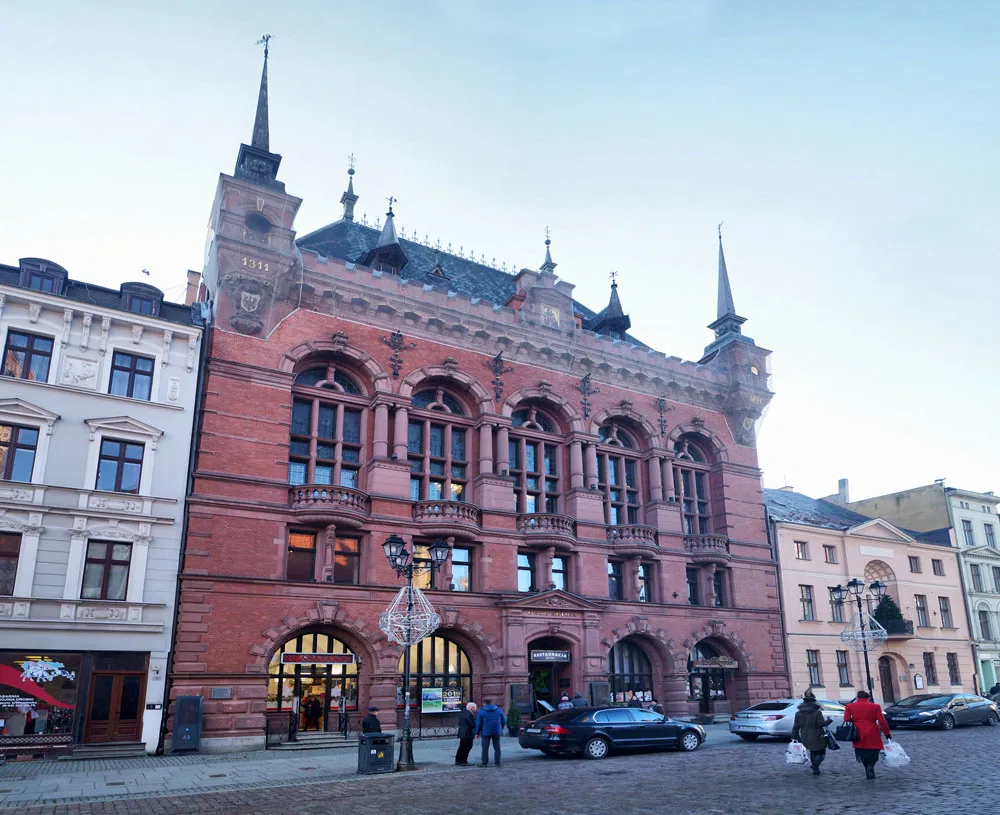
Artus House
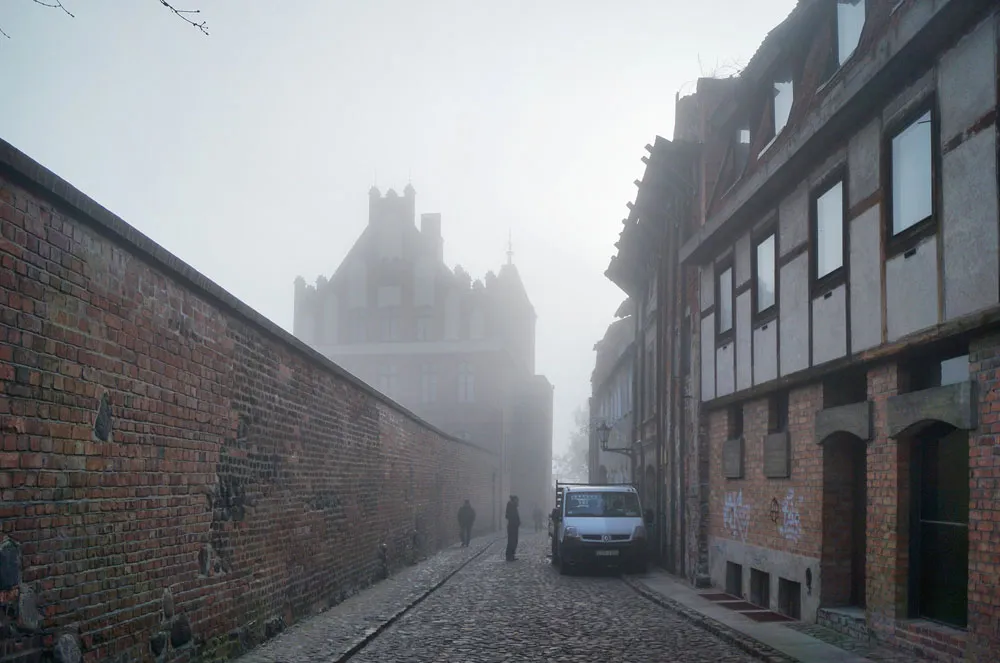
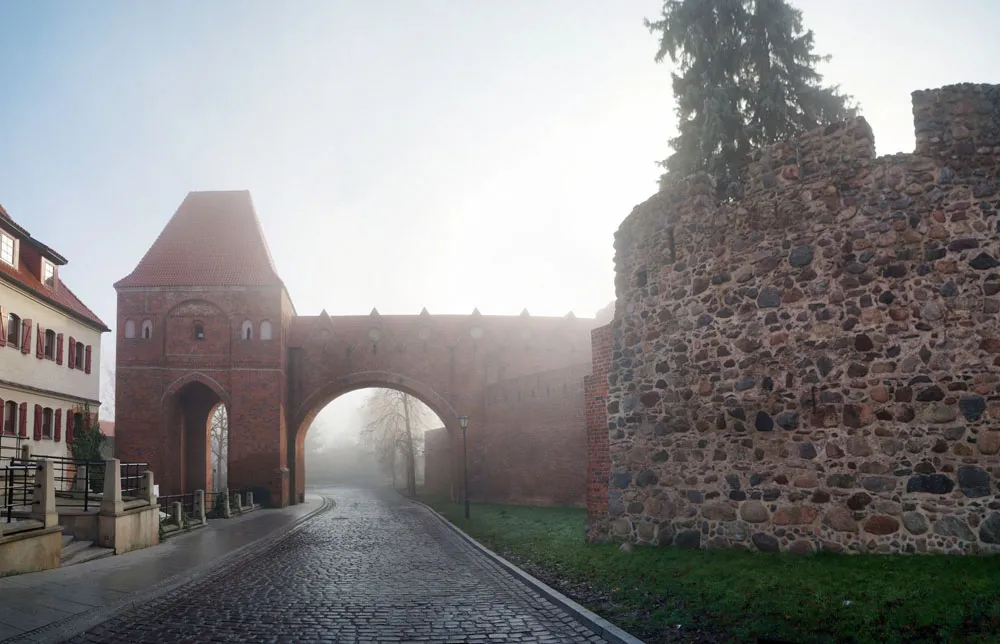
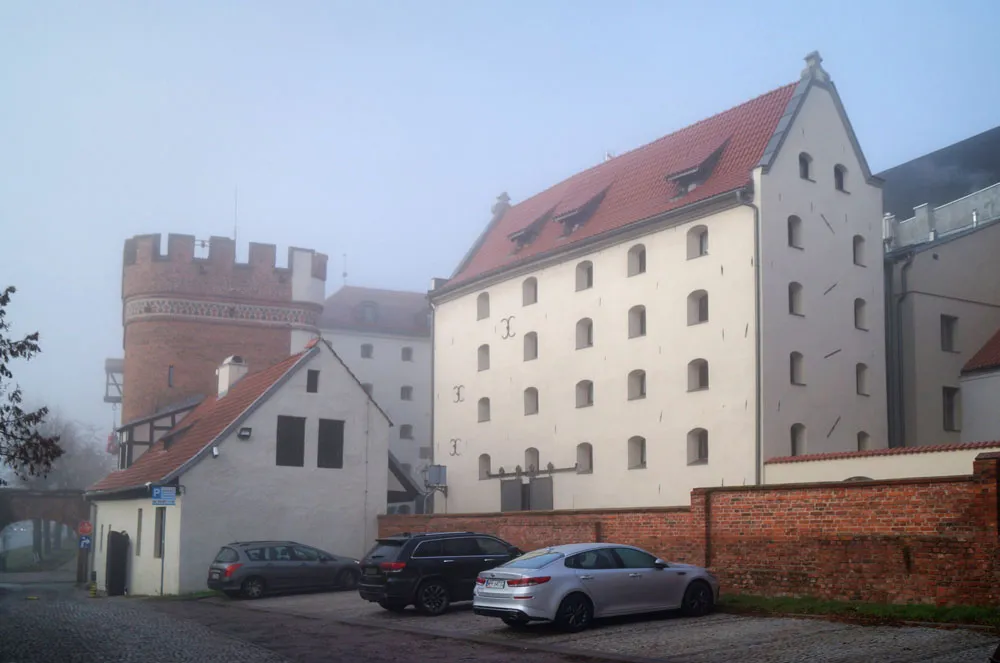
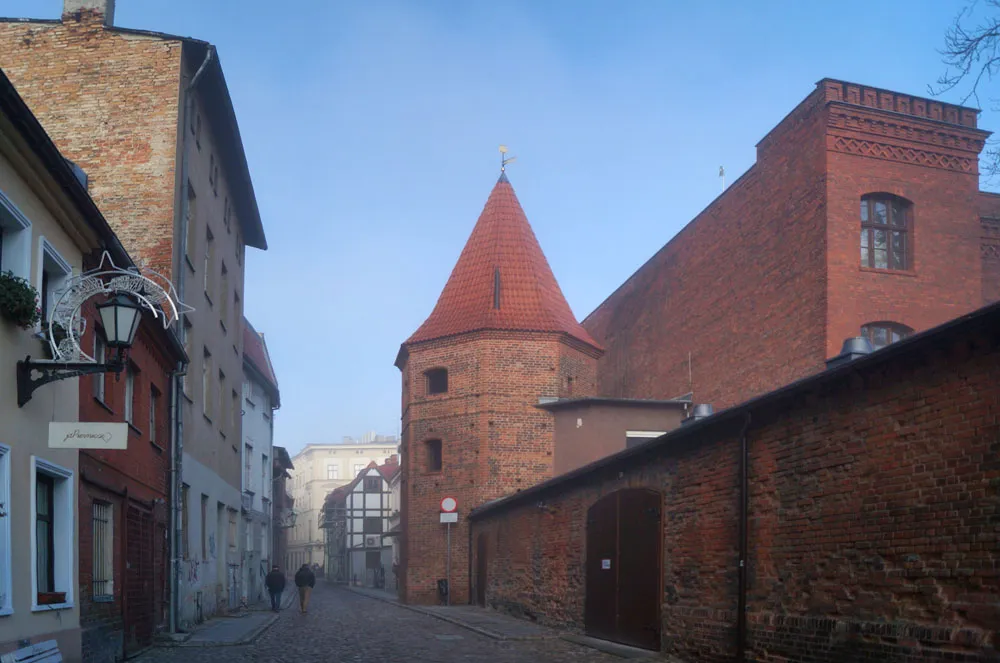
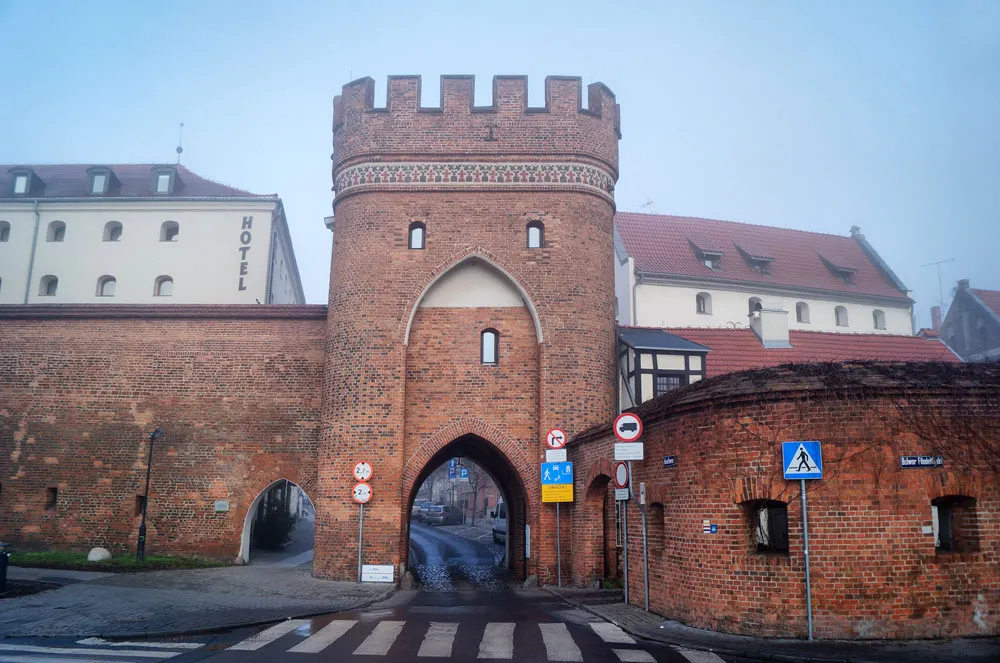
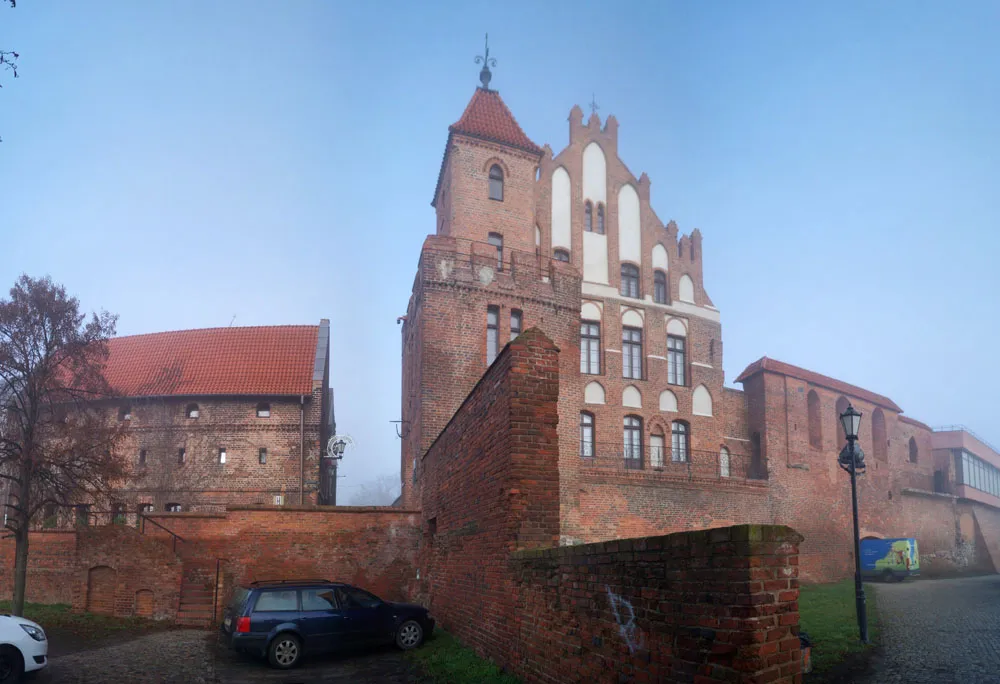
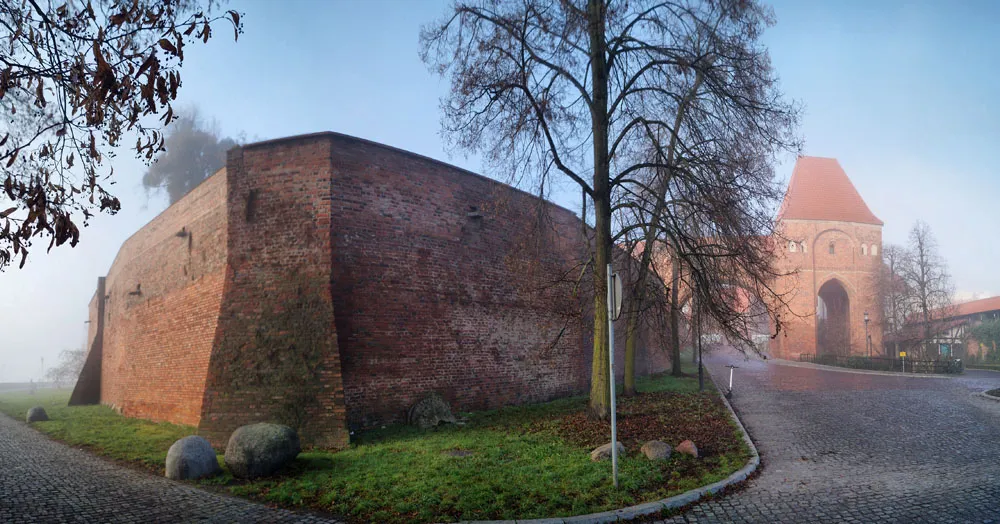
The Old Town of Toruń is entirely surrounded by fortress walls. It is a fortress founded in 1231 by the Teutonic Knights under the name Thorn. In 1233 the Teutonic leaders Hermann von Salza and Hermann Balk signed the charters for Thorn (Toruń) and Kulm (Chełmno, which we have already written about) – today all this is called the Culm Law. Thorn was moved to its present site in 1236, after a great flood. It was then that the walls that now surround the Old Town began to be built. In the centre stood a Teutonic castle, which in the 15th century was partly dismantled by the townspeople. Today it is a ruin. Quite interesting, surrounded by walls and towers.
In 1280 Thorn, already a powerful trading and craft centre, joined the Hanseatic League. In 1410 the Poles occupied the city for just a year, and this was the first period when Toruń was Polish, although the struggle for it was constant; during it King Władysław II Jagiełło built the Dybów castle opposite Thorn, which became a base for the Polish army in the lands of the Teutonic Order. Today the walls are all that remains of the castle, within the city limits, since Toruń has long since spread to both banks of the Vistula.
In 1454 a burgher revolt against the dominance of the Teutonic Knights, who had completely deprived the people of Toruń of their rights, began in Thorn. The revolt ended in victory for the townspeople, who out of hatred dismantled Thorn castle, leaving only part of the walls and the Gdańsk Tower. It was then that Dybów castle became the main one in the region – from there Polish troops, supported by the people of Toruń, occupied the city. The Second Peace of Toruń was signed, under which Toruń passed to the Polish crown and the townspeople swore allegiance to the Polish king. From then until 1793, with short interruptions, Toruń was Polish.
From 1793 to 1918 Toruń was a Prussian and then a German city. In the interwar period it was Polish; from 1939 to 1944 it was German again. It is very easy to get lost in such a turbulent history, but thanks to that turbulence and variety Toruń is so interesting today. The Polish territories that are called post-German are, in my opinion, the most interesting in Poland. Gdańsk, Wrocław, Toruń… and many, many others.
Text and photos by Roman Malenkov.