Poland. Krasiczyn. A masterpiece castle

· 3 min read
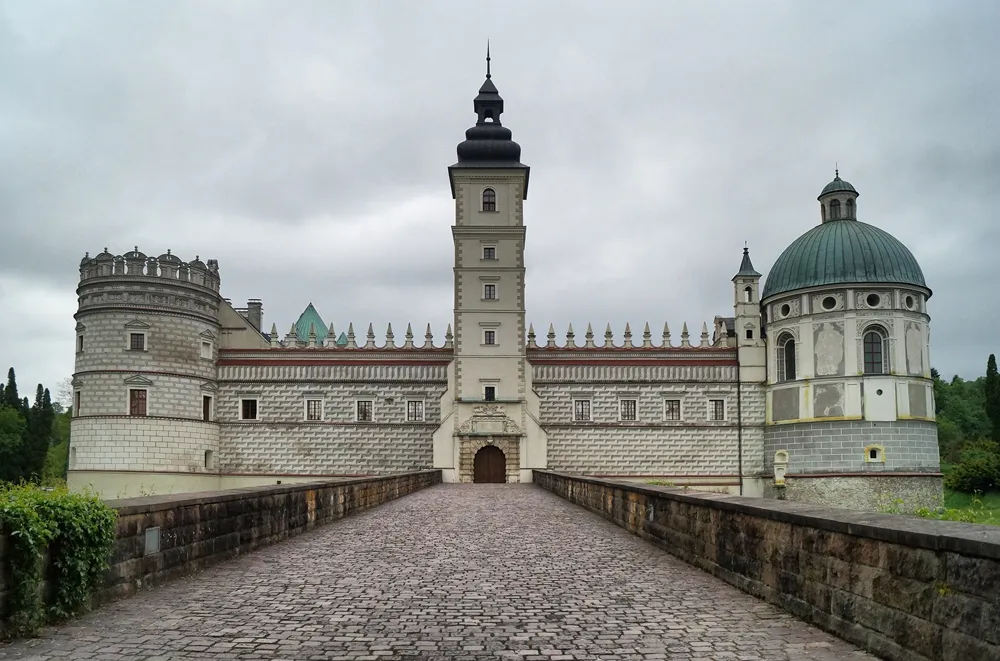
Krasiczyn is the most beautiful monument of south-eastern Poland: the castle of the Krasicki family. Some twenty years ago I bought the magazine Geo every month. One issue happened to have the castles of the Loire Valley as its main theme. They are incredible, a dream for tourists, and everyone wants to see them. In Krasiczyn stands a castle just like those, and perhaps even more beautiful. It is only some twenty kilometres from the Ukrainian border, on ethnic Ukrainian lands. It is extremely photogenic and interesting, and it is strange that it is not very well known. The castle houses a museum, one of its wings is a hotel, and around it lies a fairy-tale park. You do not want to leave, everything is so beautiful.
The first fortification on this spot appeared in the fourteenth century, built by landowners from the village of Krasice, which lies two kilometres away. Their surname was Orzechowski, but their descendants came to be called Krasicki, after their family estate. The castle was wooden, with only one masonry gate. Later, when in the 16th century the Krasickis built a brick stronghold, the old gate became part of it.
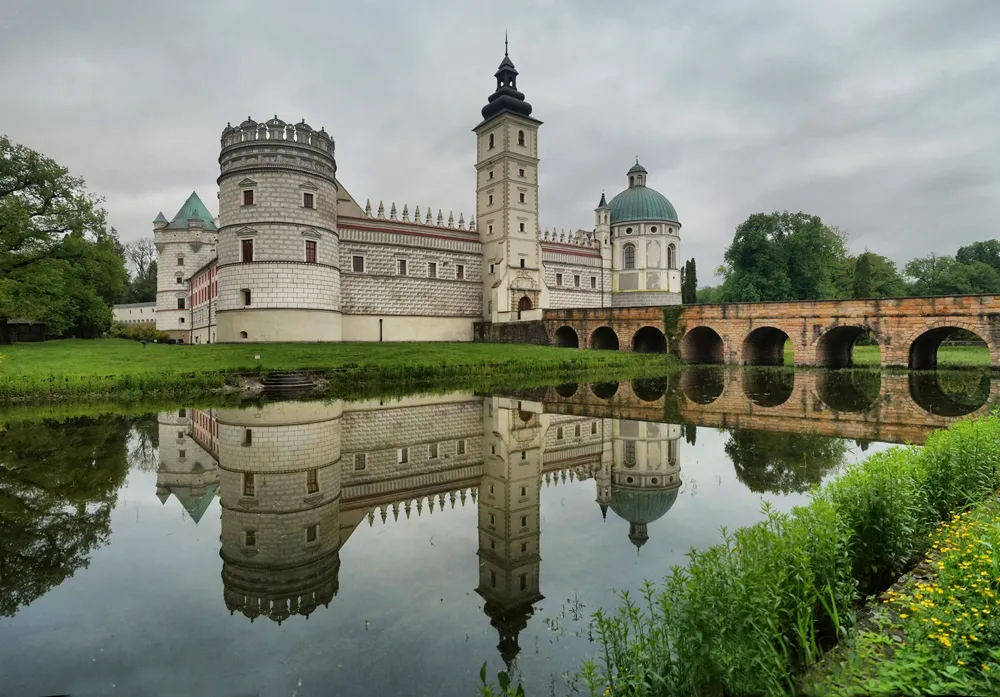
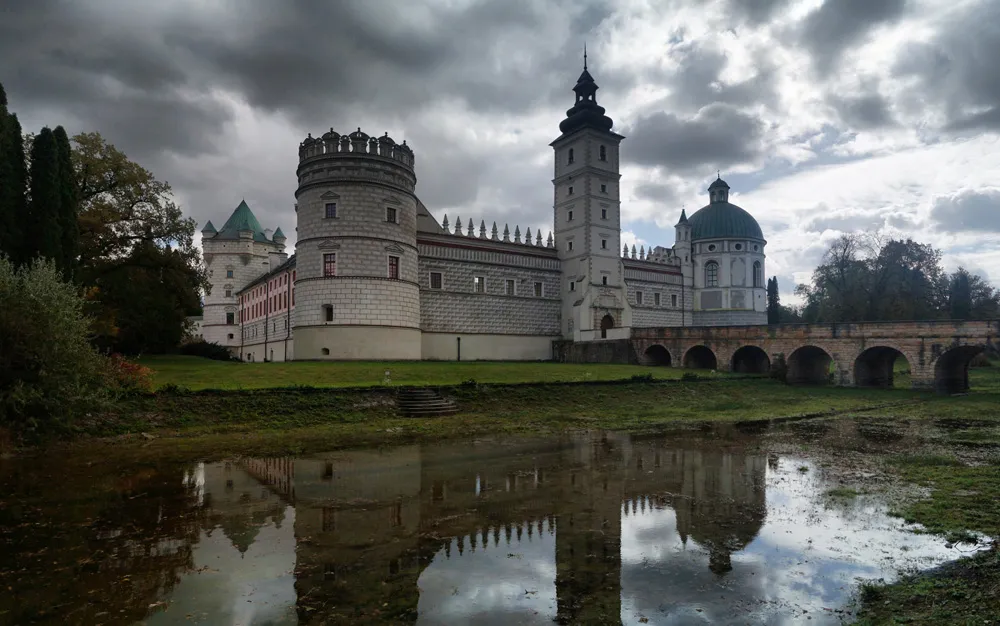
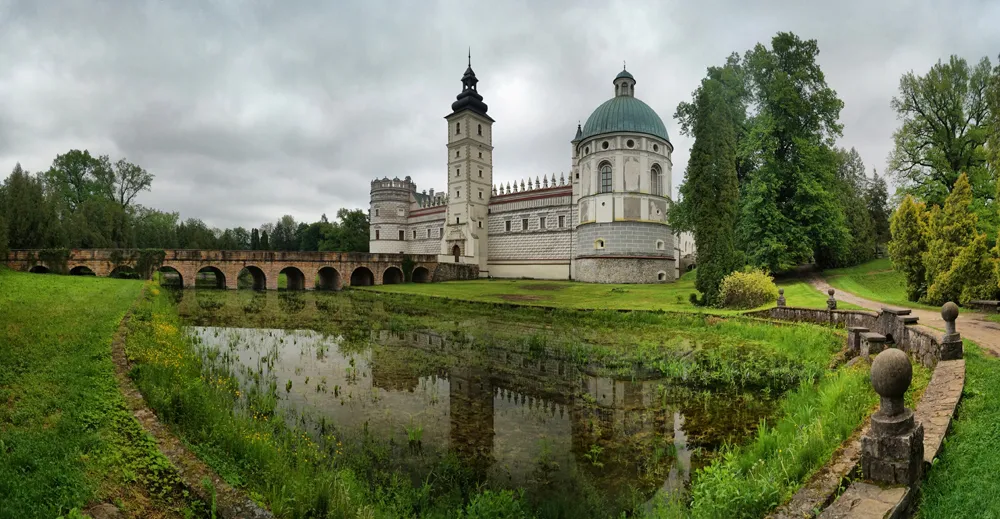
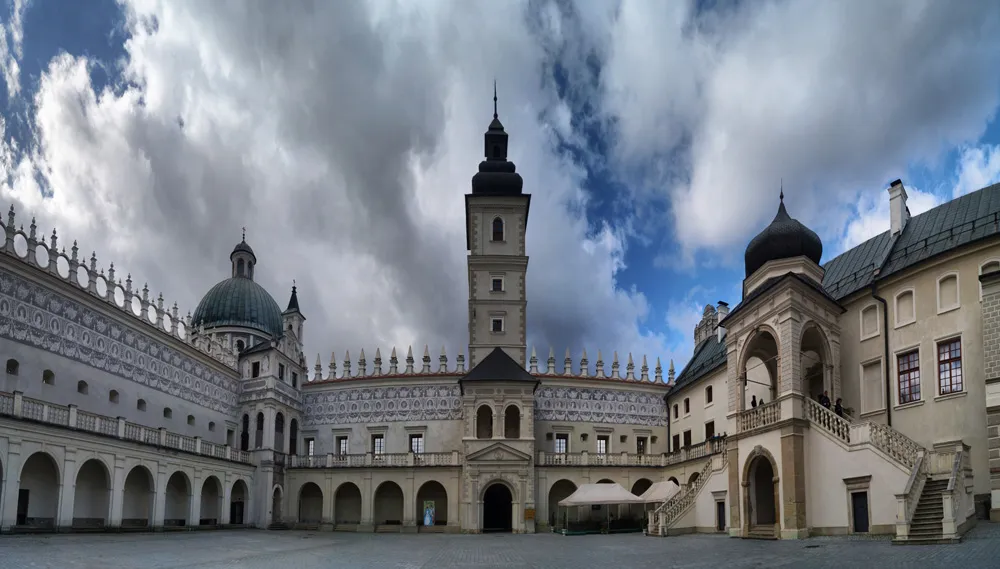
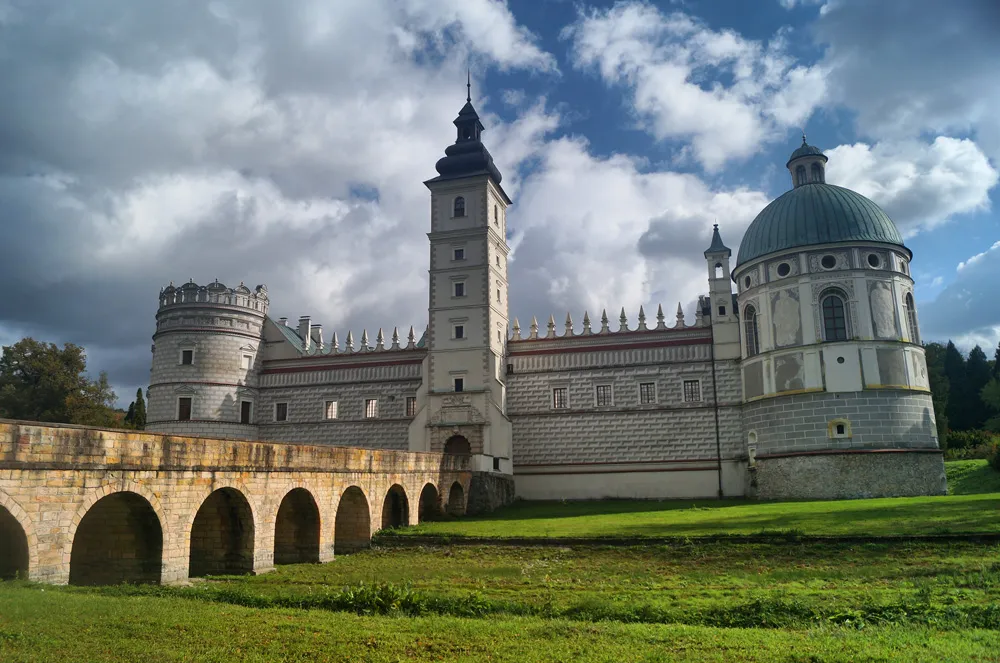
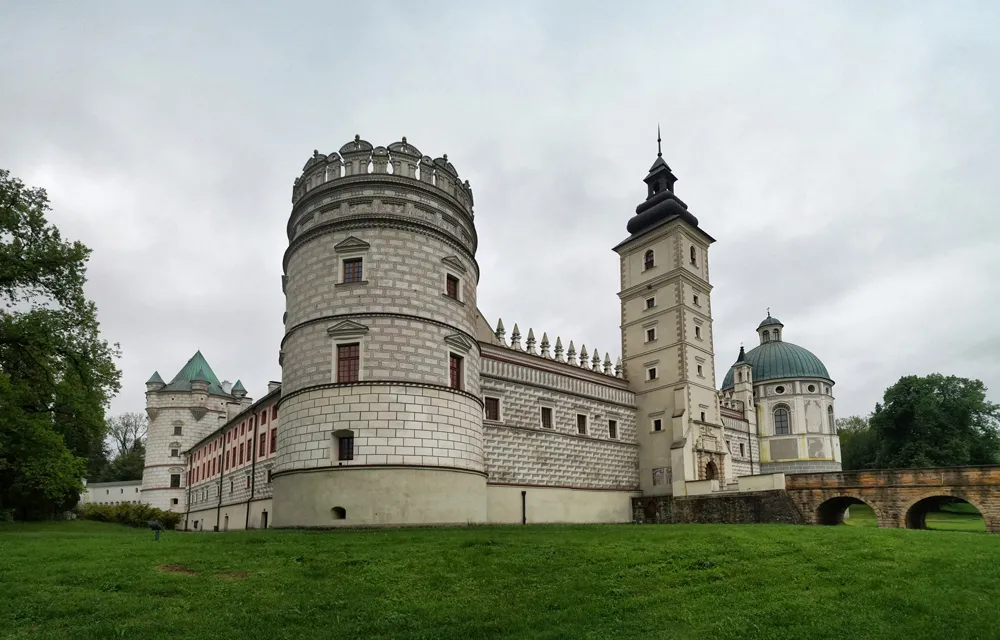
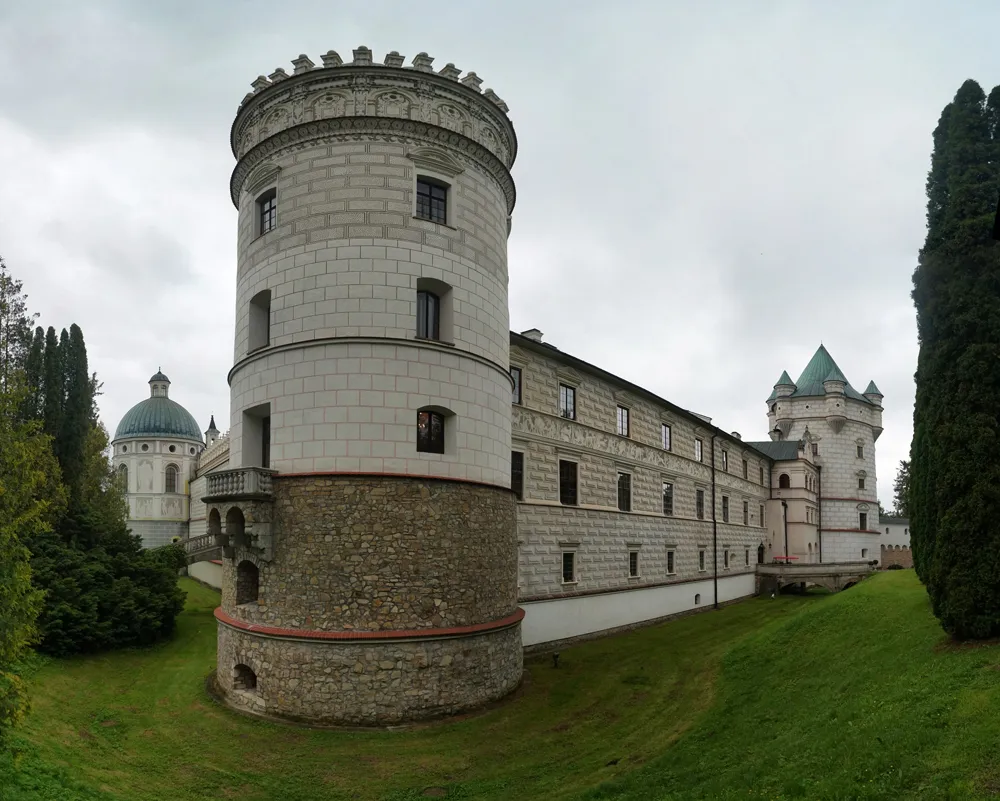
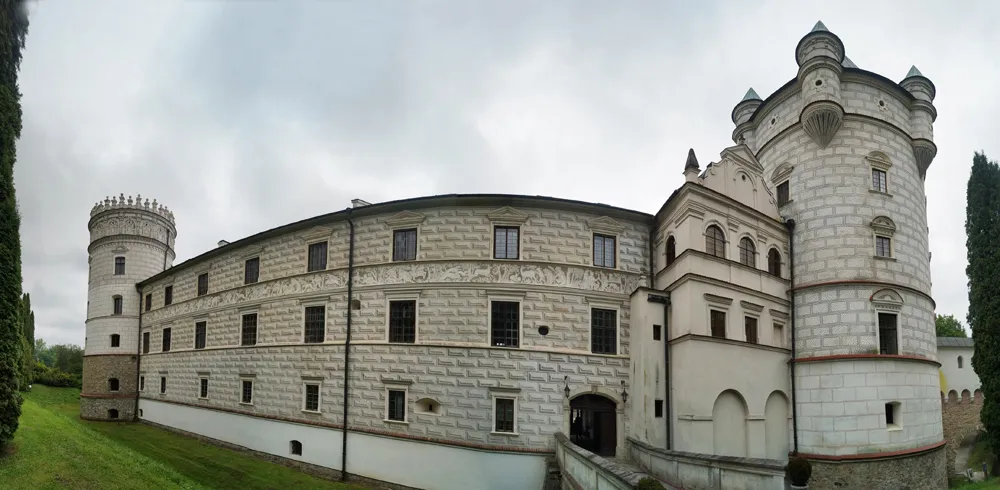
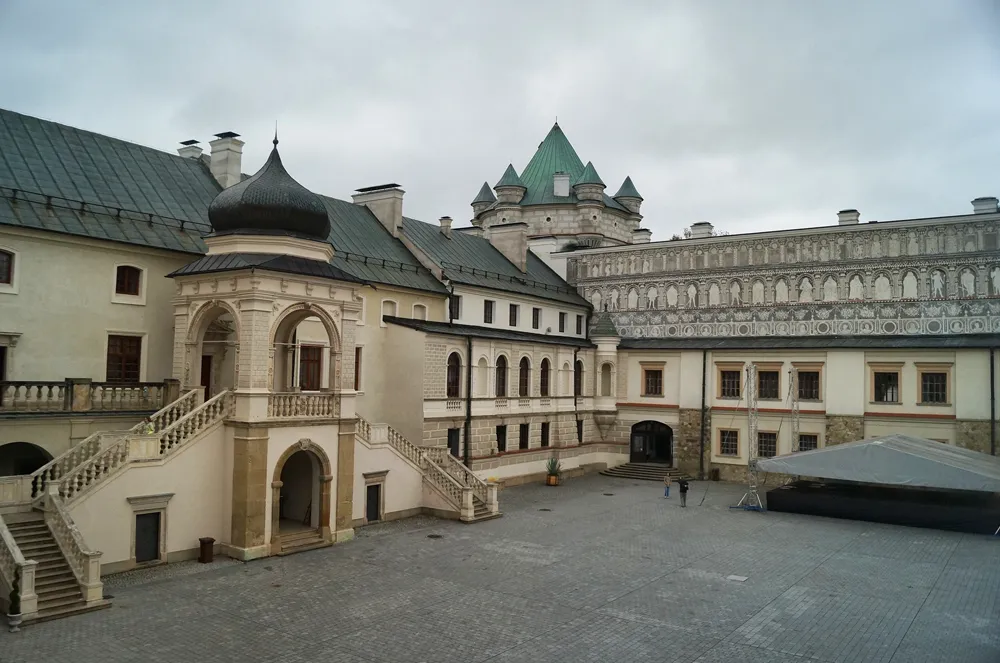
A fairly ordinary castle, with four corner towers, one gate tower and a surrounding water-filled moat, gradually turned into a Renaissance masterpiece. In the early 17th century Marcin Krasicki invited the Italian architect Galeazzo Appiani, who added an upper storey with a clock to the gate tower, rebuilt the corner towers and adorned the walls with splendid Renaissance decoration. The towers came to embody the eternal world order (the hierarchy of power: God, the Church, the king and the nobility) and received their own names: the Divine, the Papal, the Royal and the Noble.
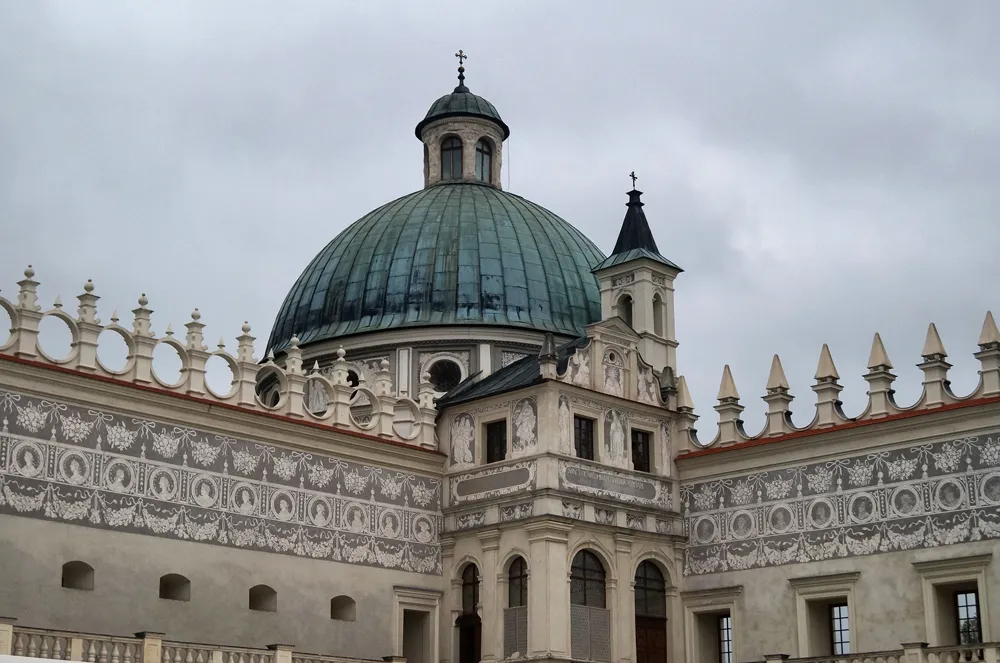
The Royal and Papal towers were given crowns as finials, a royal and a papal one respectively, the Divine Tower was crowned with a dome, and the Noble Tower with Renaissance crenellations. Today these towers are the main adornment of the castle.
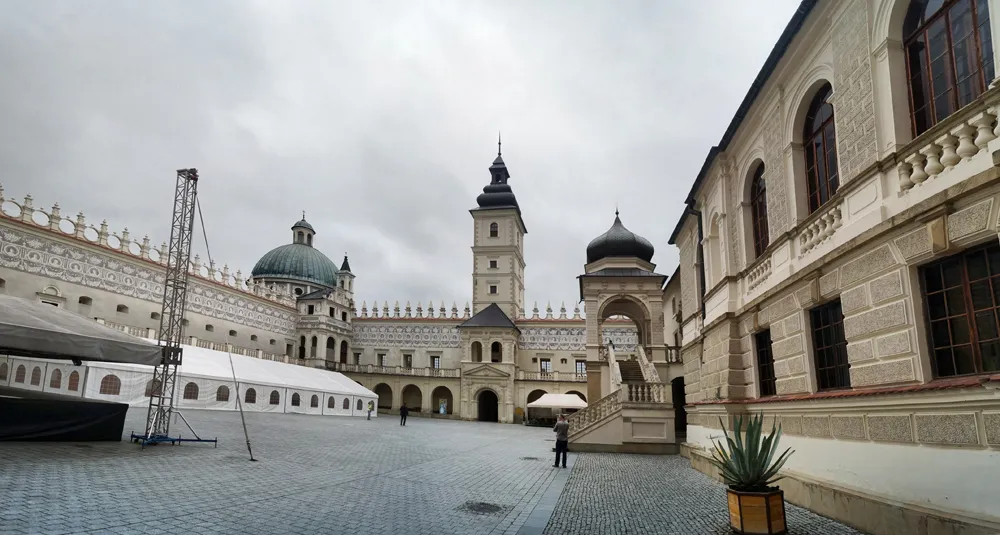
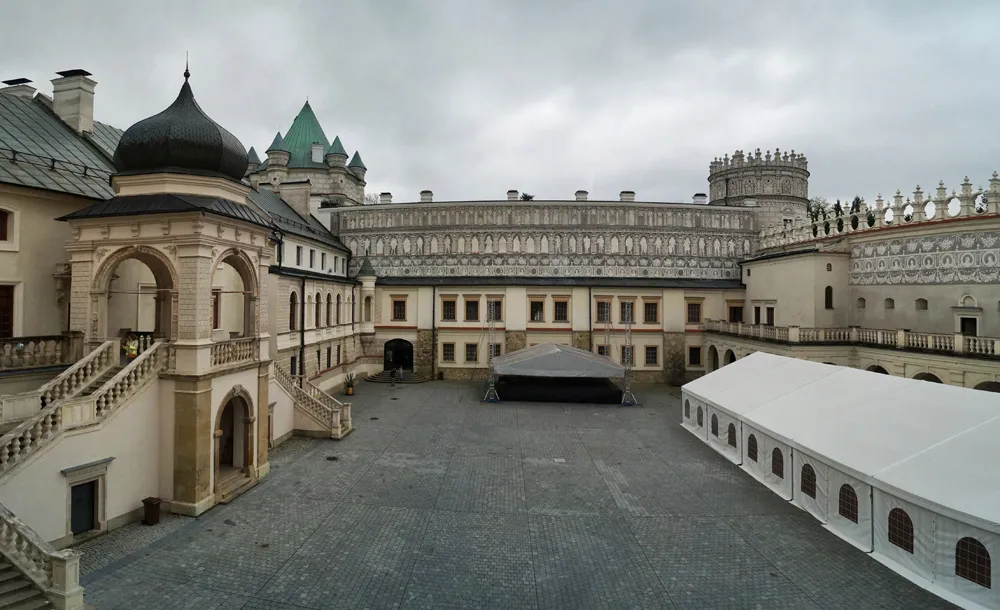
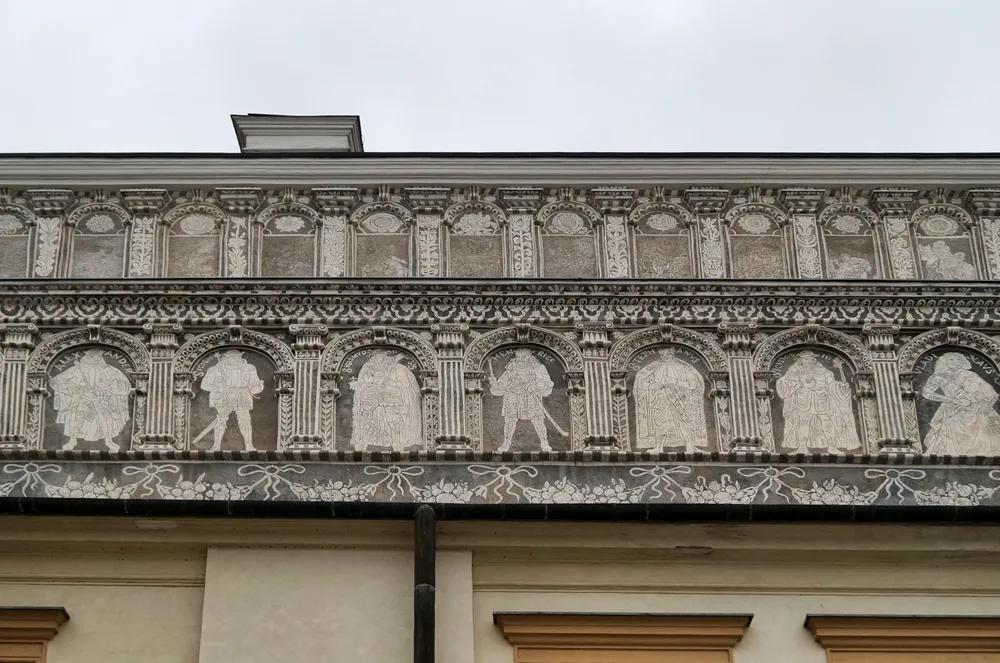
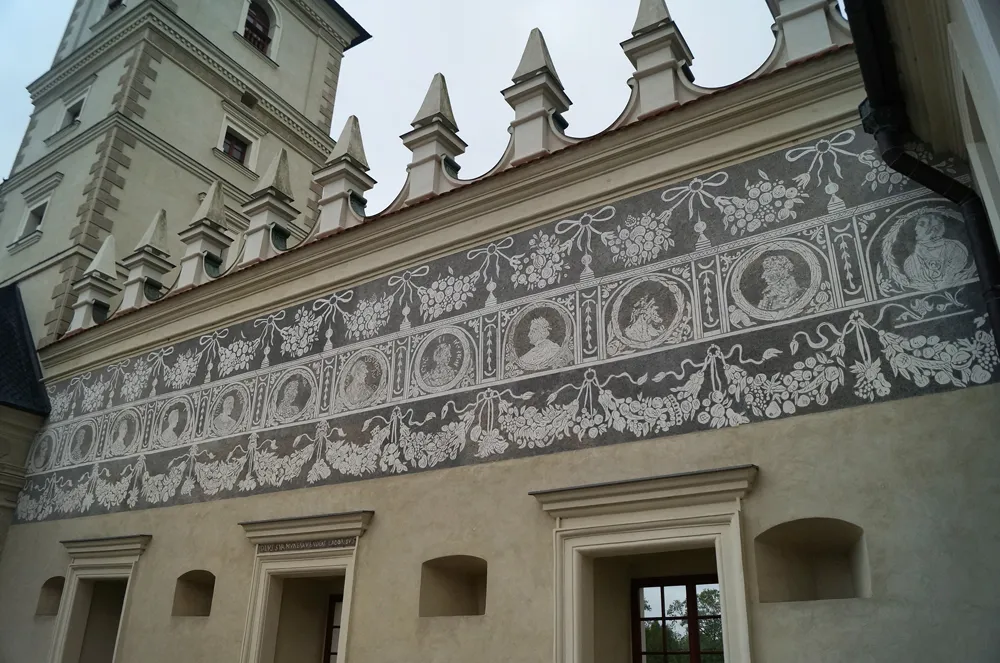
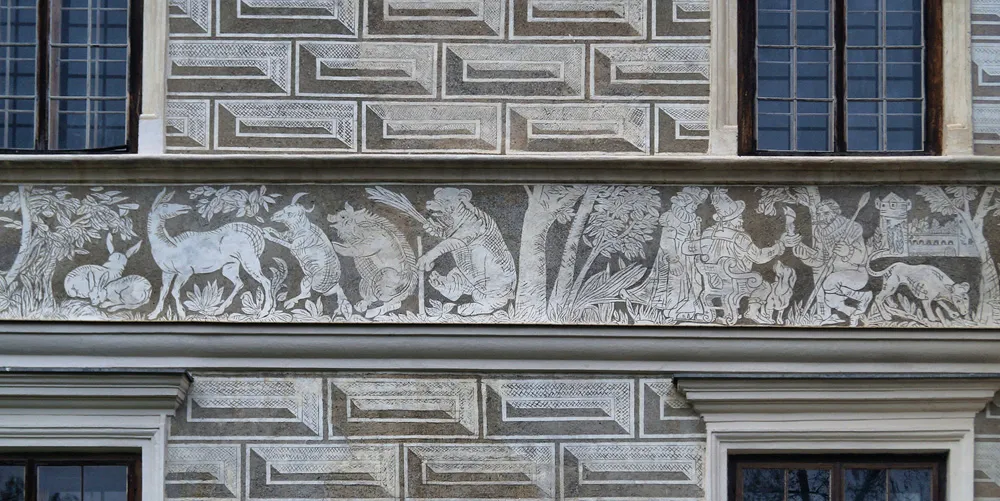
The walls, outside and inside, were decorated with images made in the Italian sgraffito technique (graffiare is Italian for “to scratch”). To create such an image, several layers of lime plaster of different colours were applied. The top layer was then scratched away, forming a relief image. The walls of the castle in Krasiczyn were adorned with 7,000 square metres of decoration depicting the Krasicki magnates, hunting scenes, kings and saints. After a high-quality restoration, this beauty still adorns the surfaces of the castle walls today.
Later, after the Krasicki line died out, the castle began to fall into decline, as the subsequent owners did not give it proper attention, especially after the region came under Russian protection. The Papal Tower was partially destroyed, and the main part of the decoration was plastered over. In 1852 a great fire broke out here, and the Sapiehas, the owners at that time, tried to undo its consequences. It was they who tried to restore the sgraffito decoration and rebuild the Papal Tower. The restoration was halted by the First World War, and under Soviet rule a military barracks was set up here.
The full restoration was completed quite recently, and the castle now looks like a new penny. A fairy tale, especially in the mirror reflection of the wide moat.
Text and photos by Roman Malenkov.