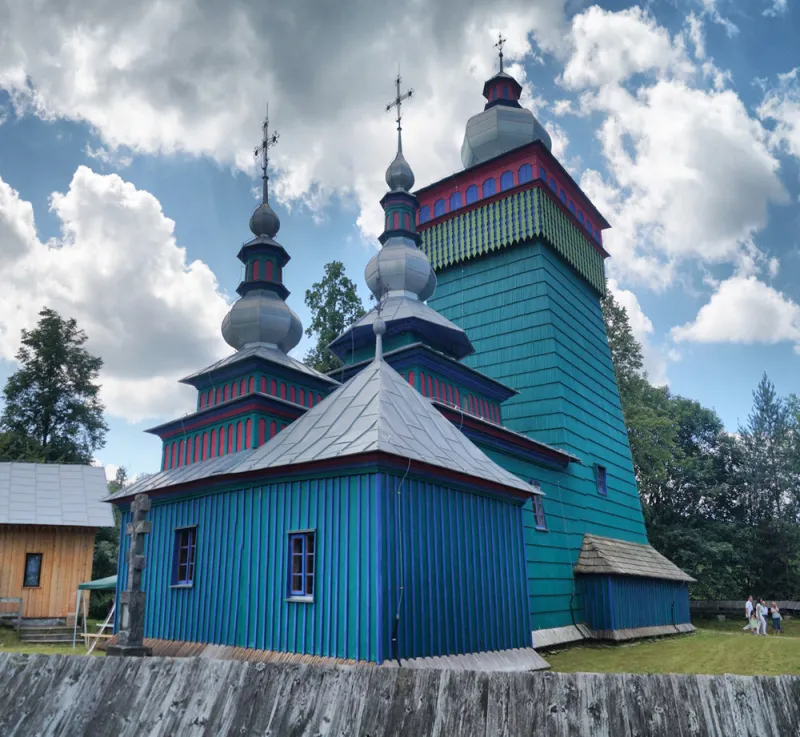
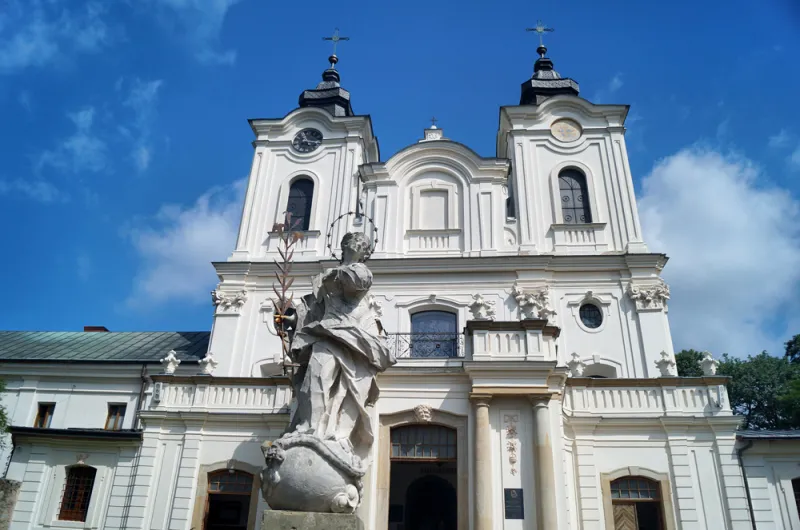
Poland. Komańcza. Capital of the Lemko Republic

· 3 min read
In the south-east of Poland, 40 kilometres from the Ukrainian border and 10 from the Slovak one, in picturesque mountains lies the Lemko village of Komańcza. True, there are very few Lemkos here — only those who managed to return from foreign lands after the mass deportation. But there are still more of them here than in most other former Lemko villages. It seems that Komańcza has some special significance for Ukrainians (Lemkos), since there are now functioning Orthodox and Greek Catholic churches here, and accordingly there is a Ukrainian community, but in what numbers I have not come across any statistics — the Poles do not keep them, and the Ukrainians…
At the beginning of the 20th century about 900 people lived in Komańcza, of whom 728 were Ukrainians (Greek Catholics). In 1918, after the proclamation of the West Ukrainian People’s Republic (ZUNR), the Ukrainians of the Carpathian foothills (Pidkarpattia) also wanted a country of their own. They might have joined the ZUNR, but this was geographically impossible — they were cut off from Ukraine by a strip of sparsely populated mountain territory. So at first the Ukrainians of the Sanok county, which included Komańcza, decided to make Sanok itself their centre, but a Polish army was quartered there and there was a great danger of premature failure, so Komańcza was chosen as the capital. This was the East Lemko Republic, which later came to be called the Komańcza Republic.
The Komańcza Republic comprised 33 villages, which took over the local authorities and formed the Ukrainian National Council. This quasi-state entity was headed by the priest Panteleimon Shpylka. A commissariat (executive body) was also created, and a flag was adopted — blue and yellow — along with the form and content of the state seal. The Komańcza Republic existed for three months — from 4 November 1918 to 23 January 1919. Then Polish troops came and, after brief fighting, liquidated it.
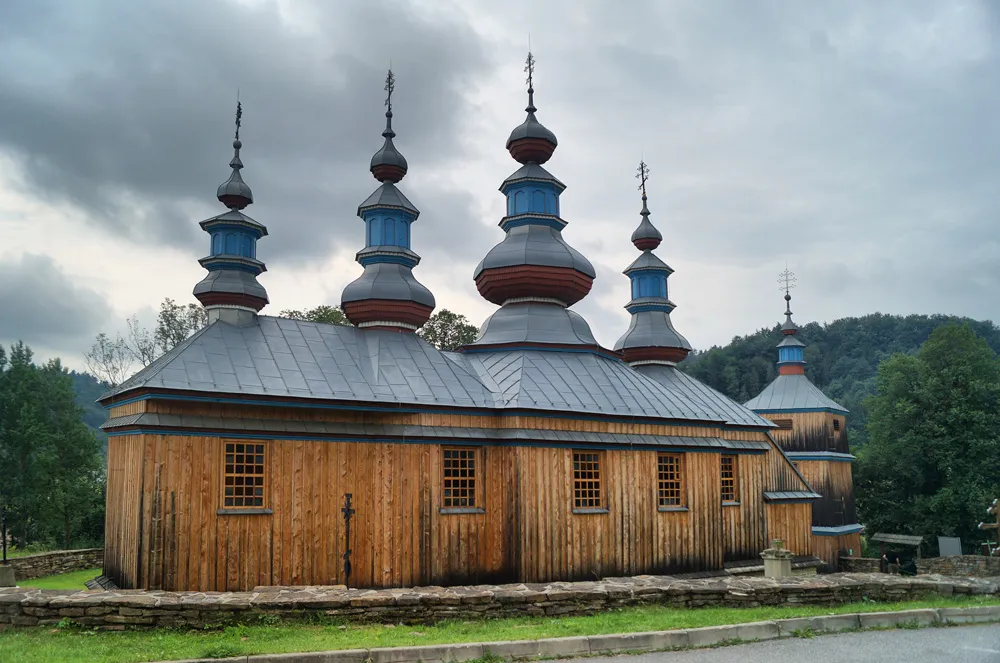
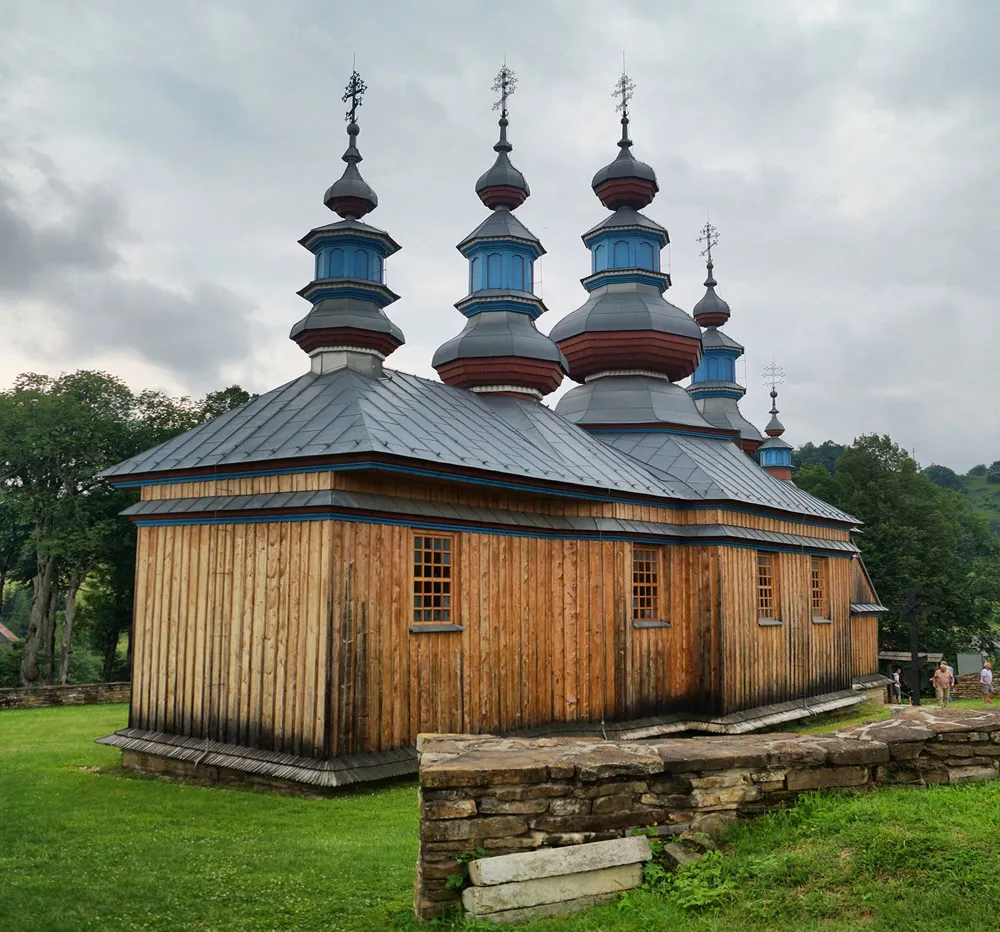
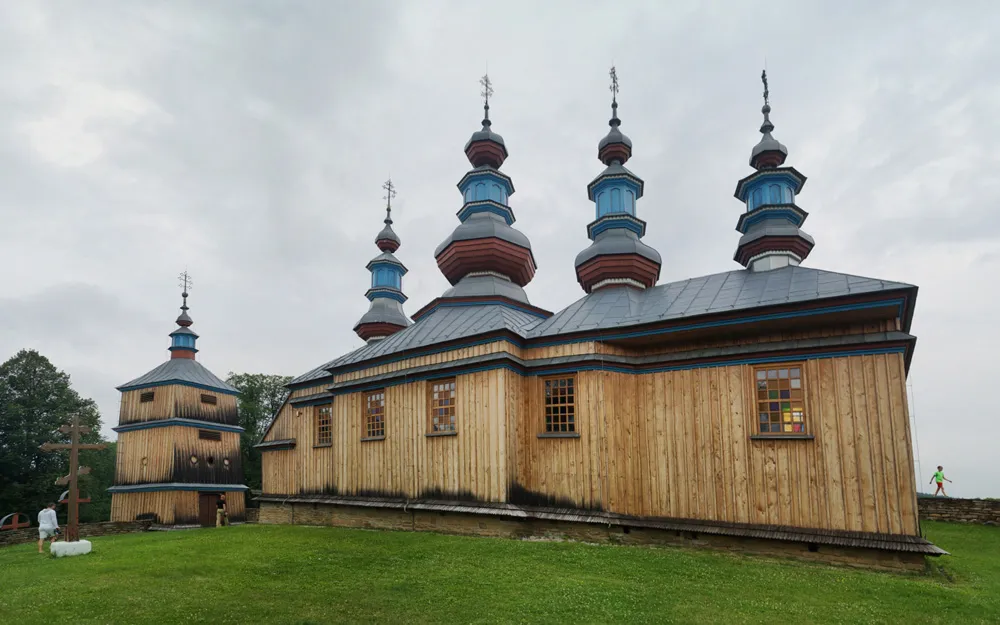
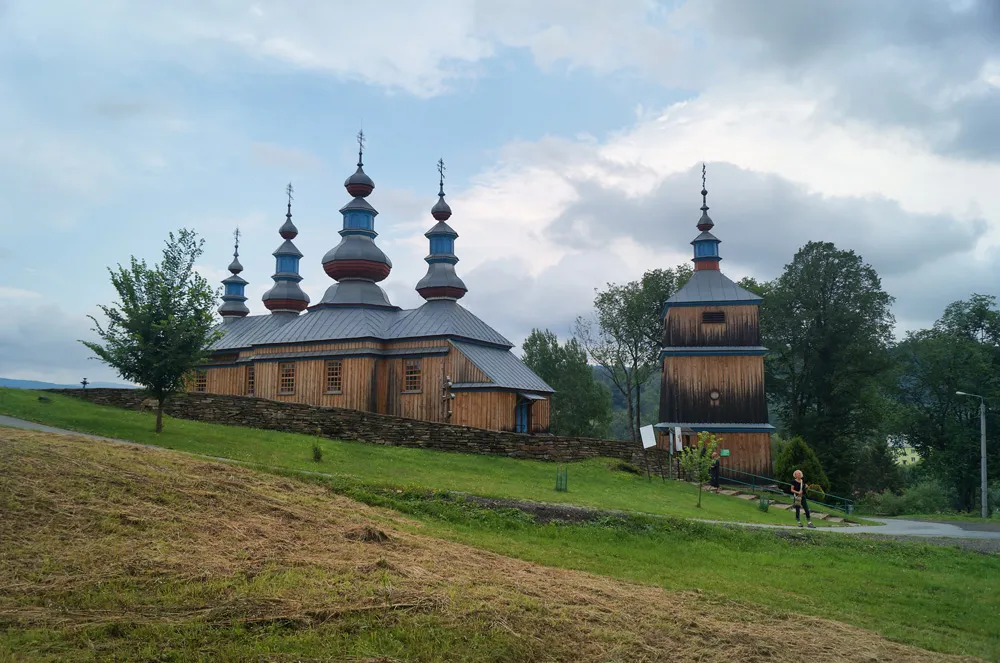
The main landmark and ornament of the village is the Church of the Intercession, built in a beautiful Lemko style, with four domes and a separate bell tower. The church was built as a Greek Catholic one in 1802. Since 1962 it has belonged to the Polish Autocephalous Orthodox Church. The church changed its denomination as a result of the same notorious Operation Vistula, when almost all Ukrainians from the south-eastern Polish regions were deported.
In 2006 the Church of the Intercession burned down — only the foundation was left, and only the bell tower could be saved. But photographs and drawings of the church survived, and it was rebuilt in its original form. Even now it is not noticeable that the church was rebuilt — the wooden cladding has darkened and come to look like an old one. The church is beautiful, and even though it is a reconstruction, it is definitely worth seeing, as is the mountain village of Komańcza — remarkably picturesque and cosy.
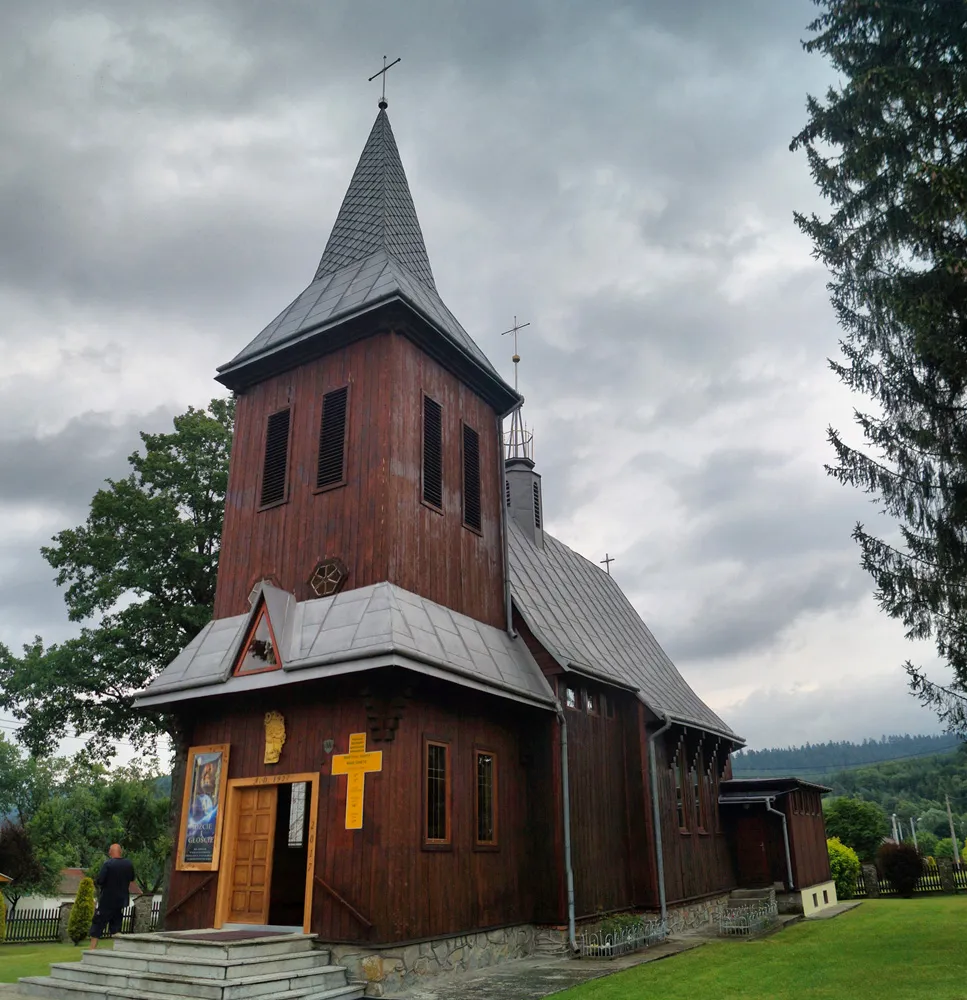
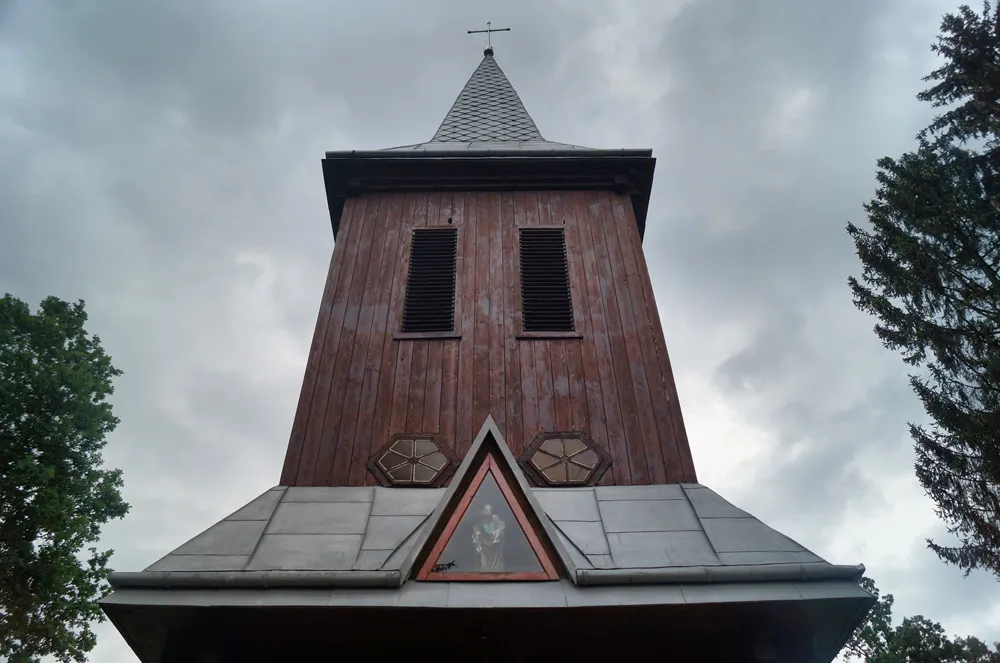
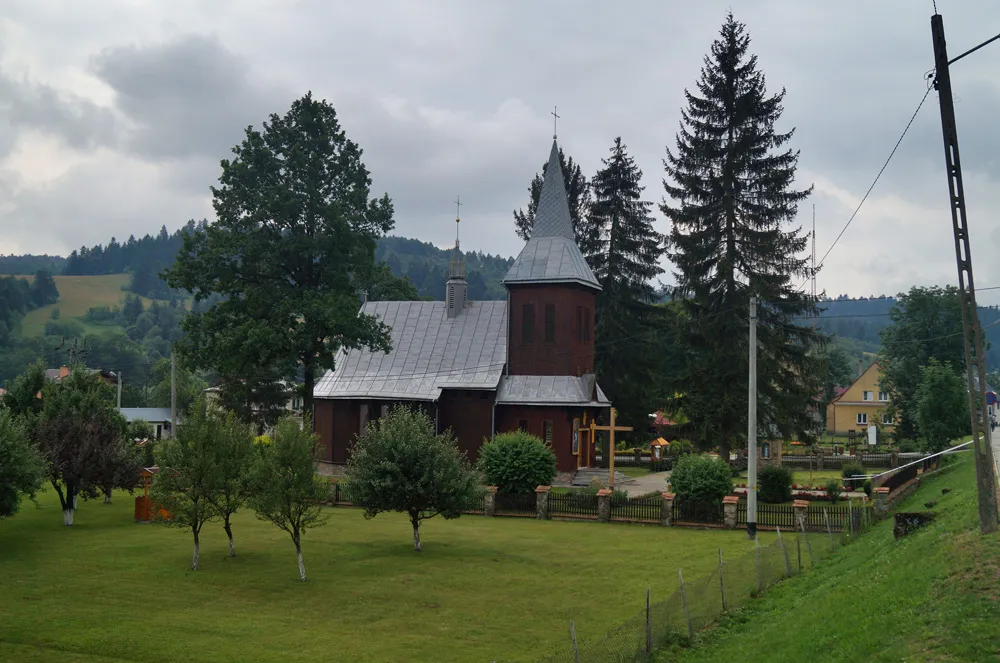
There is also a wooden Roman Catholic St. Joseph’s Church built in 1949–1950.
Text and photos by Roman Malenkov.