Poland. Tykocin

· 4 min read
Thirty kilometres west of Białystok lies the small town of Tykocin. It has only about two thousand inhabitants, but there is plenty to see: a reconstructed castle (I liked it very much), the old single-storey buildings of the historic centre with two market squares, two monasteries, a large parish church, two synagogues and a very old Jewish cemetery. There is no shortage of monuments.
The emergence of the town of Tykocin is linked with a fortress that stood from the 11th century 3 km from the modern town, at a crossing over the Narew River. Only small ruins of that fortress remain near the village of Serki; instead, about six hundred metres from the centre of Tykocin, a new wooden castle was built in 1433.
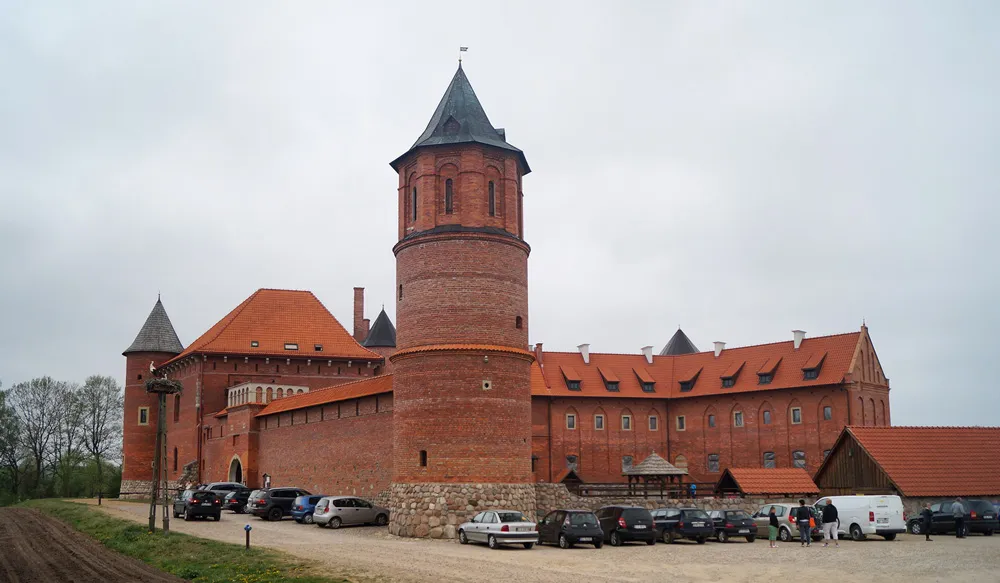
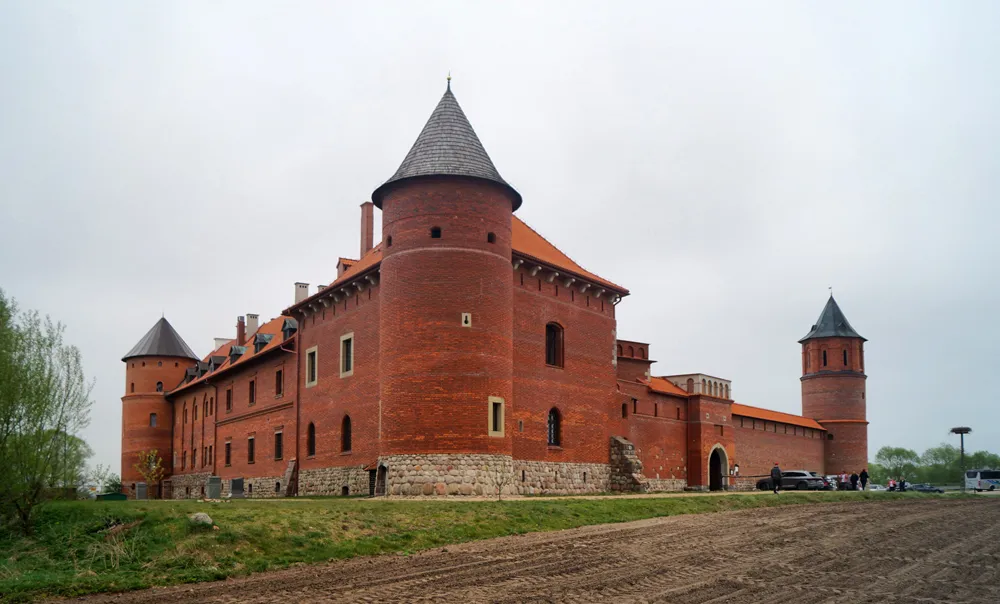
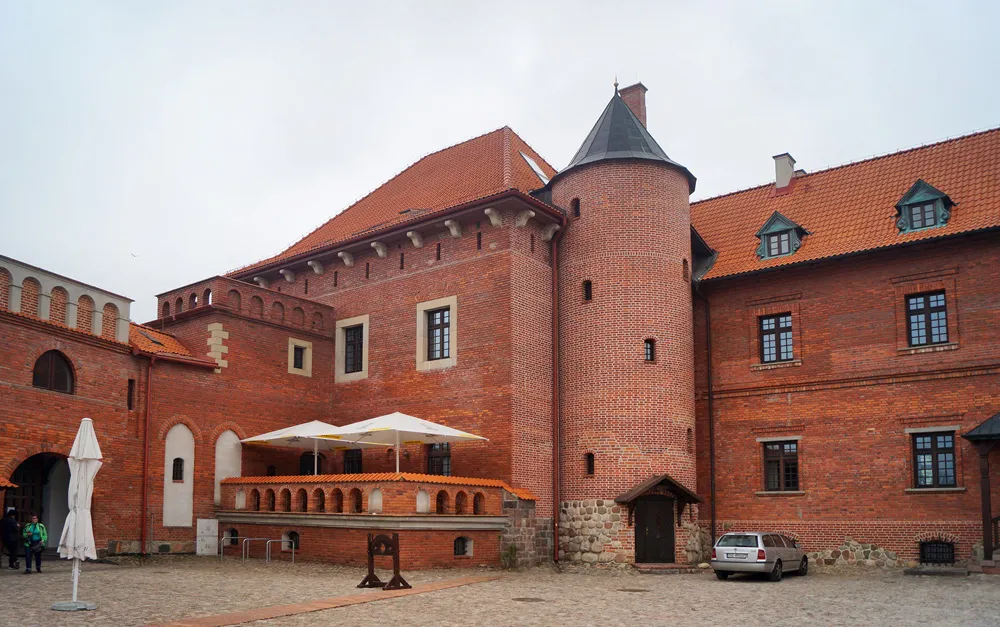
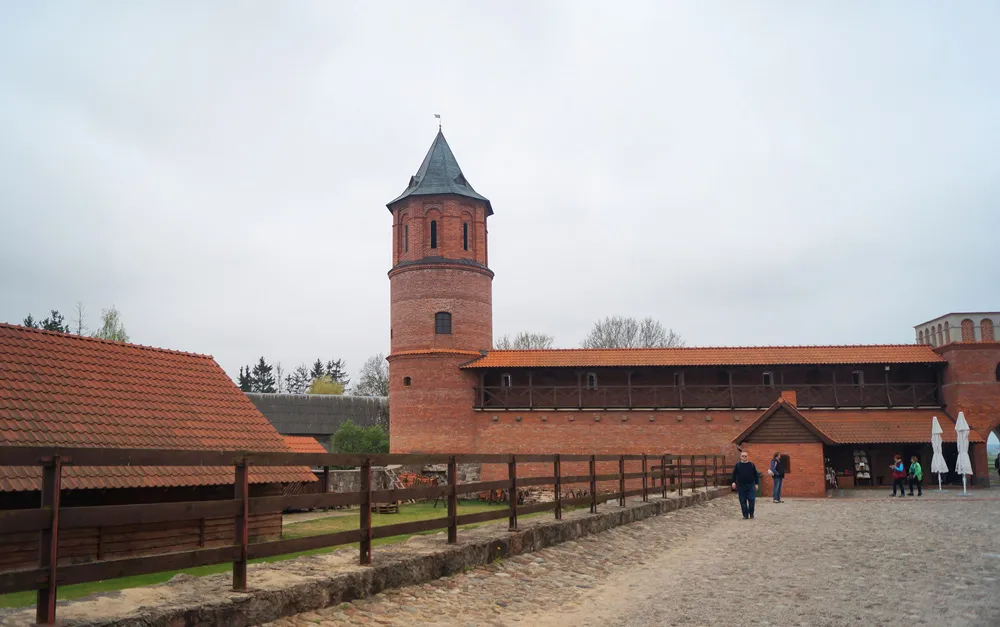
In the 16th century Tykocin became the property of King Sigismund I the Old. On the site of the wooden castle, by then obsolete (how could a king live in such junk), a brick castle in the Renaissance style was built. In 1549–1575 construction of the castle was supervised by the famous architect Job Bretfus. It is assumed that the castle was never intended to be a royal residence, only a crown arsenal where cannons and gunpowder would be kept.
Kings owned the castle until 1660. During this time it acquired bastions and took part in many battles during the wars with the Swedes. It was stormed and besieged, Prince Janusz Radziwiłł died beneath its walls, and it was captured, handed back, and transferred from crown property to private hands, to the Czarniecki family.
In 1734, during the War of the Polish Succession, a fire broke out in Tykocin Castle. The interiors burned down and the stronghold was abandoned. In 1750 Hetman Jan Klemens Branicki gave local peasants permission to dismantle the walls for building material; in addition, bricks from the castle were used to build the Bernardine monastery in the town. In 1915 German soldiers used the wall material to build a road and the soil of the bastions to build dams…
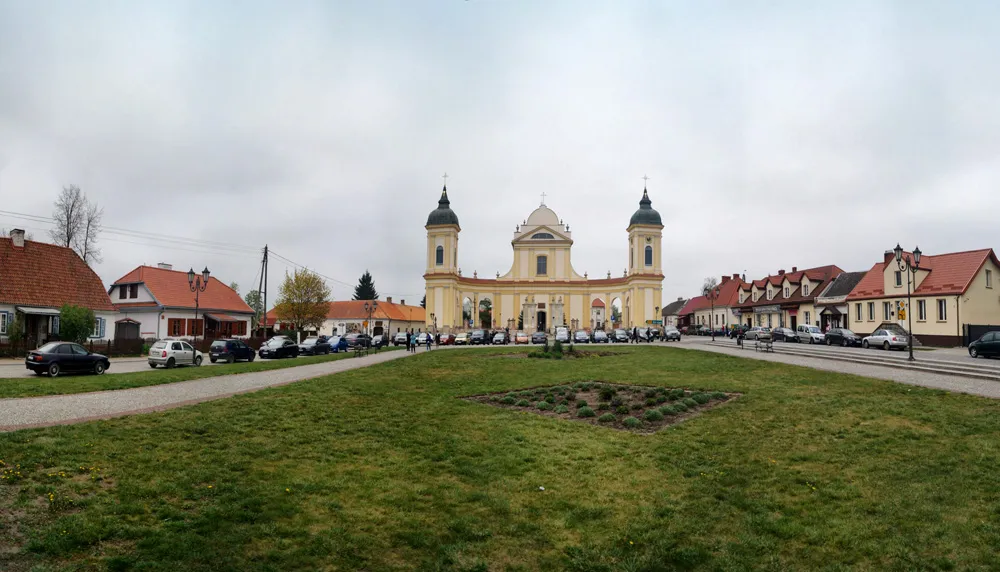
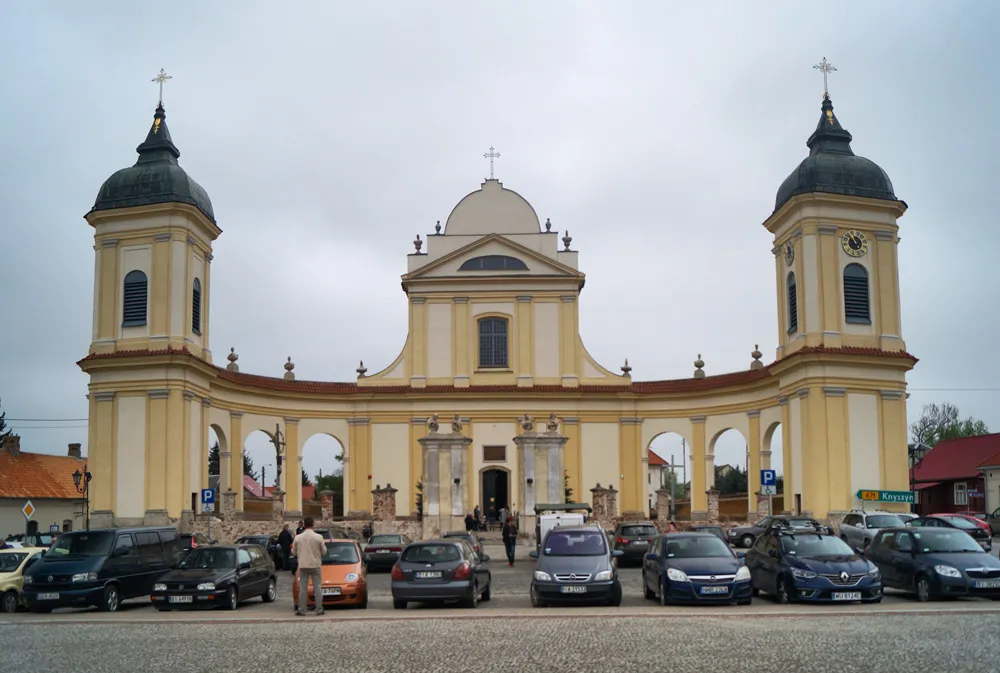
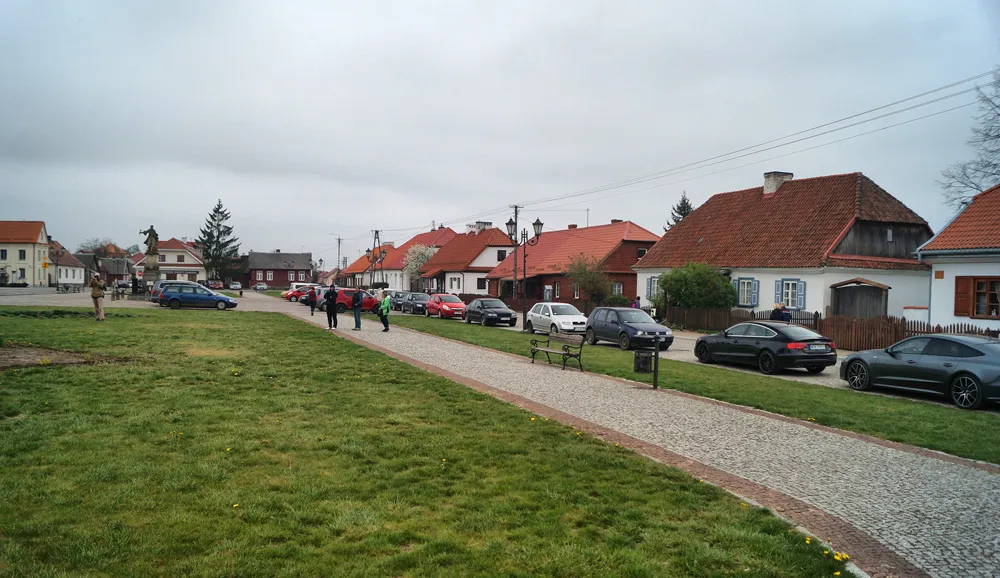
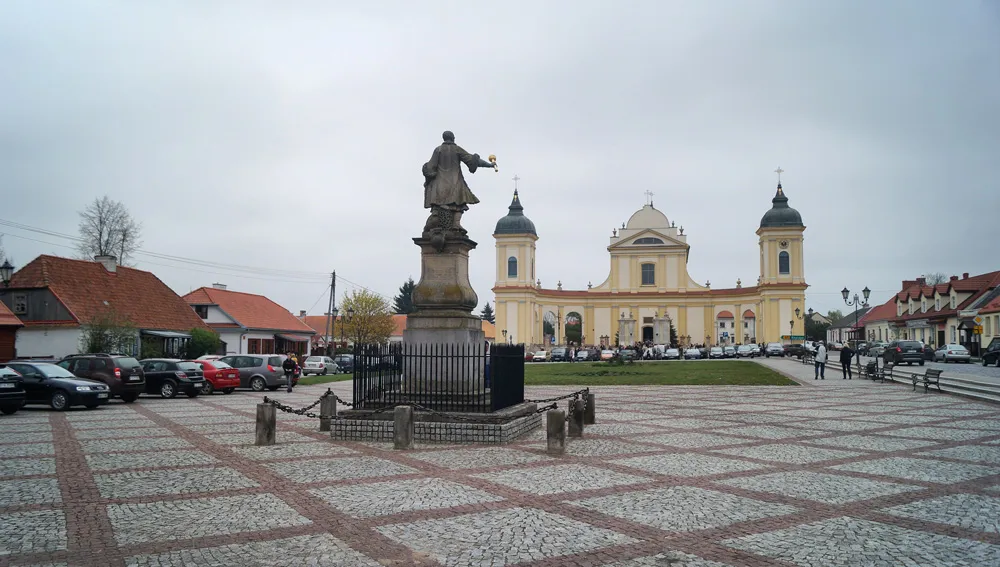
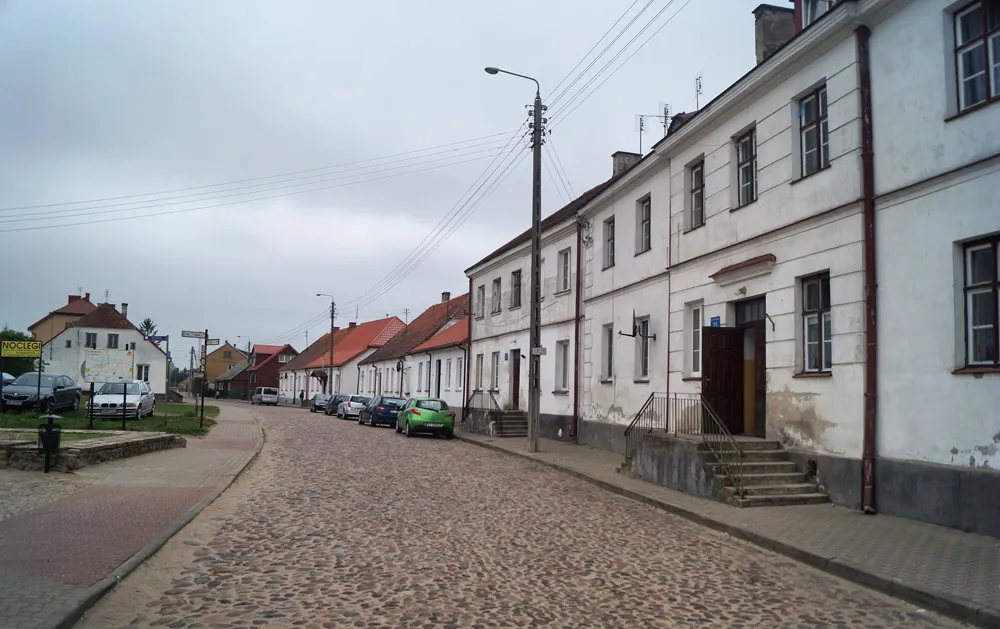
Holy Trinity Church and the Great Market Square
In the 1990s the castle’s foundations were sold into private ownership. The owners decided to reconstruct the stronghold, for which preparatory work went on for several years and a project was drawn up. Having obtained drawings of the old castle from the archives of Saint Petersburg, the owners recreated the west wing of the royal castle with 4 cylindrical towers at the corners. And I will tell you that this is very high-quality work: it does not feel like a new building at all, so detailed and well thought out is everything.
The main monument of Tykocin’s centre is the large parish Church of the Holy Trinity, built in 1742–1748 on the grounds of a post-Missionary monastery complex. Construction was financed by Jan Klemens Branicki. The church has two bell towers that stand about ten metres from the church but are connected to it by arcades and look like broad wings. A very original building. Its interior and organ, executed in the Baroque and Rococo styles, are impressive.
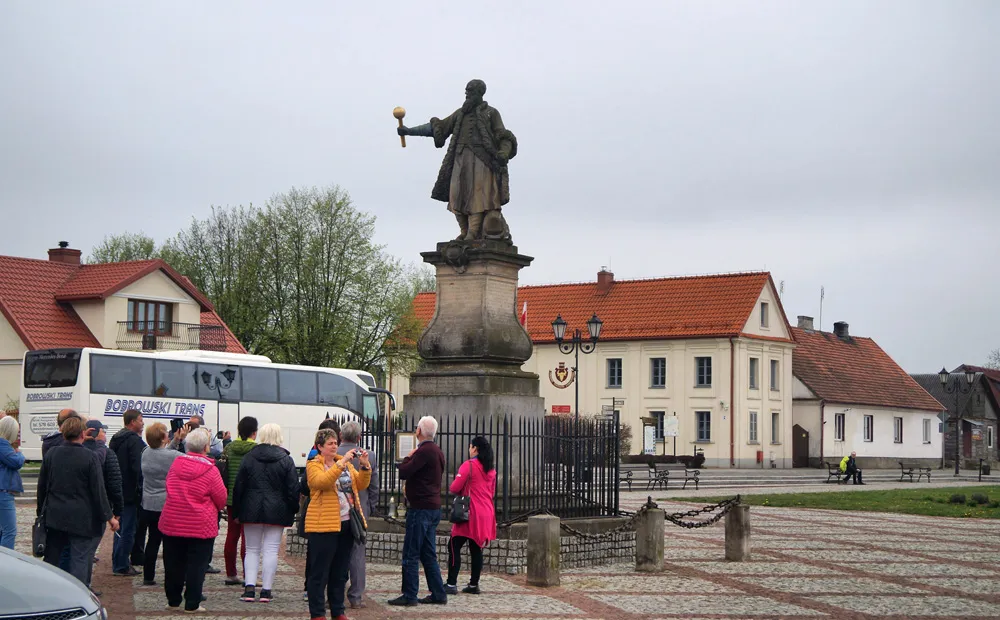
The parish Church of the Holy Trinity stands in front of the Great Market Square, in the centre of which is a monument to Hetman Stefan Czarniecki; around the perimeter is very picturesque single-storey development, probably of the 19th century. There are restaurants, souvenir shops, a confectionery and a pierogi bakery. Next to the church stand the buildings of the former post-Missionary monastery.
South of the Great Market Square, two blocks away, lies the complex of the Bernardine monastery, built in 1771–1791. We did not get inside because it was closed, so I cannot say anything about the monastery’s interior.
From the 16th century Jews made up a considerable part of Tykocin’s population. The first Jewish settlers appeared here in 1522, and by 1800 they made up 80% of the population. In 1939 Tykocin had 5,000 inhabitants, half of them Jews. Almost all of them were exterminated by the Nazis. But a significant Jewish heritage remains in Tykocin, and Jews come on excursions to Tykocin.
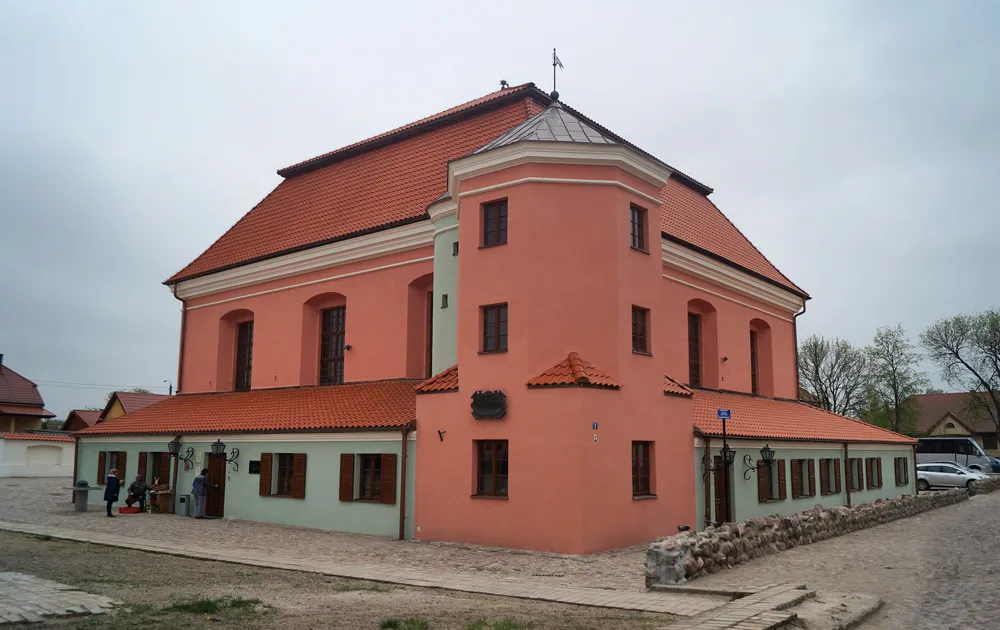
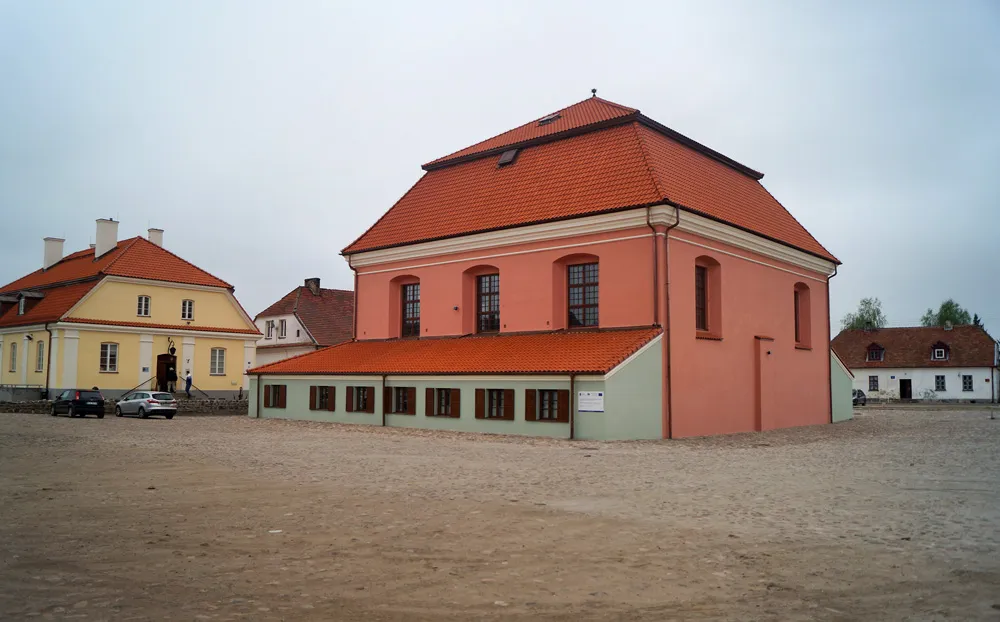
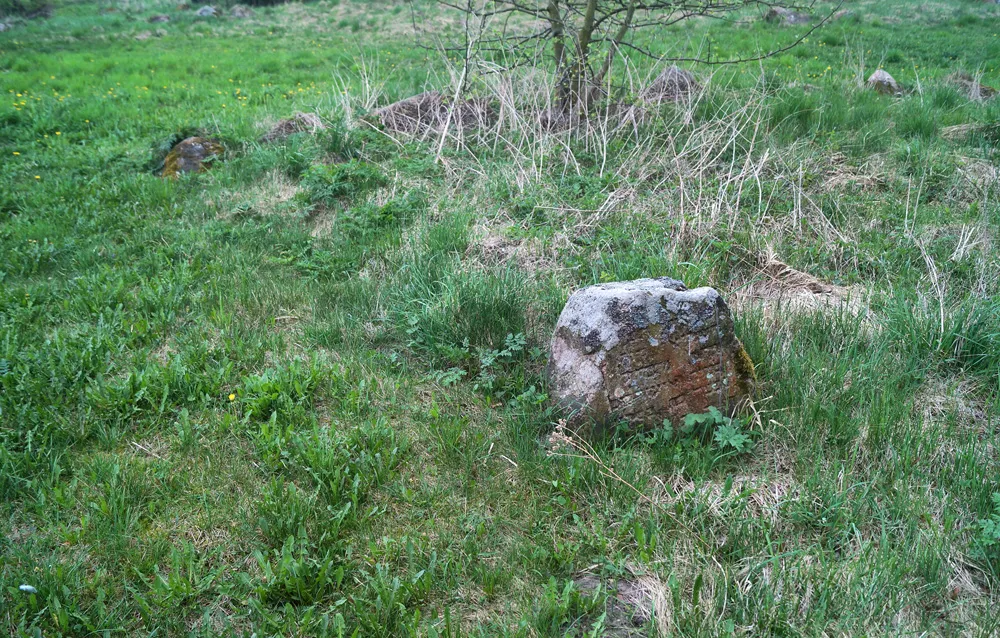
Synagogues and the kirkut (Jewish cemetery)
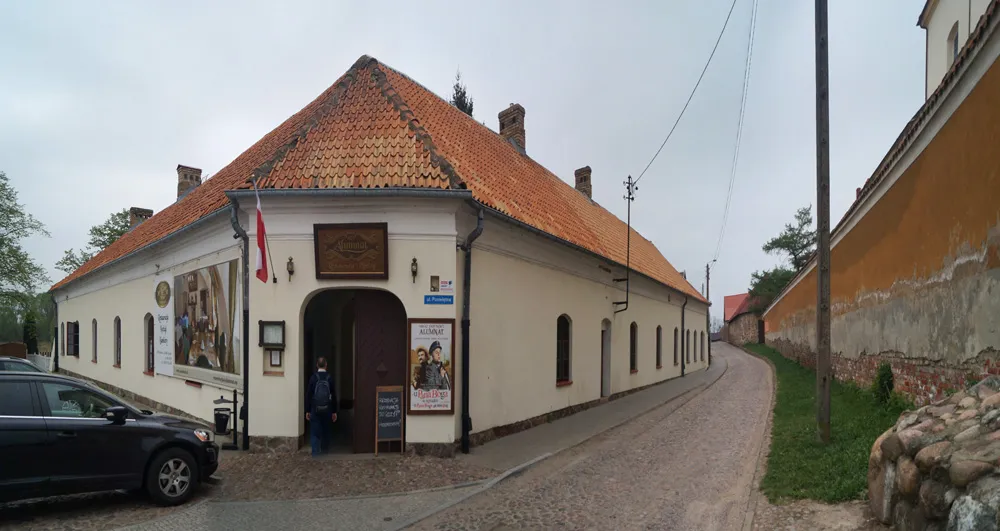
On the outskirts of the town lies a very old Jewish cemetery, and about 300 metres from the Great Market Square is the Small Market Square, where two synagogues have survived, the Great and the Small, now turned into a Museum of Jewish Culture. The Great Synagogue is one of the oldest in Poland; it was built in 1642. In the 18th century a low tower was added to a corner of the building, which served as a prison for Jews.
The Small Synagogue was once a Talmudic house. It was built at the end of the 18th century.
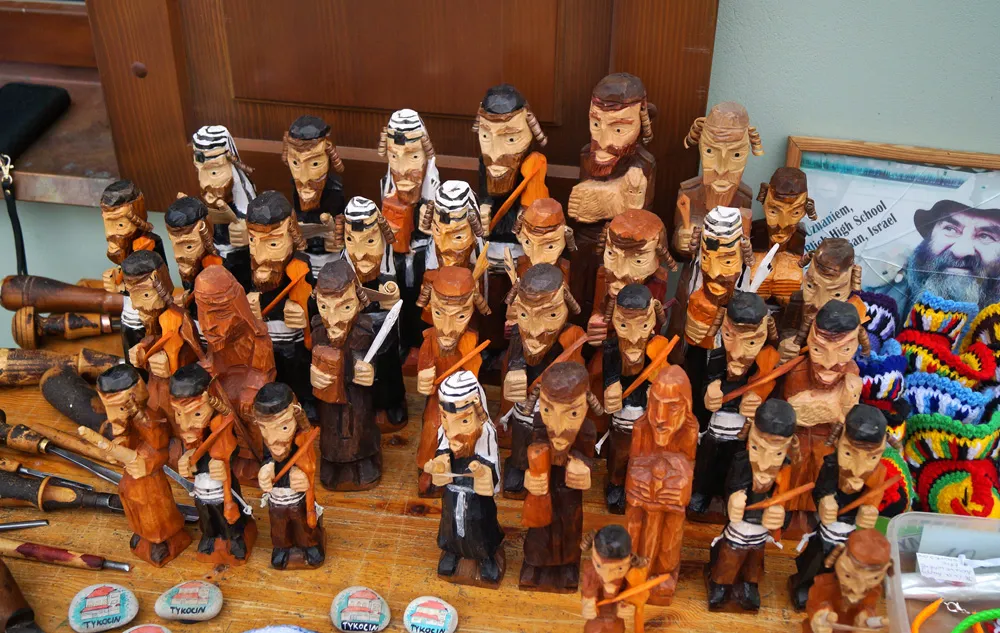
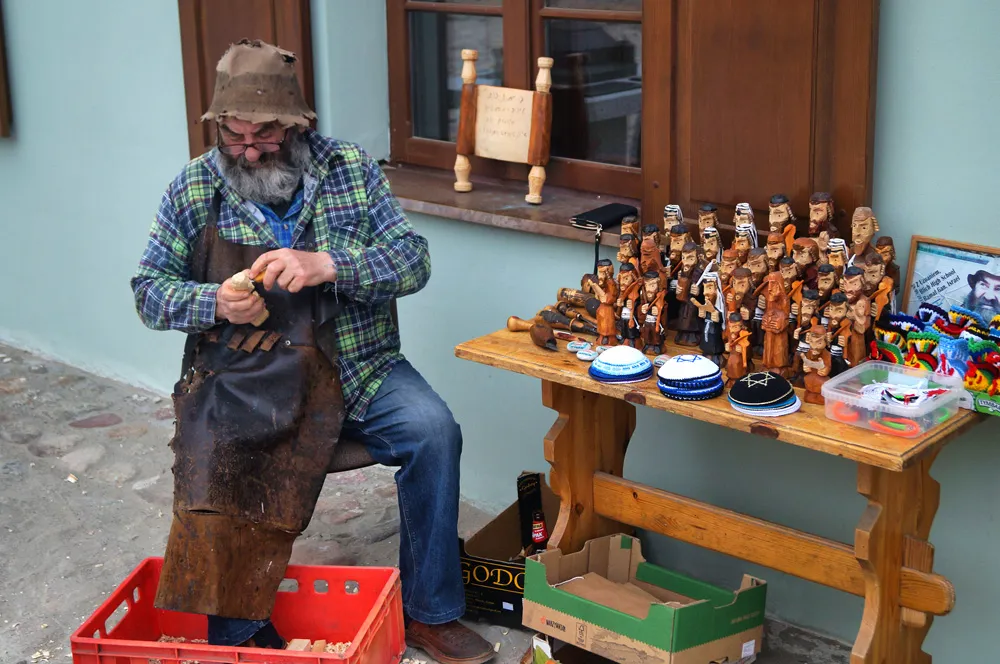
On the Small Market Square we saw several groups of Jewish visitors; whether there are always many of them or it was by chance, who knows, but there are quite a few special Jewish souvenirs here, in particular wooden figures of people in traditional Jewish clothing, made on the spot by a local resident, probably a Jew.
We spent 2–3 hours in Tykocin, although we had planned only a half-hour stop at the castle.
Text and photos by Roman Malenkov.